
Tessellated tile services in Islington
For Islington properties in Newcastle, a tessellated tile decision often needs to balance pattern, proportion and everyday durability with the character of the building and its setting. A considered consultation can help shape new verandah or pathway work, or identify a practical approach to retaining and repairing existing tiles.
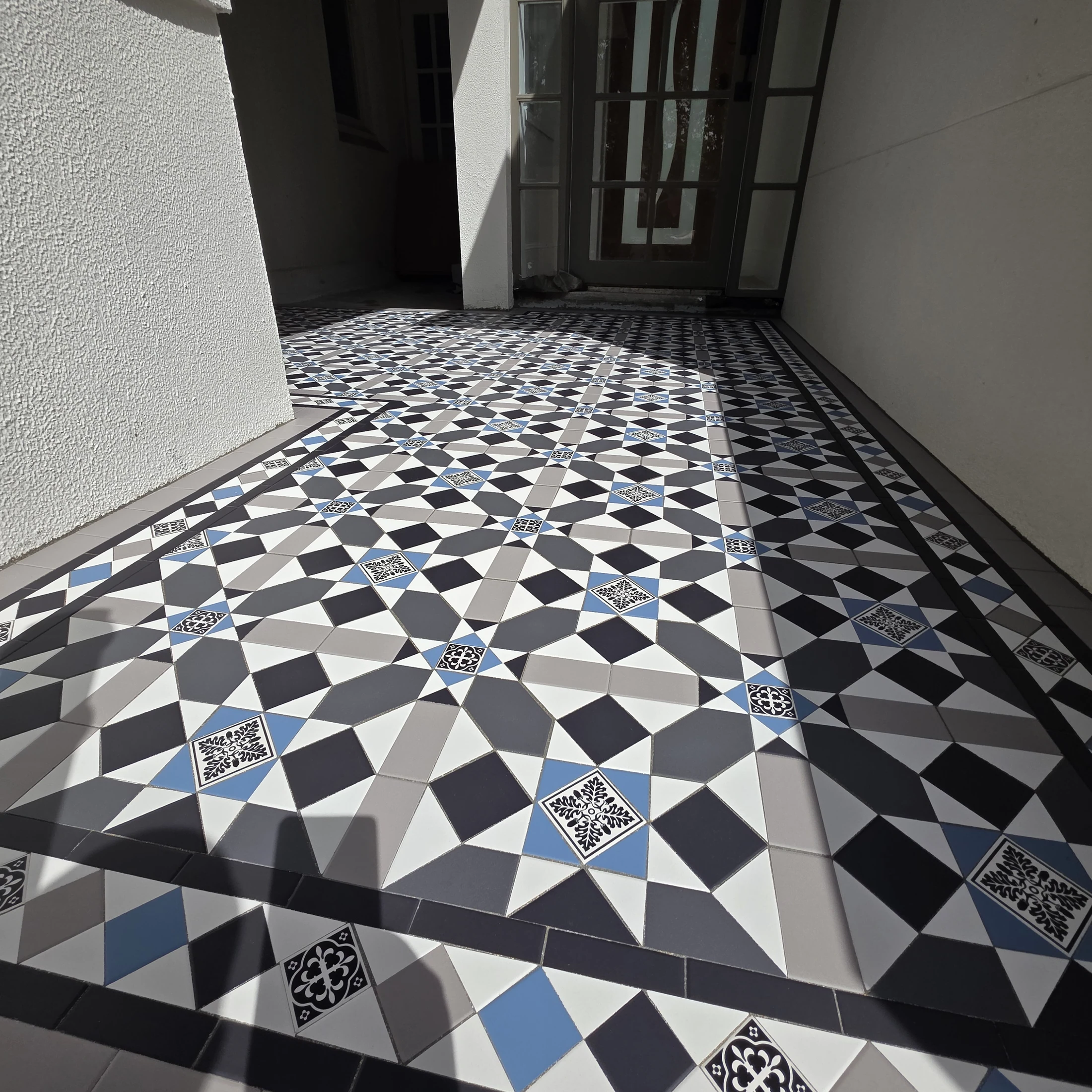
Tile design for Islington's established setting
Islington Park has been part of the locality's public landscape since its dedication in 1880. Council records describe a former estuarine setting around Throsby and Styx Creeks, extensive Moreton Bay figs and a long history of recreation and public gatherings. Those details do not define every Islington property, but they are useful reminders to consider landscape, thresholds and the relationship between a tiled path, verandah and garden rather than selecting a pattern in isolation.
For a period-influenced home, design discussions can cover border scale, field pattern, stair and entry transitions, and how new work sits beside surviving fabric. Tessellated tile supply, installation, restoration and stone bullnose or edging coordination can be considered together so the finish suits the property and the intended use.
Check the property before changing original tiles
The City of Newcastle's Newcastle LEP 2012 uses heritage maps to identify conservation areas, general heritage items, archaeological items and landscape items. A locality-wide assumption is not enough: the relevant planning and heritage position should be checked for the particular property and the proposed scope before work is finalised.
An assessment can start with photographs, approximate dimensions, access information and any visible cracking, loose tiles, staining or previous patching. Where original tiles remain, careful documentation and a repair-first discussion may help protect the character of the entry or verandah while identifying where replacement is genuinely needed.
Plan verandahs and pathways around how the property is used
Islington's connected streets and paths make entries, front paths and transitions especially practical design considerations. A site review can consider falls, drainage, thresholds, steps, exposure and the way a new tiled surface meets adjoining paving or garden edges. These are property conditions to assess, not a universal installation recipe.
For a new layout, the useful questions are where the pattern should begin and finish, how borders turn at corners, and how the surface will read from the street and from the verandah. For existing work, the priority may instead be identifying sound areas, matching a repair discreetly and avoiding unnecessary removal of intact material.
Your Heritage Tiling Questions
Does every Islington property have heritage protection?
No. Islington's historic landscape context does not by itself establish that every property is heritage-listed or in a conservation area. The City of Newcastle says its LEP heritage maps identify the relevant categories, so the particular property and proposed work should be checked before decisions are made.
Can existing tessellated tiles in an Islington verandah be repaired rather than replaced?
Often the first useful step is an inspection to understand which tiles are sound, which are loose or damaged, and whether a compatible repair approach is practical. Photographs and measurements can help guide a discussion about retention, matching and any necessary replacement; the right answer depends on the condition and construction of the individual surface.
What should be considered for a new tiled path in Islington?
Consider the path's proportions, pattern scale, borders, steps, drainage, thresholds and connection to existing paving or garden edges. The design should respond to the property and how the entry is used rather than treating a local style as a fixed template.
What information is useful before discussing an Islington tile project?
A few clear photographs, approximate dimensions, the location of the work, access constraints and any visible movement, cracking or previous repairs are useful starting points. If the property may be affected by heritage controls, include the relevant planning information so the scope can be discussed carefully.
Discuss Your Heritage Tiling Project
Share your location, project details and photographs using our enquiry form, or call 0433 932 711.