
Tessellated tiles in Cessnock
For a Cessnock home, verandah, pathway or other character property, tessellated tiles can contribute pattern, proportion and a clear sense of arrival. We provide design consultation, tessellated tile supply, installation, restoration and coordination of stone bullnose or edging details. Cessnock sits in the Hunter Region, so the right approach starts with the building and site rather than assuming a metropolitan template.
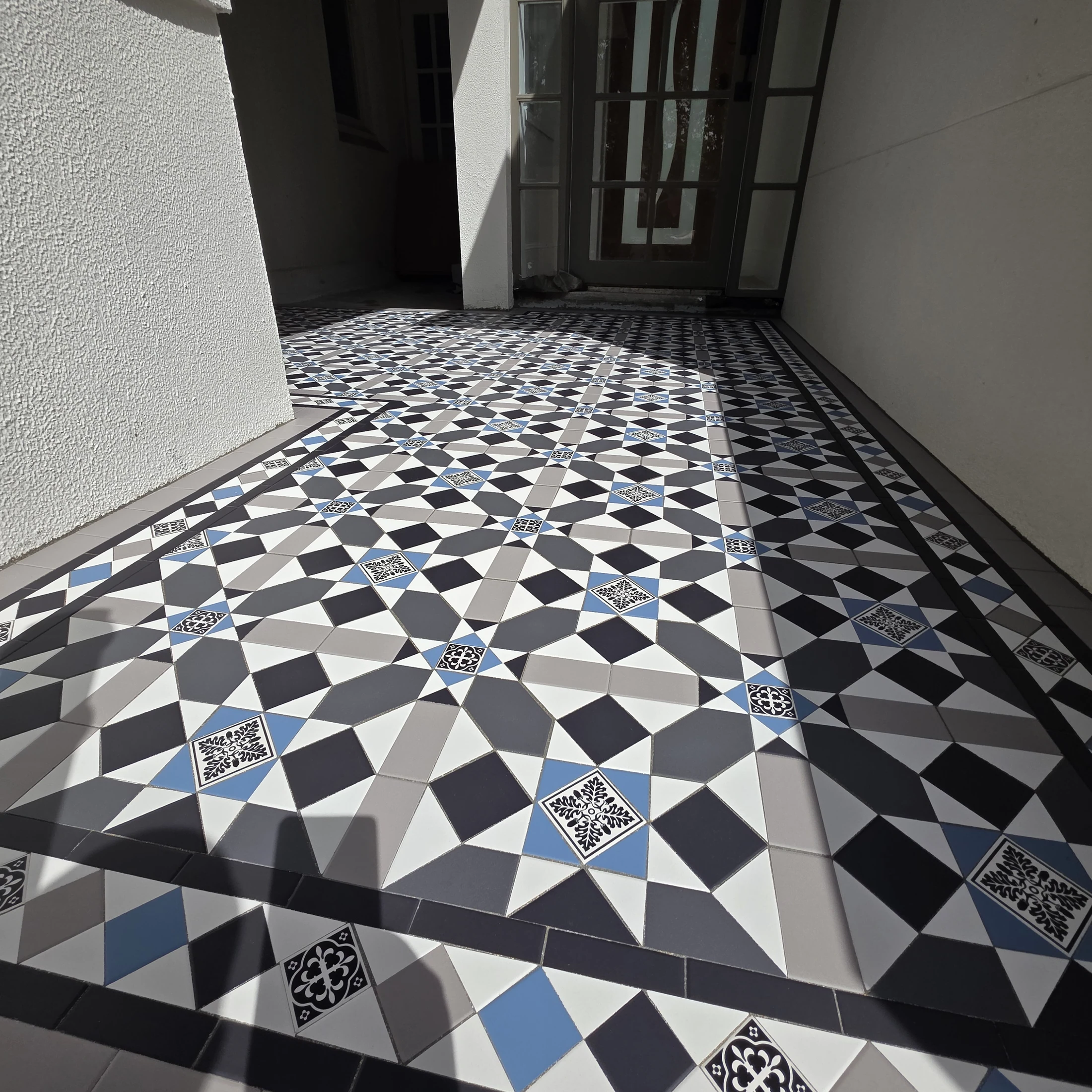
Tiling that responds to Cessnock's regional character
Cessnock's broader built-environment context includes public and commercial buildings, former coalfield places, rural influences and surviving residential fabric. Council's heritage guidance also records Victorian and Federation-era forms with verandahs, brickwork, leadlight, tiled or brick pathways and brick-edged gardens. These references can inform a respectful design conversation without suggesting that every Cessnock property has the same period or heritage status.
A new tessellated layout may suit a verandah, entry path or garden transition when its scale, border treatment, tones and relationship to the building are considered together. For an existing floor, the first question is what remains: original tiles, later repairs, an altered substrate, or evidence of an earlier pattern. Recording the condition before intervention helps separate retention and repair from new work.
Check the property before changing heritage fabric
Cessnock City Council says its region contains heritage items and heritage conservation areas, and directs owners to the Local Environmental Plan, a planning certificate, the NSW Planning Portal Spatial Viewer or the State Heritage Inventory. A property-specific check is sensible before removing, covering or altering an established tiled surface, particularly where a verandah, pathway, masonry edge or setting contributes to the property's character.
Heritage listing does not make every home identical and tile work is not automatically endorsed by a council. Where controls apply, the scope, materials and method should be considered with the relevant planning information and, where needed, advice from the Council Heritage Officer or an appropriately experienced heritage professional.
From pattern selection to careful restoration
Design consultation can address the visual rhythm of the pattern, border and field, transitions at thresholds, and how the proposed work sits beside brick, rendered walls, timber details or stone edging. Supply and installation planning should follow the actual dimensions, access and condition of the site rather than a one-size-fits-all specification.
For restoration, the aim is to understand and retain significant existing fabric where practical. Council's design guidance recommends research, close inspection, records before change and compatible repair materials. A condition review can help determine whether selective repair, carefully matched replacement or a new adjacent area is the most appropriate response.
A Cessnock service page within the Hunter Region
Cessnock is part of the Hunter Region, which includes Greater Newcastle as a major centre but is not the same thing as a Sydney metropolitan suburb. This page keeps the local Cessnock focus while connecting customers with the broader Hunter service area for design, supply, installation and restoration enquiries.
Your Heritage Tiling Questions
Are all Cessnock homes heritage listed?
No. Cessnock City Council distinguishes heritage items, conservation areas and other heritage places, and recommends checking the property through the Local Environmental Plan, a planning certificate, the NSW Planning Portal Spatial Viewer or the State Heritage Inventory. A characterful building is not automatically a listed property.
Can tessellated tiles suit a Cessnock verandah or pathway?
They can, when the pattern, scale, border, thresholds and surrounding materials are designed for the particular building and site. Cessnock's heritage design guidance identifies tiled or brick pathways and brick-edged gardens among local built-environment details, but it does not make one treatment appropriate for every property.
What should happen before restoring an older tiled floor?
Begin with a condition review and record the existing surface, edges, pattern and alterations. Council's guidance recommends understanding the history and physical fabric before decisions are made, retaining original features where possible and using appropriate advice for major work.
Do I need to check planning controls before tile work in Cessnock?
If the property is a heritage item, in a heritage conservation area or otherwise affected by heritage controls, special planning requirements may apply. Check the relevant property records and seek property-specific advice before removing or changing significant fabric; the Council Heritage Officer can advise on proposed works and materials.
Discuss Your Heritage Tiling Project
Share your location, project details and photographs using our enquiry form, or call 0433 932 711.