
Tessellated tiles in Milsons Point
Milsons Point sits beside Sydney Harbour and the northern approaches of the Sydney Harbour Bridge. Its documented local story brings together transport infrastructure, waterfront places, changing Alfred Street buildings and later apartment development. For a tiling project here, the right starting point is the property itself: understand the existing floor or pathway, decide whether the work is new or restorative, and check any applicable North Sydney heritage controls before work begins.
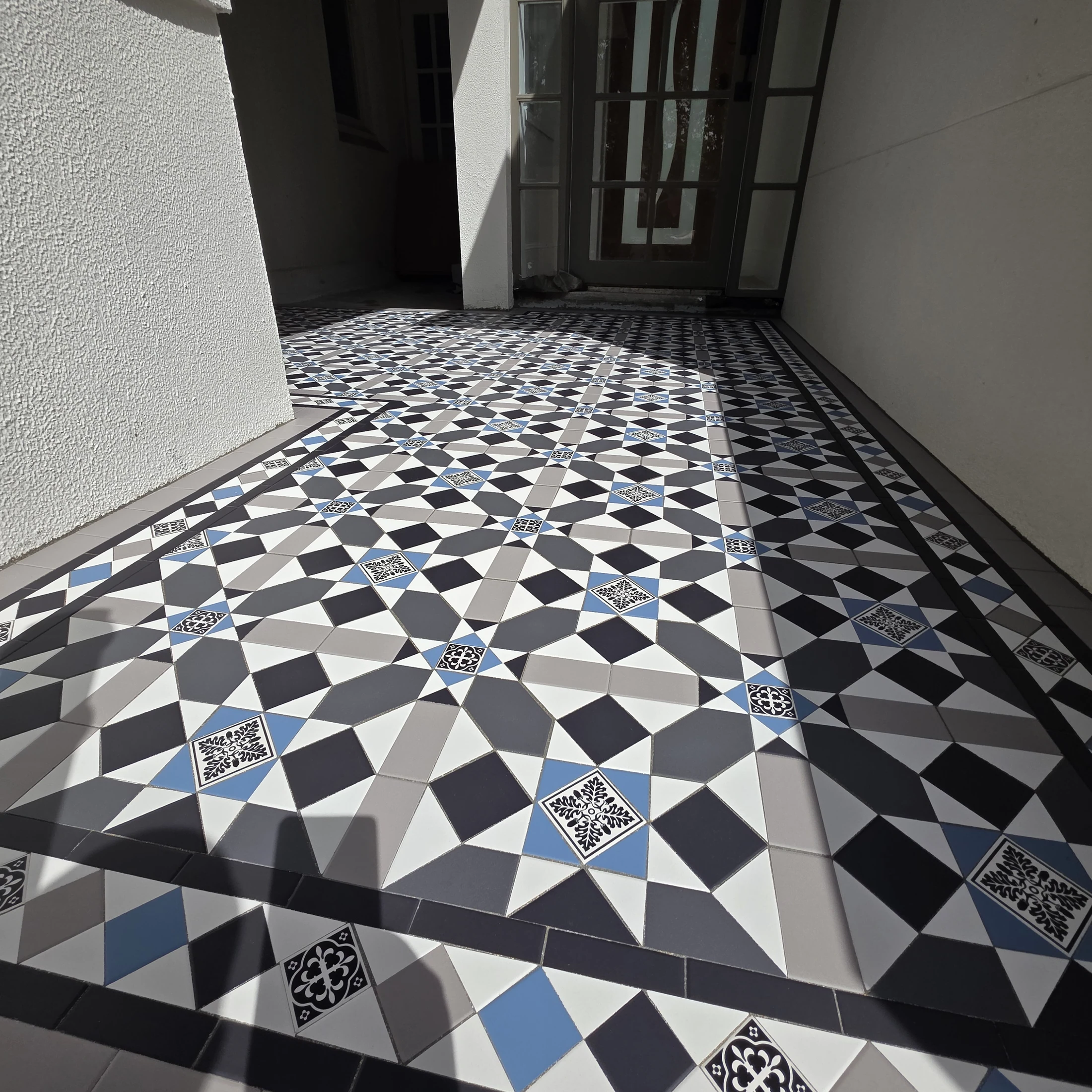
A harbour setting shaped by transport and change
North Sydney Council's Milsons Point and Lavender Bay history walk describes the area as a major transport hub from the 1860s to the 1930s. The Council records the deep change brought by Sydney Harbour Bridge construction between 1924 and 1932, while the Dictionary of Sydney traces the earlier role of ferries, trams and rail in connecting the lower north shore with the city.
That layered setting is useful design context rather than a claim that every property shares one architectural style. A new tessellated floor, verandah or pathway can take cues from the scale, circulation and setting of the individual property, while restoration should begin with what survives rather than an assumed period pattern.
Milsons Point and Lavender Bay History Walk - North Sydney Council
Plan from the building and its existing fabric
For an existing floor or threshold, document the pattern, border, transitions, wear and any areas that have already been altered. Matching decisions are strongest when they are based on retained evidence from the property, not on a generic idea of what a Milsons Point home should look like.
For new work, consider how the layout meets entries, stairs, garden edges and harbour-facing outdoor areas. Design consultation can help coordinate the pattern and edge treatment with the property's proportions and the practical demands of access and exposure. Installation planning should follow the assessed site conditions rather than a universal substrate recipe.
Milsons Point and Lavender Bay History Walk - North Sydney Council
Check heritage controls before changing established fabric
North Sydney Council explains that heritage items are individual buildings, structures or places, while conservation areas protect a cohesive sense of place that can include building materials, streetscapes, landscaping and subdivision patterns. The Council's interactive mapping and the NSW State Heritage Inventory are the appropriate places to check a property's status.
Council guidance also notes that controls can affect demolition, additions, openings, fences and significant site features such as sandstone retaining walls, rock faces, kerbs, gutters, seawalls and decorative elements. These are property-specific planning matters. A tiling consultation can help identify what should be documented and retained, but it is not heritage approval and does not replace advice from the relevant authority.
Heritage property protection and regulationsHeritage property restrictions
Design inspiration and careful craftsmanship
Milsons Point's documented relationship with the Harbour, its transport routes and its changing public landmarks can inform a restrained design approach: clear borders, readable geometry, considered transitions and a pattern that belongs to the building rather than competing with its setting.
Where original or older tiles remain, restoration may involve recording the arrangement, assessing condition, identifying what can be retained and coordinating selective repairs. Where the project is new, supply and installation can be planned together so that the chosen tessellation, edging and installation sequence suit the measured site. Stone bullnose or edging coordination can be considered where the design requires a durable, resolved edge.
Milsons Point and Lavender Bay History Walk - North Sydney CouncilHeritage property protection and regulationsHeritage property restrictions
Recognise significant places without generalising them
Milsons Point contains places of documented heritage and cultural interest, including the station and the local sites recorded by North Sydney Council. In September 2025, the NSW Heritage Council also recommended State Heritage Register listing for the Seidler Offices and Penthouses at Glen Street. That recommendation concerns a specific property and should not be read as a suburb-wide heritage listing or as evidence that a private project has approval.
For any address, confirm the applicable listing, conservation-area status and approval pathway before altering established fabric. The useful tiling response is then shaped around the actual property, its evidence and the work being proposed.
Milsons Point and Lavender Bay History Walk - North Sydney CouncilState Heritage Register Committee - Resolutions, 2 September 2025Heritage property protection and regulations
Your Heritage Tiling Questions
Can tessellated tiles suit a Milsons Point property?
They can be considered where the pattern, scale, edge treatment and installation approach suit the individual building and setting. The documented harbour, transport and redevelopment history provides context, but it does not prescribe one pattern for every property.
What should be checked before restoring an older tiled area?
Record the existing pattern and condition, identify alterations and check whether the property or surrounding area is subject to North Sydney heritage controls. Significant site elements and neighbouring heritage settings may also matter.
Does the Seidler heritage recommendation apply to all Milsons Point homes?
No. The 2025 Heritage Council resolution concerns Seidler Offices and Penthouses at Glen Street and is a property-specific recommendation. It is not a suburb-wide listing or a general approval for other properties.
Can a tiling consultation confirm heritage approval?
No. A consultation can help document the proposed tiling work and coordinate design, supply, restoration or installation considerations. Heritage status and any required consent must be confirmed with the relevant authority for the property.
Discuss Your Heritage Tiling Project
Share your location, project details and photographs using our enquiry form, or call 0433 932 711.