
Tessellated tiles in Mount Eliza
Mount Eliza homes sit within a Peninsula setting where gardens, coastal outlooks and established street character can be as important to the design as the floor itself. We help plan tessellated tile layouts, supply, installation and restoration for interiors, verandahs, entries and pathways, with recommendations shaped around the property and the fabric that is already there.
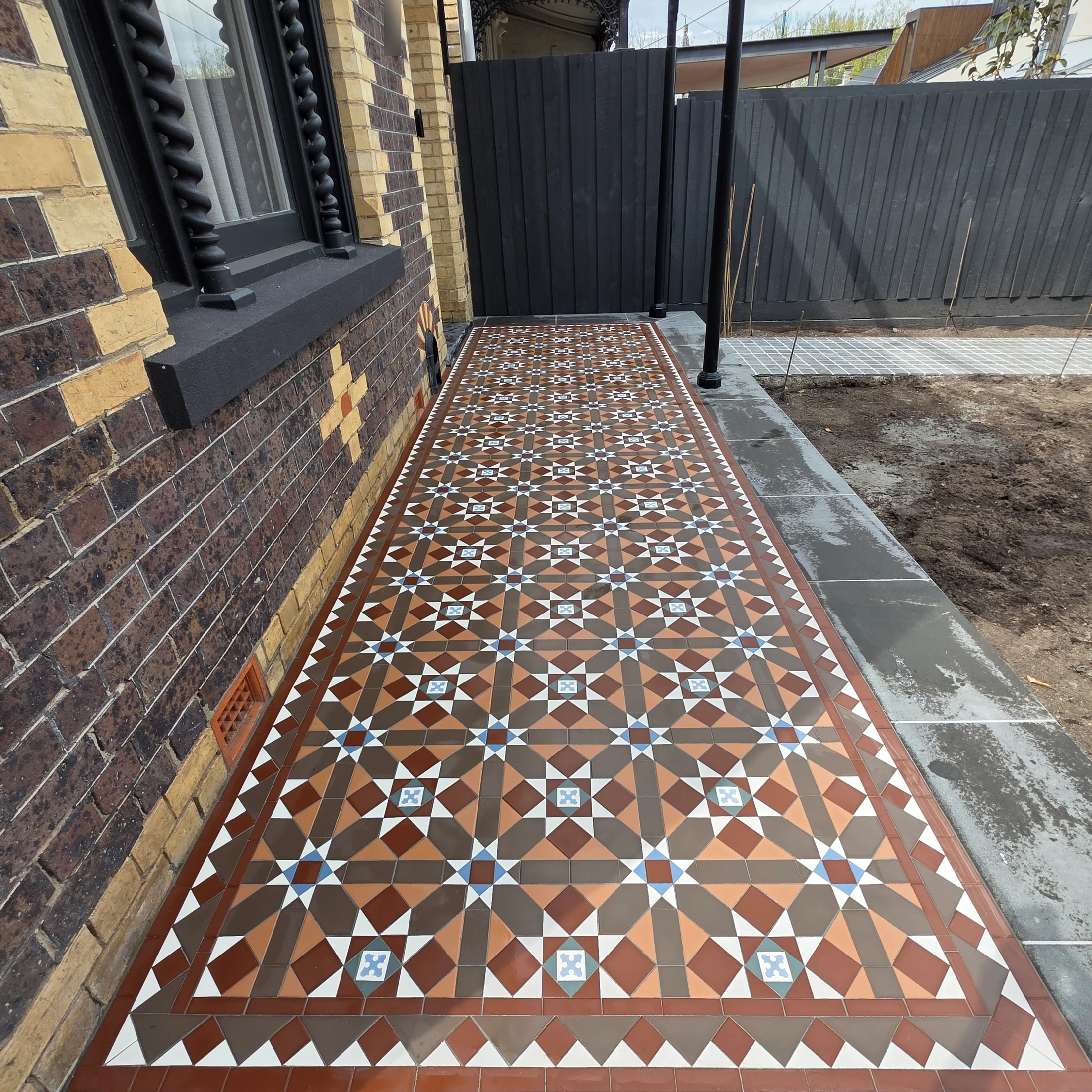
A Peninsula setting with its own design language
The Mornington Peninsula Planning Scheme describes Mount Eliza as a large township activity centre and emphasises the relationship between built form, landscape and local character. That makes proportion, transitions and the way a tiled surface meets gardens or existing masonry important parts of a considered design.
A Mount Eliza project may be a new pattern for a contemporary renovation, a sympathetic replacement for a tired entry, or careful work around surviving tiles. The right direction depends on the building, the adjoining surfaces, drainage and the visual rhythm of the site rather than on a suburb-wide rule.
Designing near Mount Eliza heritage places
Ranelagh Estate is a particularly important local reference point. It was designed in 1924 by Walter Burley Griffin, Marion Mahony Griffin and Saxil Tuxen, and its cultural significance is managed through heritage documentation and a conservation management plan.
If a property is in Ranelagh Estate or another heritage overlay, check the applicable controls before changing a verandah, path, crossover or other associated setting. A heritage listing applies to a defined place or area, not automatically to every home in Mount Eliza. Tile choices can be developed alongside the relevant heritage advice, with attention to scale, pattern, edge detail and the retention of sound original fabric.
For properties outside a listed place, the same care can still produce a more coherent result: assess what remains, record useful dimensions and colours, and distinguish repair or matching work from a new installation.
Heritage studies — Mornington Peninsula ShireMornington Peninsula Heritage Review: Area 1 — Mount Eliza, Mornington, Mount Martha
Tessellated tile planning for homes, verandahs and paths
For a new floor, the design conversation can cover pattern scale, border treatment, thresholds and how the tiles relate to joinery, masonry and garden edges. For an existing floor, the first step is understanding condition and identifying which tiles or sections can be retained, repaired or matched.
Outdoor verandahs and pathways need a site-led approach to levels, transitions, exposure and drainage. We can coordinate tessellated tile supply, installation and restoration, and arrange stone bullnose or edging coordination where the design calls for a defined edge.
Start with the property, not a template
Photos, approximate dimensions and a short description of the area can help establish whether the project is primarily design, supply, installation or restoration. Existing tiles, substrate condition, access and the relationship to adjacent surfaces should be reviewed before a final layout is chosen.
Mount Eliza has varied housing and landscape settings, so a pattern that suits one property may be wrong for another. A measured, property-specific discussion helps keep new work visually settled while respecting any surviving character.
Your Heritage Tiling Questions
Does every Mount Eliza property have heritage controls?
No. Heritage controls apply to defined listed places, areas or overlays. Mount Eliza includes the heritage-listed Ranelagh Estate and other assessed places, but a property's status must be checked individually before work is planned.
Can new tessellated tiles suit a Mount Eliza period home?
They can, when the pattern, scale, borders, thresholds and adjoining materials are chosen for that particular building. The design should distinguish a new interpretation from repairs or matching work to original fabric.
What should I consider for a tiled verandah or pathway in Mount Eliza?
Consider levels, drainage, exposure, transitions to garden or driveway areas, edge treatment and how the work meets existing masonry or steps. If the property is within a heritage-listed area, check the relevant controls before changing the setting or associated public-facing elements.
Can existing Mount Eliza tiles be restored rather than replaced?
Often the appropriate direction is determined by the condition and significance of the surviving tiles. An assessment can separate sound original sections, repairable areas, missing tiles and later alterations before a restoration or matching approach is selected.
Discuss Your Heritage Tiling Project
Share your location, project details and photographs using our enquiry form, or call 0433 932 711.