
Tessellated Tiles in Strathmore
Strathmore homes include a mix of early residential fabric, inter-war work and later post-war development. For a verandah, entry, pathway or interior floor, tile choices should respond to the proportions and character of the property rather than applying one period look across every home. We can discuss design, tessellated tile supply, installation, restoration and stone bullnose or edging coordination for projects in Strathmore.
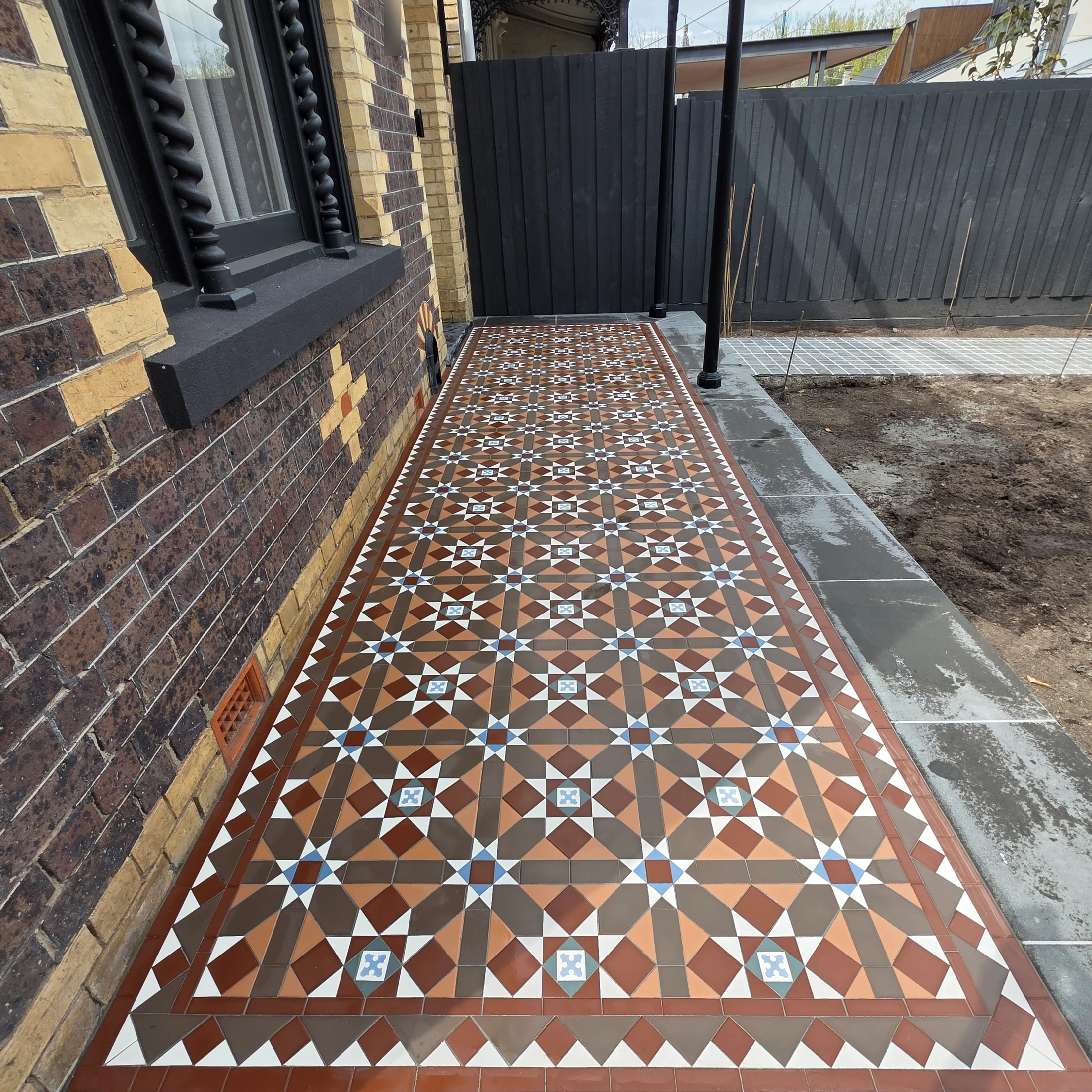
A varied architectural setting
Moonee Valley Council places Strathmore in the municipality's mostly residential north-western Melbourne setting. Local heritage records show why a careful, property-led approach matters: one recorded Strathmore house is an early bungalow with weatherboard and roughcast elements, while a separate church complex brings together a 1936 community hall and a 1962 church. These are useful reminders that the right tile scale, border treatment and colour balance depend on the building and the space being worked on.
A design consultation can consider the existing facade, threshold levels, pathway geometry, adjoining materials and whether original-looking work or a clearly contemporary finish is the better fit. The aim is a coherent result, not an assumption that every Strathmore property is heritage-listed or belongs to one architectural period.
Check the property before changing established fabric
Moonee Valley Council explains that heritage studies identify significant places and can inform Heritage Overlay controls. Its library guide recommends checking the relevant Victorian heritage registers and local planning information for the individual building. If your Strathmore property has established tiles, a distinctive frontage or another documented heritage interest, begin by identifying what is already there and checking the applicable planning information before selecting a repair or replacement approach.
A Heritage Overlay or other planning control is property-specific. It does not mean that every house in Strathmore is protected, and tile work should not be presented as automatically approved. Where approval or advice may be needed, confirm the requirements with the relevant authority before work proceeds.
Moonee Valley Heritage Study 2023Researching the History of a Building — Moonee Valley Libraries
Plan tiles for verandahs, paths and floors
For a Strathmore verandah or front path, proportion is often as important as colour. A border can frame the route, while transitions and edge details need to work with steps, thresholds and drainage. Indoors, the layout can be considered alongside room scale, daylight and the relationship between the floor and existing joinery or masonry.
Where older tiles remain, an assessment can help separate sound original material from loose, damaged or later sections. Restoration may involve retaining what can be kept and coordinating sympathetic new work where a complete match is not possible. New tessellated layouts can also be designed for a contemporary extension without pretending that the extension is historic.
Researching the History of a Building — Moonee Valley Libraries
Tessellated tile services for Strathmore projects
A project can begin with design consultation and a review of the area, followed by tessellated tile supply and installation planning. Existing floors, verandahs and pathways can be considered for restoration, while stone bullnose or edging coordination can help resolve steps and perimeter details. The appropriate scope depends on the property, the substrate and the condition of any surviving work.
Share the location and the type of space you are considering so the discussion can focus on the building's proportions, the intended use and the finish you want to achieve.
Your Heritage Tiling Questions
Are all Strathmore homes covered by a Heritage Overlay?
No. Heritage controls are property-specific. Moonee Valley Council and the Victorian Heritage Database identify selected places and overlays, so check the particular property and current planning information rather than assuming suburb-wide protection.
Can tessellated tiles suit a newer Strathmore extension?
They can, provided the layout is designed for the extension rather than made to imitate an older building inaccurately. Scale, colour, borders, thresholds and the relationship to the existing home can guide a contemporary but connected result.
Can an existing tiled verandah or pathway be restored?
An assessment can identify which tiles and edges are sound, where sections are loose or damaged, and whether restoration, selective replacement or a new layout is the most suitable response. The condition of the actual surface determines the practical scope.
What should I check before changing tiles on an older property?
Record the existing fabric, check the relevant council planning information and Victorian heritage records, and ask whether any overlay or other control applies to the property. If a planning approval or heritage advice may be required, confirm that before work begins.
Discuss Your Heritage Tiling Project
Share your location, project details and photographs using our enquiry form, or call 0433 932 711.