
Tessellated Tiles in Cumberland Park
Cumberland Park combines an established metropolitan setting with locally recognised residential character. The City of Mitcham identifies parts of the suburb within a Character Area Overlay, while Cabra Convent, Boarding School, Chapel and Gatehouse is recorded as a State Heritage Place. For a verandah, pathway, entry or interior floor, the most useful starting point is the property itself: its proportions, surviving surfaces, transitions and the way new work will sit alongside the building. AHTC can assist with tessellated tile design consultation, tile supply, installation and restoration, with stone bullnose or edging coordination where it suits the design.
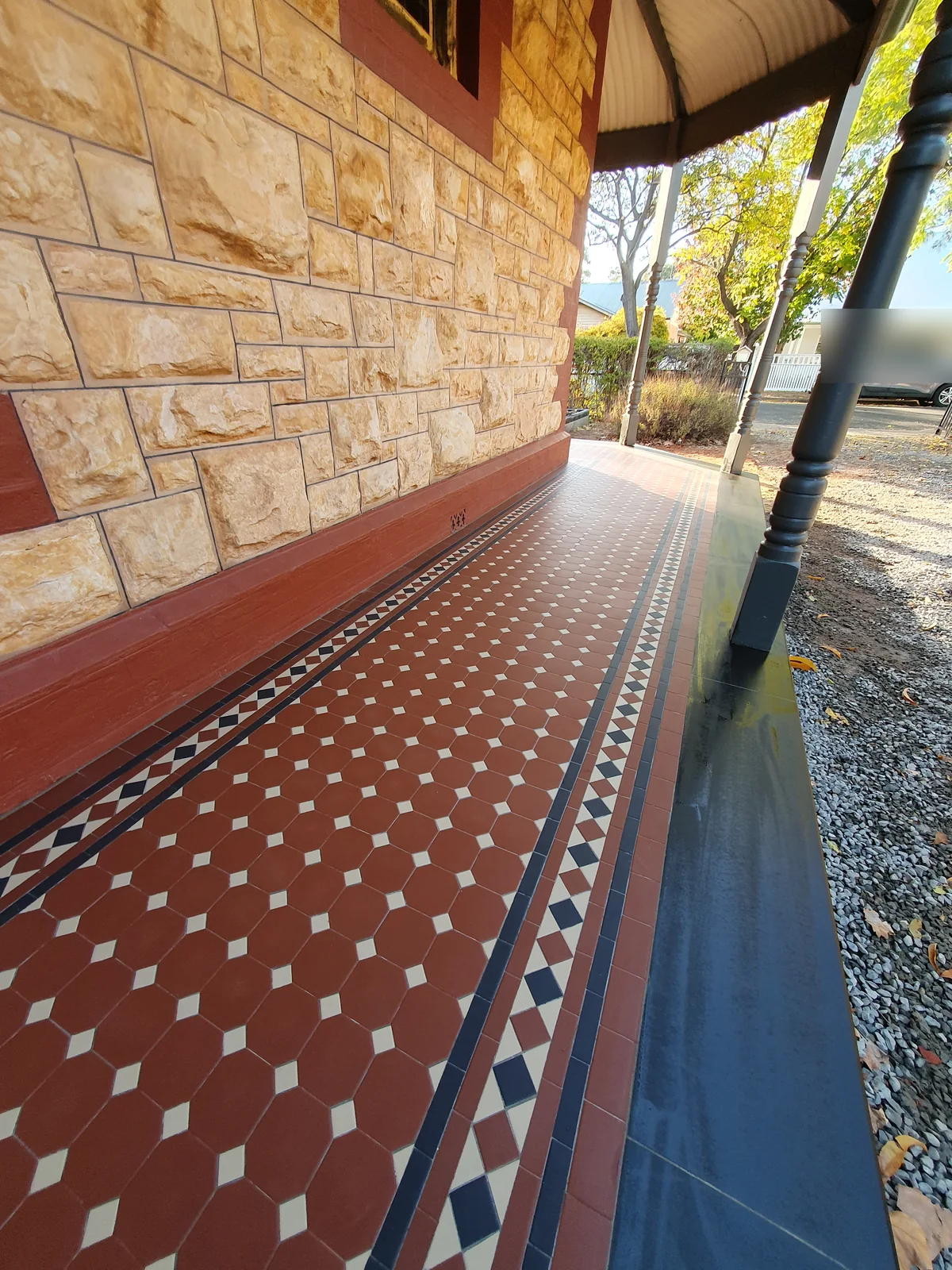
Designing with Cumberland Park's local character
Mitcham's character-area work considered matters such as building stock, subdivision pattern, frontages, setbacks, site coverage and private open space. Those factors are useful design prompts, not a universal tile pattern for every address. A restrained border, a clear threshold and proportions that respect the existing approach can often matter as much as the individual colours in a tessellated layout.
The council distinguishes residential character from heritage listing. That distinction is important when planning tile work: a character-area setting can encourage a careful response, but it does not by itself establish that a particular house is heritage listed or that a particular treatment is automatically approved.
Heritage context and property-specific checks
Cumberland Park has a documented institutional history that includes the opening of Cabra Catholic Convent in 1886. Cabra Convent, Boarding School, Chapel and Gatehouse is separately recorded in the South Australian Heritage Places Database as a State Heritage Place. That history can inform a respectful approach to scale, colour and transitions, but it is not evidence that every nearby dwelling shares the same age or architectural character.
Before work affecting a listed place or its setting, check the current South Australian Heritage Register and Planning and Design Code position for the specific property. The heritage database notes that development implications cannot be deduced from the listing record alone. AHTC's role is to help assess the tile brief and coordinate an appropriate design response; any statutory advice or approval must come from the relevant authority.
Verandah, pathway and entry tile planning
For a Cumberland Park verandah or front path, begin with the route people use, the width of the landing, door thresholds and the relationship between the paving and the facade. A border can clarify an edge, while a field pattern can be kept quieter where the setting already has strong brickwork, stone or planting. Where an existing tiled surface remains, recording its dimensions and condition before lifting or adding to it helps guide matching and selective restoration decisions.
Supply and installation can be planned together so that the selected pattern, edge treatment and site constraints are considered as one brief. Stone bullnose or edging coordination may be appropriate at steps, exposed path edges or transitions, subject to the actual site and the chosen finish.
Restoration or a new tessellated layout
A restoration discussion should distinguish sound original fabric from later repairs, movement, moisture effects and areas that need replacement. New work may call for a different design decision from repair work, even on the same property. A site review can consider the existing pattern, available matching options, levels and the intended use before a scope is settled.
For homes within or near a character or heritage context, preserve the useful evidence of the place without assuming a period style that has not been established. The aim is a coherent, durable tile treatment that responds to the property and its setting.
Your Heritage Tiling Questions
Does a Cumberland Park Character Area Overlay mean my home is heritage listed?
No. The City of Mitcham distinguishes residential character from heritage. An overlay identifies planning considerations for parts of the suburb; it does not mean every property is a listed heritage place. Check the specific address through the current South Australian planning and heritage information before finalising affected work.
What local heritage context should be considered when planning tiles in Cumberland Park?
The City of Mitcham records the opening of Cabra Catholic Convent in Cumberland Park in 1886, and the South Australian Heritage Places Database records the Cabra Convent, Boarding School, Chapel and Gatehouse group as a State Heritage Place. Those facts provide context, but they do not establish the age or style of an individual home.
Can a new tessellated pathway or verandah be designed for a character-area property?
A character designation is not described by Mitcham Council as a no-development scenario. The design should respond to the individual property's proportions, setbacks, existing materials and access, with any required planning or heritage checks completed for that property before work begins.
How should an existing tessellated floor be assessed before restoration?
Record the existing pattern, dimensions, condition, thresholds and any areas of movement or moisture before deciding between selective repair, matching and broader replacement. A property-led assessment helps separate original fabric from later work and keeps the restoration brief proportionate to what is actually present.
Discuss Your Heritage Tiling Project
Share your location, project details and photographs using our enquiry form, or call 0433 932 711.