
Tessellated tiles in Moreland West
Planning tessellated tiling around Moreland West? We can help with design consultation, tile supply, installation and restoration for floors, verandahs and pathways. Moreland West is a historical name associated with the Coonans Hill area, so property-led advice should begin with the address, the home's surviving details and the relevant current locality context.
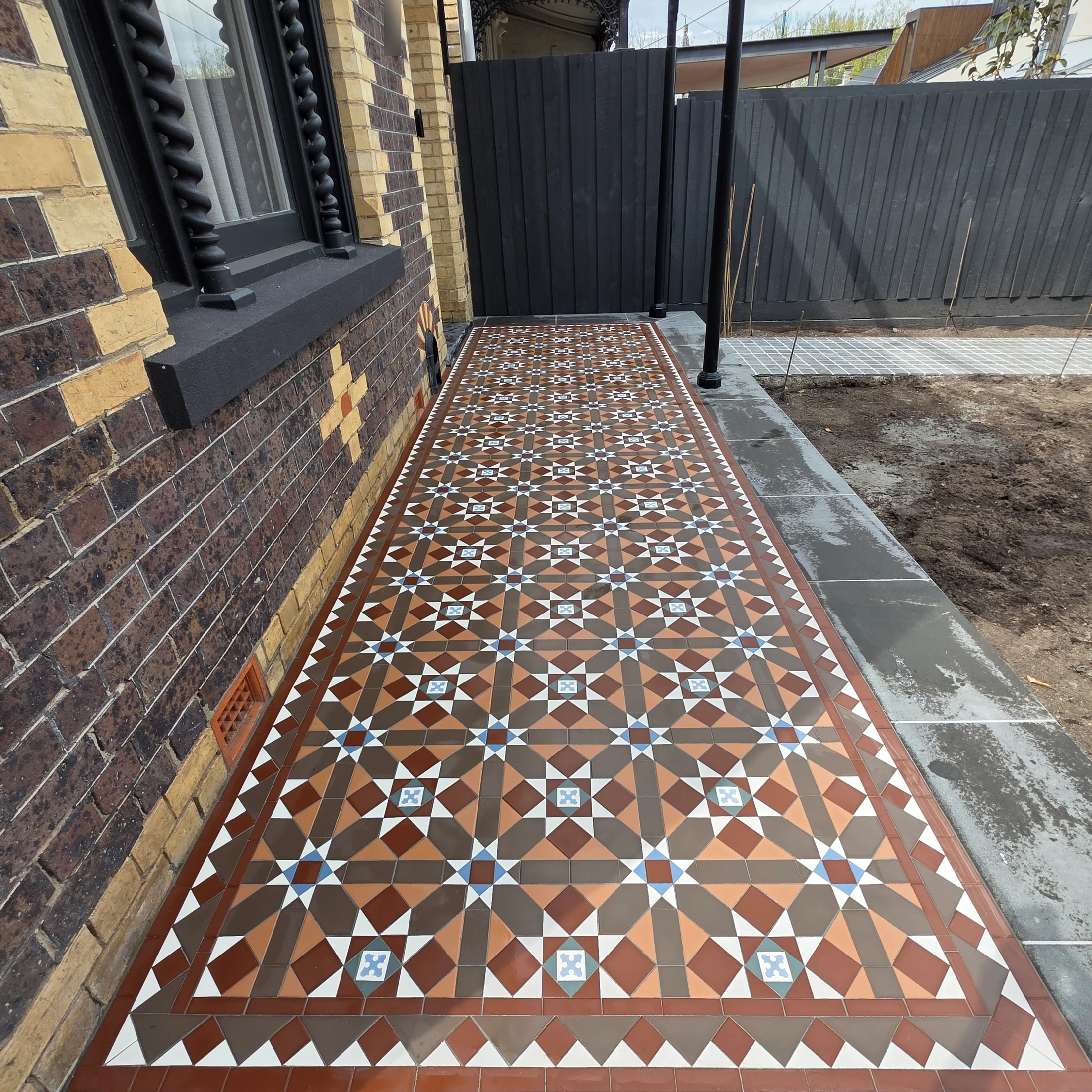
A careful approach to Moreland West's layered local context
Moreland West was used in the 1940s for the Coonans Hill area, now associated with Pascoe Vale South. Today the surrounding service area sits within Merri-bek, an inner-northern Melbourne municipality. Using the historical name as a search reference while checking the property's current locality helps keep the design conversation precise.
The wider Moreland area developed in stages, from early residential growth around the railway to later tram-enabled expansion and interwar housing. That history can inform proportion, entry sequence and palette choices, but it is not a reason to assume that every home is heritage-listed or that one pattern suits every street.
Designing tiles around period details
Documented nearby examples include Federation and Edwardian homes, Closer Settlement cottages and villas, and cohesive interwar bungalow streetscapes in Brunswick West. When a front path, porch or verandah is visible from the street, tile scale, border rhythm and transitions can be considered alongside the existing roofline, joinery, brickwork and entry proportions.
A useful consultation separates original fabric from later work. Existing tiles may need condition assessment and careful matching, while a new pathway or verandah can take its cues from the house without pretending to reproduce an undocumented original. Stone bullnose or edging coordination can help define thresholds and protect the visual relationship between paving, garden and facade.
Restoration, supply and installation for the property
For an existing tessellated floor, the practical starting points are its condition, pattern, drainage, thresholds and areas of loss. Restoration may involve documenting what remains and planning sympathetic repairs rather than replacing sound original work unnecessarily. For new work, design consultation can coordinate tessellated tile supply, layout and installation around the site's access, levels and intended use.
Merri-bek's planning policy encourages context-responsive design and detailed street frontages, while heritage controls and permit questions depend on the individual property. A tile consultation can support design decisions, but it is not heritage authority approval; check the current planning and heritage position for the property before works begin.
Your Heritage Tiling Questions
Is Moreland West a current suburb?
Moreland West was a 1940s name for the Coonans Hill area, now associated with Pascoe Vale South.
Can tessellated tiles suit a Brunswick West or Merri-bek period home?
They can be considered where the layout, scale and palette work with the home's surviving character. Nearby documented examples include Federation/Edwardian houses and interwar bungalows, but each property's fabric and setting should guide the design rather than applying a standard period pattern.
Can you restore an existing tessellated verandah or pathway?
Yes, restoration planning can begin with the surviving pattern, tile condition, thresholds and drainage. The appropriate balance between repair, selective replacement and new work depends on what remains at the property and how the area is used.
Do I need to check heritage or planning requirements before tiling?
Check the current position for the individual property, especially where work affects a visible frontage or a place with a heritage control. Merri-bek policy supports context-responsive design and protection of valued heritage places, but a general service consultation is not a planning permit or heritage approval.
Discuss Your Heritage Tiling Project
Share your location, project details and photographs using our enquiry form, or call 0433 932 711.