
Tessellated Tiles Glenroy
Glenroy sits in Melbourne's north within the City of Merri-bek, where established residential streets meet an activity centre planned for ongoing change. For a verandah, entry path or interior floor, tessellated tiles can be selected to suit the proportions and character of the property rather than applied as a one-size-fits-all pattern. AHTC can help with design consultation, tile supply, installation and restoration planning for Glenroy projects.
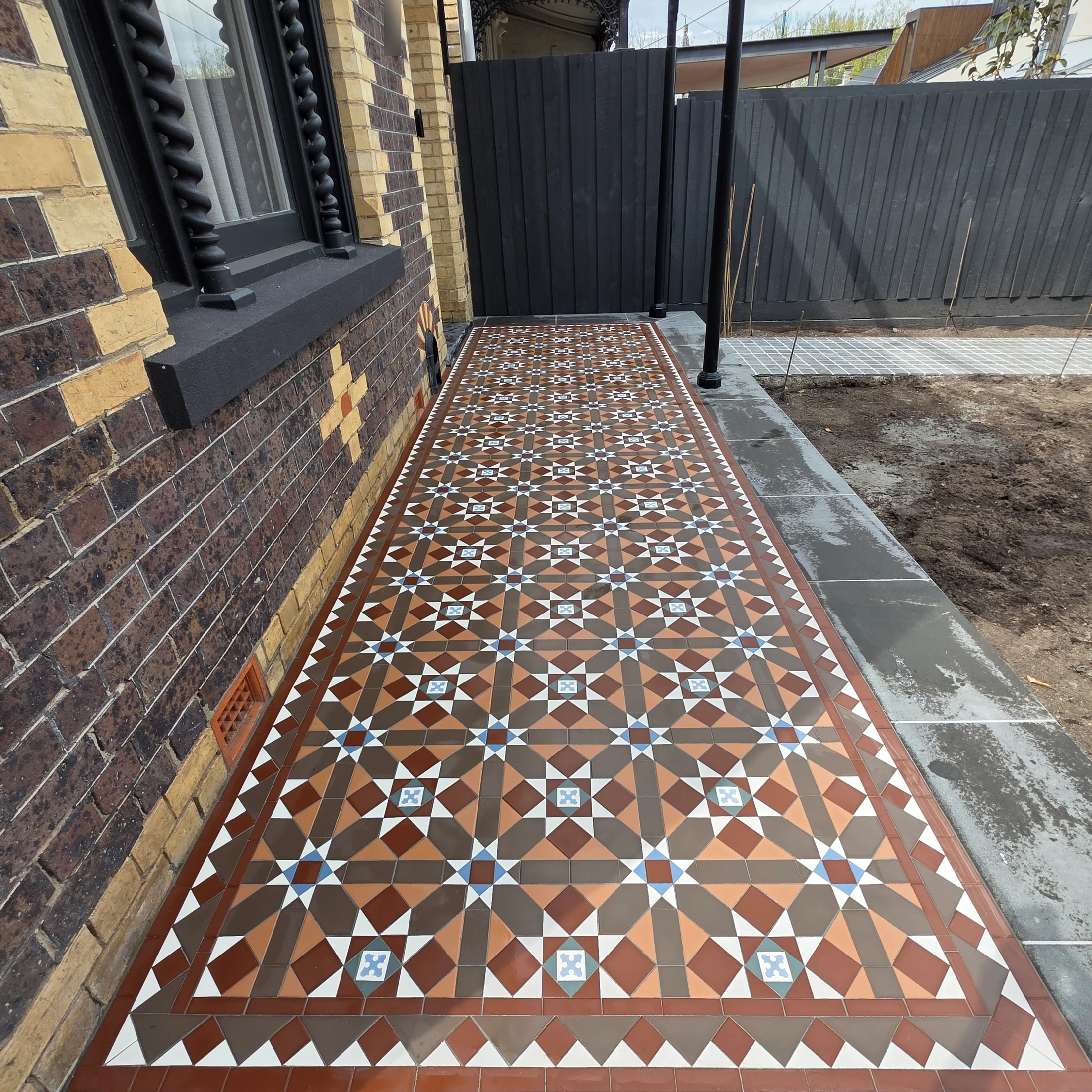
A Glenroy context for tile design
Merri-bek's Glenroy Structure Plan describes an activity centre extending around Pascoe Vale Road and Wheatsheaf Road, the railway-side industrial area and adjoining land. That planned change makes it useful to treat each property on its own terms: a long-established frontage, a newer alteration and a mixed-use setting may call for different proportions, borders and transitions.
The local heritage study identifies Glenroy Public Hall and Glenroy Uniting Church as heritage places. Those records are important prompts for careful observation, but they do not mean every house in Glenroy is heritage listed. If a property has a heritage control or sits near a documented place, confirm the relevant planning and heritage position before work begins.
Plan the pattern, edges and transitions together
For Glenroy verandahs and pathways, the useful starting points are the available width, the entry alignment and how the tiled area meets steps, garden edges or other paving. A border can clarify a narrow threshold, while a simpler field may sit more comfortably across a broader area. Colour and geometry should be considered alongside brickwork, joinery and the amount of original fabric that remains.
Design consultation can be coordinated with tessellated tile supply and installation so the selected layout is considered before ordering. Stone bullnose or edging coordination may also be relevant where a tiled edge meets a step or exposed transition.
Restoration-led decisions for existing Glenroy tiles
Where older tiles survive, an assessment should distinguish sound original work from later repairs, movement, staining or sections that have been replaced. Retaining a repairable area may produce a more coherent result than removing it solely to create a new uniform surface; the practical choice depends on condition, matching options and how the area is used.
Before changing a property with a heritage overlay or another planning control, check the applicable requirements with the relevant authority. AHTC's role is to help develop a tile and restoration approach; it is not an approval authority.
Your Heritage Tiling Questions
Are all Glenroy homes heritage listed?
No. The Merri-bek heritage study identifies particular Glenroy places, including Glenroy Public Hall and Glenroy Uniting Church. That does not establish heritage protection across the whole suburb. Check the specific property and applicable planning controls before work starts.
Can tessellated tiles suit a newer Glenroy renovation?
They can, when the pattern, scale, colours and edge treatment are designed to relate to the existing building and the proposed alteration. A restrained border or a clearly defined entry zone can help the tiled work feel intentional without pretending that new work is original fabric.
What should I consider for a Glenroy verandah or pathway?
Consider the width and fall of the area, the entry sequence, step and paving transitions, exposure to weather and the relationship to the facade. These decisions affect both the pattern layout and the practical detailing at the edges.
Can existing Glenroy tiles be restored rather than replaced?
Often the first step is an assessment of what remains, including loose or damaged areas, previous repairs and whether a close match is practical. A restoration or selective replacement approach can then be considered alongside how the space needs to perform.
Discuss Your Heritage Tiling Project
Share your location, project details and photographs using our enquiry form, or call 0433 932 711.