
Tessellated tiles in Ringwood
Ringwood brings together established residential streets, a major retail and commercial centre, and a changing activity-centre core around the station. For a verandah, pathway, entry or interior floor here, the right tile direction depends on the property, the existing surface and the way new work meets older details. We can help with design consultation, tessellated tile supply, installation, restoration and stone bullnose or edging coordination.
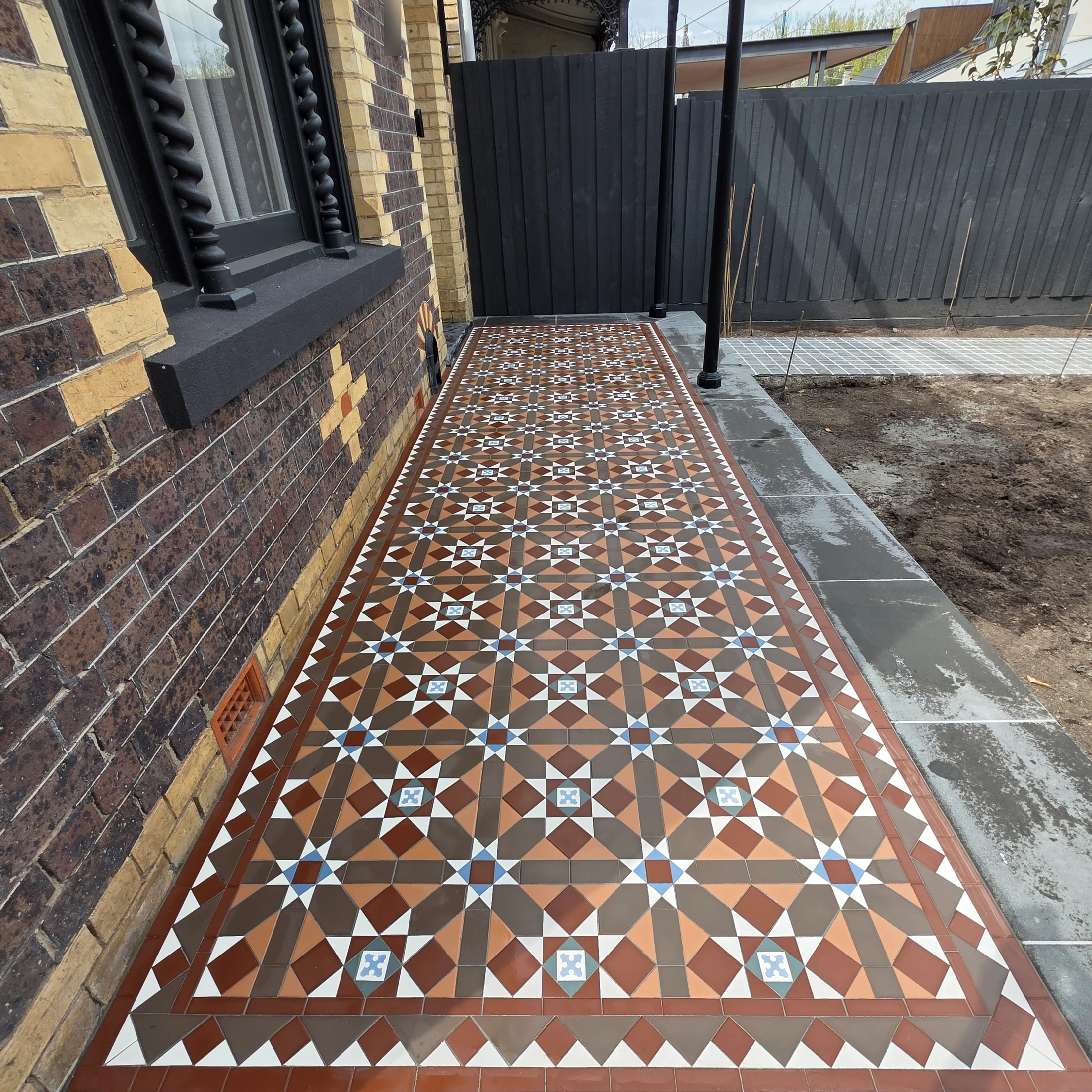
A varied Ringwood setting calls for a property-led tile design
Maroondah describes Ringwood as having grown from a rural settlement into a substantial Melbourne residential, retail and commercial centre. That mix means a suitable tessellated layout may be quite different from one property to the next. A simple border and restrained colour relationship can sit comfortably in a period-influenced entry, while a newer renovation may call for a clearer transition between original-looking pattern work and contemporary surfaces.
The Ringwood Activity Centre is also changing, with taller development concentrated in the core and lower-rise housing planned in the surrounding catchment. Where an older dwelling is being adapted or an entry is being renewed beside newer work, proportions, thresholds, levels and sightlines deserve attention before a pattern is selected.
A design consultation can consider the room or outdoor approach as a whole: pattern scale, border placement, colour balance, drainage and exposure for external areas, and how edging or bullnose details finish the junctions. The aim is a coherent result rather than a generic pattern applied without regard to the property.
Working carefully around Ringwood's documented heritage context
Ringwood Railway Station retains brick and timber buildings from the late nineteenth and early twentieth centuries, while the Memorial Clock Tower provides a later local landmark with a rendered Baroque form and Modernist clockface. These places are not a claim that every Ringwood property is heritage-listed, but they show why period cues and surviving fabric should be assessed rather than assumed.
If a property sits within a heritage overlay or has identified heritage significance, begin by checking the property's current planning and heritage controls before altering original tiles, thresholds or associated details. A heritage-sensitive tile assessment can separate repairable original work from later additions and consider matching, selective replacement, edge treatment and the visual relationship between old and new. Any required permit or planning advice comes from the relevant authority for the individual property; tile work is not automatically approved by undertaking it carefully.
For new work, the same discipline remains useful even where no heritage control applies. Record the existing pattern and levels, check the substrate and transitions, and choose a layout that works with the architecture instead of presenting a false claim of historical replication.
Tessellated tile services for Ringwood properties
For Ringwood projects, the work may involve designing a new tessellated floor, sourcing tiles for an established pattern, installing a verandah or pathway, or restoring a tired section while retaining as much sound material as practical. We can also coordinate stone bullnose or edging where a step, border or transition needs a considered finish.
Before recommending a direction, the assessment should account for the property's use, access, exposure, existing tile condition, levels and the relationship between adjacent finishes. Restoration and installation are different decisions: repairing a surviving surface may call for careful matching and selective intervention, while a new area can be designed around the available space and the desired relationship with the building.
Your Heritage Tiling Questions
Can tessellated tiles suit a Ringwood home near the activity centre?
Yes, but the design should respond to the building and site rather than assume one Ringwood style. A consultation can consider pattern scale, borders, thresholds, levels and how the tilework sits beside newer alterations or other finishes.
Does a heritage place in Ringwood mean every nearby home needs heritage approval?
No. Ringwood's documented railway station and memorial clock tower are specific heritage places, and heritage controls are property-specific. Check the individual property's current overlay and planning information before altering original fabric or commencing work that may be controlled.
Can existing tessellated tiles be restored instead of replaced?
Often the first step is an inspection of the existing tiles, substrate, edges and areas of loss. If sound original or established fabric can be retained, the restoration approach can focus on careful cleaning, matching and selective repair rather than treating the whole floor as new work.
Are tessellated tiles suitable for a Ringwood verandah or pathway?
They can be, provided the design and installation account for exposure, drainage, levels, movement and the transition into the house or garden. Border proportions and edge details should be resolved with the actual site dimensions rather than selected from a generic layout.
Discuss Your Heritage Tiling Project
Share your location, project details and photographs using our enquiry form, or call 0433 932 711.