
Tessellated tiles in Warradale
For a Warradale verandah, entrance, path or interior floor, tessellated tile work needs to suit the building, the pattern and the way the space is used. We can help with design consultation, tile supply, installation, restoration and stone bullnose or edging coordination. Where a property has heritage significance, begin with the existing fabric and check the property-specific planning position before work is scoped.
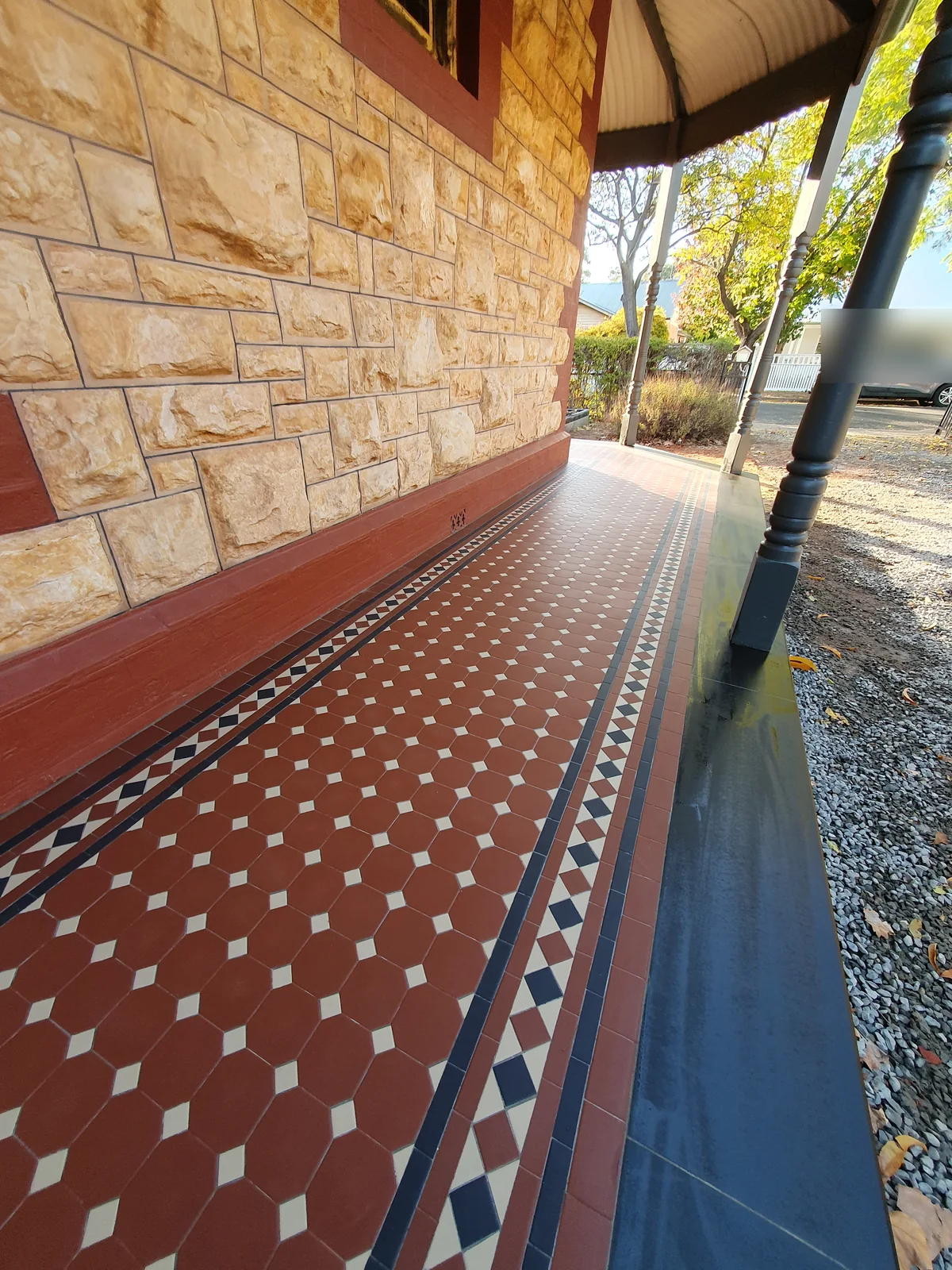
A property-led approach for Warradale homes
Warradale sits in Adelaide’s south-west metropolitan area. Its local setting includes established residential streets and neighbourhood open space, while the official heritage record identifies particular local heritage places rather than a suburb-wide heritage designation. That distinction matters: a period appearance or an older address can inform a careful design discussion, but it does not by itself establish statutory protection.
For a new verandah or pathway, layout, thresholds, drainage, sun exposure and the relationship between the hard surface and garden edges should be considered together. At Warradale Park Reserve, the City of Marion describes landscaped areas, large trees and hard-surface paths. A private project is different, but the same practical questions about transitions, levels, water movement and tree-aware detailing can be useful when planning outdoor tile work.
When a Warradale property has heritage significance
The South Australian Heritage Places Database lists individual local heritage places in Warradale, including dwellings and a former dwelling now used as Marion Community House. If your property appears in a heritage register or council list, document the existing tiles, borders, steps and edging before removing anything. A measured condition review can help separate sound original work from later repairs and identify what may be retained, matched or carefully replaced.
The City of Marion advises that development affecting a Local Heritage Place can include alteration, addition, removal or other work that may materially affect heritage value. Tile advice is not approval advice, so confirm the current planning and heritage requirements for the exact property before committing to demolition, façade changes or work near a listed element.
Design, supply and installation details
A useful design brief records the intended pattern, border treatment, colour balance, dimensions, slip and wear expectations, and the way the tiled area meets walls, garden beds, steps or other paving. For a restoration, surviving fragments or adjacent rooms may provide better matching evidence than a generic period label. For new work, the pattern can be designed to complement the property without pretending that every Warradale home shares the same architectural era.
Installation planning should account for the existing surface, levels, moisture exposure, access and movement at thresholds. Stone bullnose or edging coordination may be appropriate where a stair, verandah edge or pathway needs a durable transition. The suitable preparation and fixing approach depends on the site assessment rather than a universal recipe.
Understanding what development you can do on your property | City of Marion
Check the property before work begins
The City of Marion explains that South Australian planning rules are set through the Planning and Design Code, with zones, overlays and general policies mapped through SAPPA. It also notes that additions and related work can depend on setbacks, open space, site coverage, parking and other site conditions. Use the property address to check the current planning position, and seek the relevant council or professional advice where the work may affect a listed place or a regulated feature.
This check is particularly useful when a tiled verandah, front path, retaining edge or alteration sits close to a building’s visible frontage. It helps the design conversation stay grounded in the actual allotment and its controls rather than assumptions based on the suburb name.
Understanding what development you can do on your property | City of MarionHeritage information | City of Marion
Your Heritage Tiling Questions
Is every older home in Warradale heritage-listed?
No. The official heritage database identifies particular local heritage places in Warradale, but that does not make the whole suburb heritage-listed. Check the exact property and current planning information before treating heritage controls as applicable.
Can existing tessellated tiles be restored rather than replaced?
Often the first step is to assess what survives: loose or cracked tiles, missing pieces, borders, steps, edging and the condition beneath them. A condition-led review can then guide selective repair, matching or replacement. The appropriate approach depends on the tiles and substrate at the property.
Can I install a new tiled pathway or verandah in Warradale?
The design and planning position depends on the property, the proposed work and any applicable zone or overlay. The City of Marion and PlanSA direct owners to SAPPA and the Planning and Design Code for property-specific checks, particularly where the work changes levels, affects an addition or may affect a listed place.
How should a new pattern relate to a Warradale house?
Start with the building’s proportions, entry sequence, existing materials and the scale of the space. A restrained border and a pattern sized to the path or verandah can connect new work to the property without assuming an unverified architectural period. Where original tiles remain, record them before choosing new colours or modules.
Discuss Your Heritage Tiling Project
Share your location, project details and photographs using our enquiry form, or call 0433 932 711.