
Tessellated tiles in Plympton Park
For Plympton Park homes, a good tiled surface begins with the building and its setting. The locality sits within Adelaide's western metropolitan area and has a documented history of suburban growth, so a practical design conversation may need to balance new work with the proportions, thresholds and surviving details of an established property. AHTC can discuss tessellated tile design, supply, installation and restoration for indoor floors, verandahs and pathways, subject to the conditions found at the property.
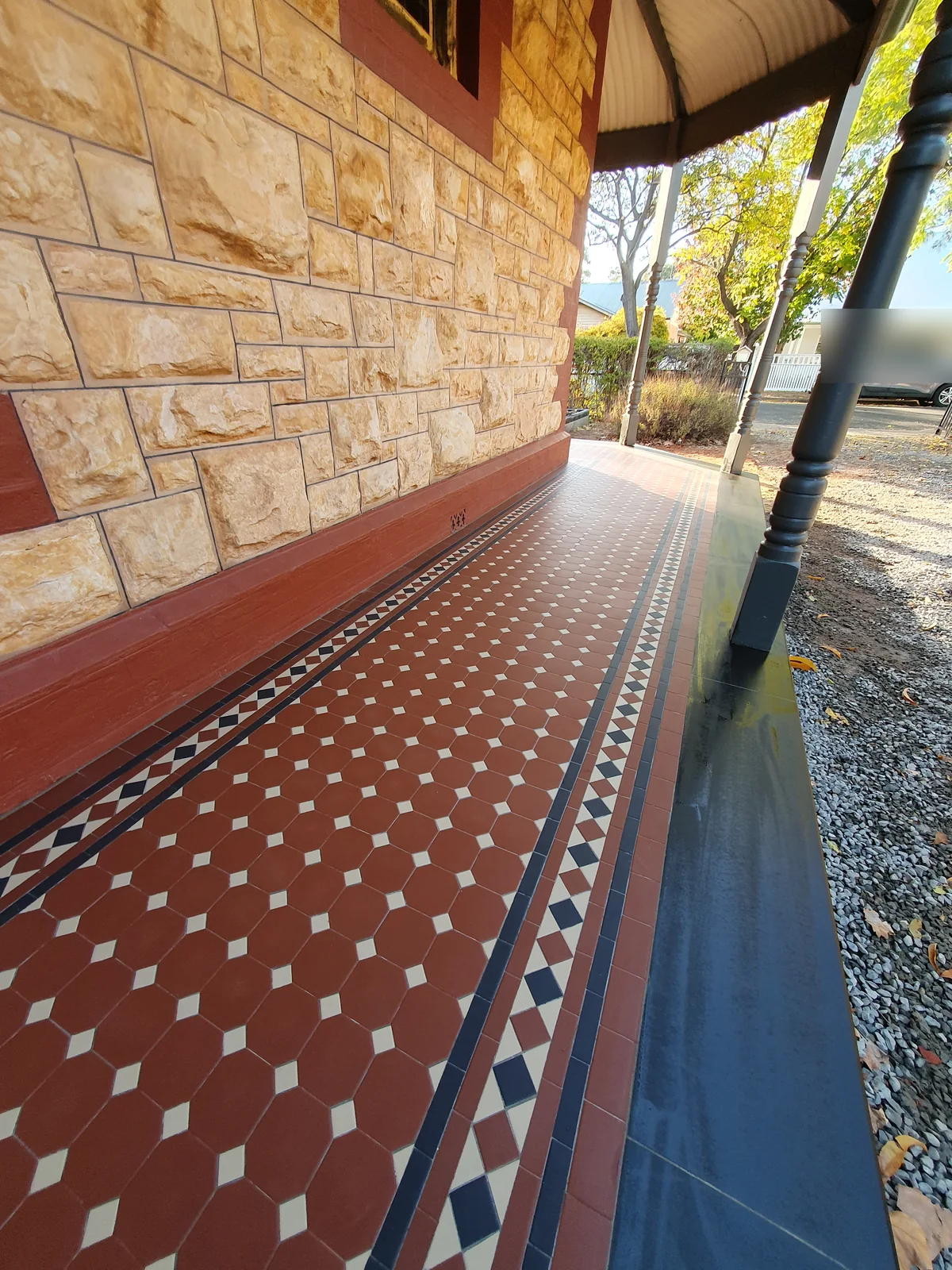
A local context for tile decisions
The Marion Heritage Survey records increased urban development at Plympton in the 1880s and places Plympton Park among the suburban district localities associated with Marion. That history is useful context, not a statement that every home retains early fabric or has heritage protection. The appropriate response depends on the individual building, its alterations and any applicable planning or heritage controls.
The City of Marion identifies Plympton Oval and neighbourhood reserves within Plympton Park. For outdoor work, the practical questions are often about the relationship between the house, verandah, path and garden: clear thresholds, sensible falls, durable edges and a pattern that sits comfortably with the property's scale. Existing surfaces should be assessed before a replacement is specified.
Design, restoration and installation
A design consultation can help test pattern, border, colour balance and transitions against the architecture rather than selecting a layout in isolation. Where an existing floor or verandah has worn, loose or mismatched tiles, restoration may call for careful assessment of what can be retained and what needs replacement. New installation should be planned around the actual substrate, levels, drainage and access at the site rather than a universal build-up.
For pathways and verandahs, proportion and edge treatment matter as much as the central pattern. Stone bullnose or edging coordination may help define a step, landing or garden edge, while the final detailing should respond to movement, exposure and the adjoining finishes. Property-specific planning or heritage questions should be checked with the relevant authority before work begins; a suburb's history alone does not establish an approval requirement.
Start with the property, not a preset period label
Useful photographs and measurements can include the room or verandah, adjoining thresholds, damaged areas, steps, drainage points and any existing border or motif. These details help distinguish a restoration conversation from a new installation and make it easier to discuss a design that is compatible with the property's character without overstating what its history proves.
If the work involves a place with a heritage listing, a character area or other planning constraint, confirm the relevant address-based advice through the appropriate South Australian planning and council channels. AHTC's role is to help with the tile design and practical scope; it is not to represent council or heritage authority approval.
Your Heritage Tiling Questions
Can you design tessellated tiles for a Plympton Park verandah or pathway?
Yes. A design discussion can consider the property's proportions, the relationship between the house and outdoor areas, border and edge details, transitions and the conditions at the site. A verandah or pathway layout should be developed from those observations rather than from a generic period template.
Does Plympton Park's history mean my home needs heritage approval?
No. Local history does not by itself establish a listing or an approval requirement. If a particular property is listed, in a character area or affected by another planning control, check the address-specific position with the relevant South Australian planning or council authority before work begins.
Can existing tessellated tiles be restored instead of replaced?
That depends on the condition of the existing tiles, the underlying surface, moisture or movement issues and whether suitable matching pieces can be identified. An assessment can separate areas that may be retained or repaired from areas that require new work.
What should I photograph before discussing a Plympton Park tiling project?
Include wide views of the room, verandah or path, close views of damage and borders, thresholds and steps, adjoining paving, drainage points and any areas that move or hold moisture. Those details help shape a site-specific design and installation conversation.
Discuss Your Heritage Tiling Project
Share your location, project details and photographs using our enquiry form, or call 0433 932 711.