
Tessellated tiles in Mitchell Park, SA
Mitchell Park sits in Adelaide's Inner South within the City of Marion. Its documented story runs from Kaurna Country and productive agricultural land through post-war housing growth and later metropolitan change. For a Mitchell Park home, the right tile decision depends on the property itself: existing surfaces, the way rooms and outdoor edges connect, drainage and exposure, and whether a heritage or character control applies. AHTC can help plan tessellated tile supply, installation, restoration and related stone bullnose or edging details around those site-specific questions.
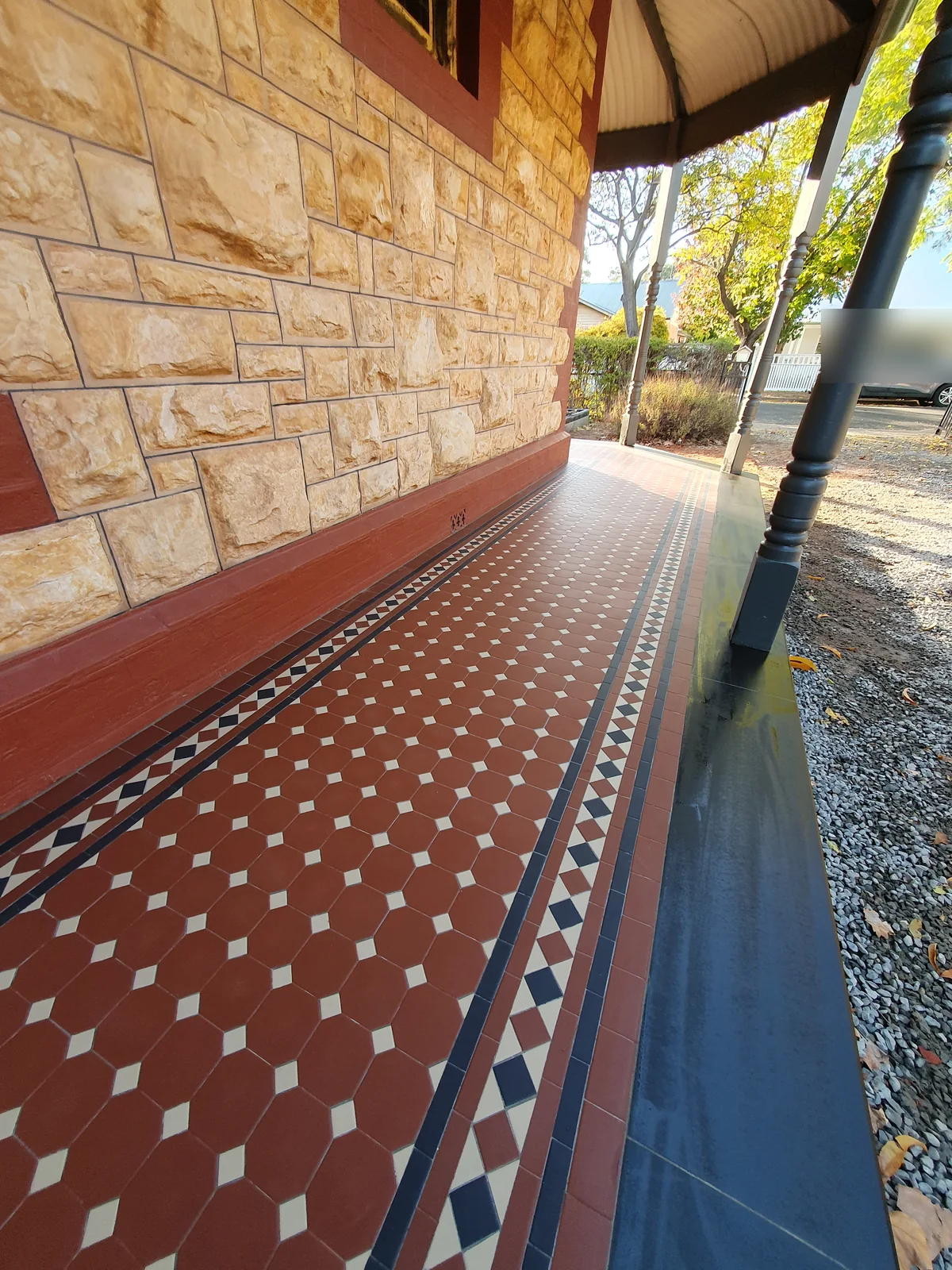
Designing for Mitchell Park's changing residential context
The City of Marion records Mitchell Park as a former farming and almond-growing district that later experienced strong housing growth in the 1950s and 1960s. That history is useful context, but it does not make every home the same age or style. A measured design consultation can instead look at the actual entry, verandah, porch or pathway, and decide whether a new tessellated layout should complement surviving details or provide a clearly contemporary transition.
For established homes, proportion and thresholds often matter as much as pattern. Border width, stair nosings, doorway levels, falls and the relationship between indoor and outdoor surfaces should be considered before a pattern is selected. On exposed paths and verandahs, drainage, movement and edge detailing need to be reviewed with the site rather than assumed from the suburb name.
Check the property before altering an older surface
A suburb's history is not the same as a heritage listing. The City of Marion publishes local heritage information, while the South Australian Planning and Design Code identifies mapped heritage places, historic areas, character areas and representative buildings. Before removing, covering or changing an older tiled surface, check the individual property and the applicable planning controls, particularly where demolition, alteration or an addition could affect identified heritage value.
Where a surface appears to be original or part of a significant frontage, begin with recording and condition assessment. Matching colour, scale and border logic may be more appropriate than replacing a sound field with a new pattern. If the surface is later work or has failed extensively, a new layout can still be designed to sit comfortably with the home's proportions without pretending that the work has heritage approval.
Heritage information | City of MarionHeritage and character | PlanSA
Tessellated tile services for Mitchell Park projects
AHTC's service scope can cover design consultation, tessellated tile supply, installation and restoration, including coordination of stone bullnose or edging where that suits the project. The useful starting information is the location of the proposed work, photographs of existing tiles and edges, approximate dimensions, access conditions and what you want the finished space to do.
For a restoration brief, the assessment should separate cleanable or locally repairable areas from loose, cracked or missing sections. For a new verandah, entry or pathway, the design can be developed around the site's proportions and transitions. The existing Mitchell Park service page remains the place for this locality-specific enquiry and can connect the work to the broader Marion service context.
Planning a practical tile brief
A clear brief should identify whether the priority is retaining existing fabric, matching a known pattern, creating a new tessellated arrangement or coordinating a complete supply-and-installation sequence. It should also note thresholds, steps, surface drainage, adjoining materials and any access restrictions. These details help keep the design appropriate to the property rather than relying on a generic period label.
If you are unsure whether a planning or heritage check is needed, confirm the property's mapped status with the relevant authority before work begins. Design advice can support the visual and practical decisions, but it does not replace council or state planning advice.
Heritage information | City of MarionHeritage and character | PlanSA
Your Heritage Tiling Questions
Does every older Mitchell Park home need heritage approval for tile work?
No. Heritage controls are property- and overlay-specific. Check the individual property in the City of Marion and South Australian planning information before removing, altering or covering an older tiled surface. A suburb's post-war or agricultural history does not by itself make every home heritage-listed.
Can tessellated tiles suit a Mitchell Park verandah or pathway?
They can, provided the layout is developed for the actual site. Review width, borders, steps, thresholds, falls, drainage, exposure and edge details before choosing a pattern. A consultation can help decide whether the new work should echo existing details or make a measured contemporary transition.
What should I send when asking about Mitchell Park tile restoration?
Useful starting information includes clear photographs of the whole area and close-ups of damage, approximate dimensions, the home's location, access details and what you hope to retain. Mention loose tiles, missing sections, movement, water exposure and any known planning or heritage information.
Is Mitchell Park considered part of metropolitan Adelaide?
Yes. The South Australian Government's Greater Adelaide urban-infill report places Mitchell Park in the Inner South region of Greater Adelaide. Local planning and heritage questions should still be checked with the City of Marion and the applicable state planning information.
Discuss Your Heritage Tiling Project
Share your location, project details and photographs using our enquiry form, or call 0433 932 711.