
Tessellated tiles in Maidstone
Planning tessellated tiles in Maidstone calls for a response to the individual property rather than a one-size-fits-all period label. Maidstone's early subdivision history includes small allotments and timber homes, while today's streets include varied buildings and alterations. We can help with design consultation, tessellated tile supply, installation, restoration and stone bullnose or edging coordination for a verandah, entry, pathway or interior floor.
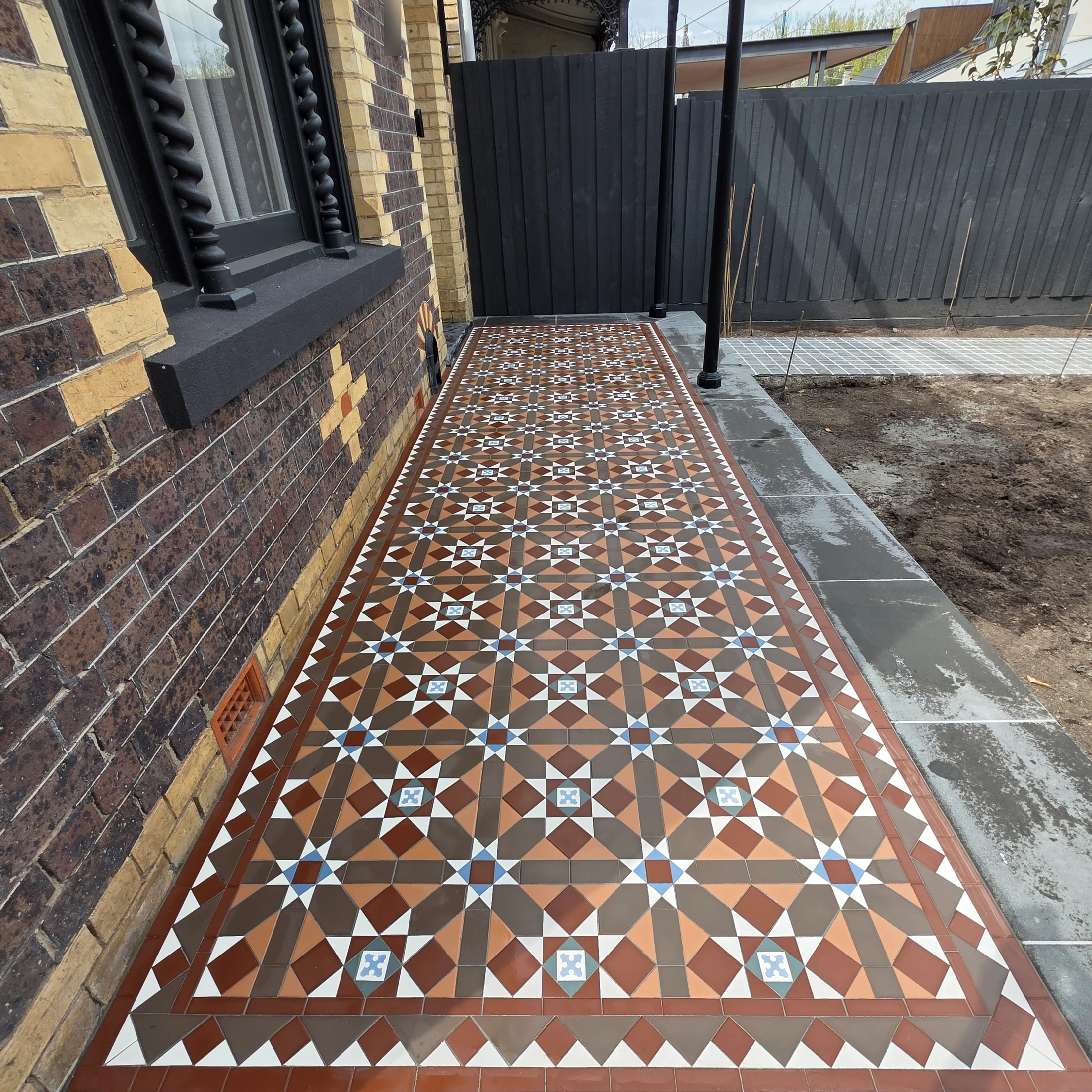
A Maidstone context for tile decisions
Maidstone was laid out as a private subdivision in 1858. Maribyrnong's environmental history records 47 houses there by 1861, most of them timber. That history is useful context when considering proportion, frontage and the relationship between a tiled threshold and an older-looking garden setting, but it does not mean every surviving or newer home has the same character.
A careful first step is to look at the house and its street setting together: the entry width, verandah depth, front setback, fence, garden and existing masonry or paving. A restrained tessellated layout may sit more comfortably than a busy pattern where the frontage is compact; a border, edge or bullnose detail may be more useful where the tile meets steps or a garden path. These are design questions to resolve on site, not universal rules for Maidstone.
Check the property before changing original fabric
Maribyrnong Council's heritage material covers individual places and areas, and explains that a Heritage Overlay can require a planning permit for works affecting a heritage place. Council also publishes neighbourhood-character precinct guidance. Before removing an established tiled surface or changing a frontage, check the property's current planning information and obtain project-specific advice from the relevant authority where needed.
A heritage-sensitive approach does not require new work to imitate every older detail. It can mean recording what survives, matching scale and colour thoughtfully, retaining sound original fabric where practical, and making a new intervention legible without overwhelming the building. A design consultation can help separate those choices from the practical questions of access, falls, edges and transitions.
Plan verandahs, entries and pathways as one composition
For a Maidstone verandah or front path, consider how the tile field meets the street edge, steps, thresholds and garden. A border can clarify the route and frame a simple field, while a more detailed pattern may suit a focal entry when its scale is tested against the frontage. Stone bullnose or edging coordination may be relevant at exposed steps and changes of level.
For restoration, the existing floor should guide the brief: inspect the pattern, areas of loss, loose or cracked tiles, previous repairs and the condition of the base before deciding whether to repair selectively, replace a section or redesign a later addition. Supply and installation can then be coordinated around the chosen level of retention.
Your Heritage Tiling Questions
Does every Maidstone home need a heritage approval for tessellated tiles?
Not necessarily. Heritage controls apply to particular places and areas, not automatically to every property. Check the property's current planning information before altering an established floor, verandah or frontage, and seek project-specific advice where a Heritage Overlay or another control applies.
What tile approach can suit an older Maidstone frontage?
Start with the property's proportions and surviving details. A simple field with a considered border can work for a compact entry, while a more detailed pattern may suit a focal verandah. The right choice depends on the frontage, threshold, garden and the fabric you want to retain rather than on the suburb name alone.
Can an existing Maidstone tessellated floor be restored instead of replaced?
Often the decision starts with an inspection of the existing pattern, loose or damaged tiles, previous repairs and the underlying condition. A restoration brief can then consider selective repairs and careful matching before replacement of sound original work is proposed.
Can tessellated tiles continue from a Maidstone verandah into a pathway?
They can be designed as a connected composition, but the transition needs to account for steps, exposed edges, drainage, access and the relationship with paving and garden areas. Design consultation can test the pattern and border before supply and installation are finalised.
Discuss Your Heritage Tiling Project
Share your location, project details and photographs using our enquiry form, or call 0433 932 711.