
Tessellated tiles in Casula
Casula has a layered architectural setting, from colonial-era homesteads and houses to a former power station adapted for cultural use and the brick infrastructure of the railway. For a Casula property, tessellated tile design or restoration should respond to the building, its surviving details, the site and the intended use. AHTC can assist with design consultation, tessellated tile supply, installation, restoration and stone bullnose or edging coordination.
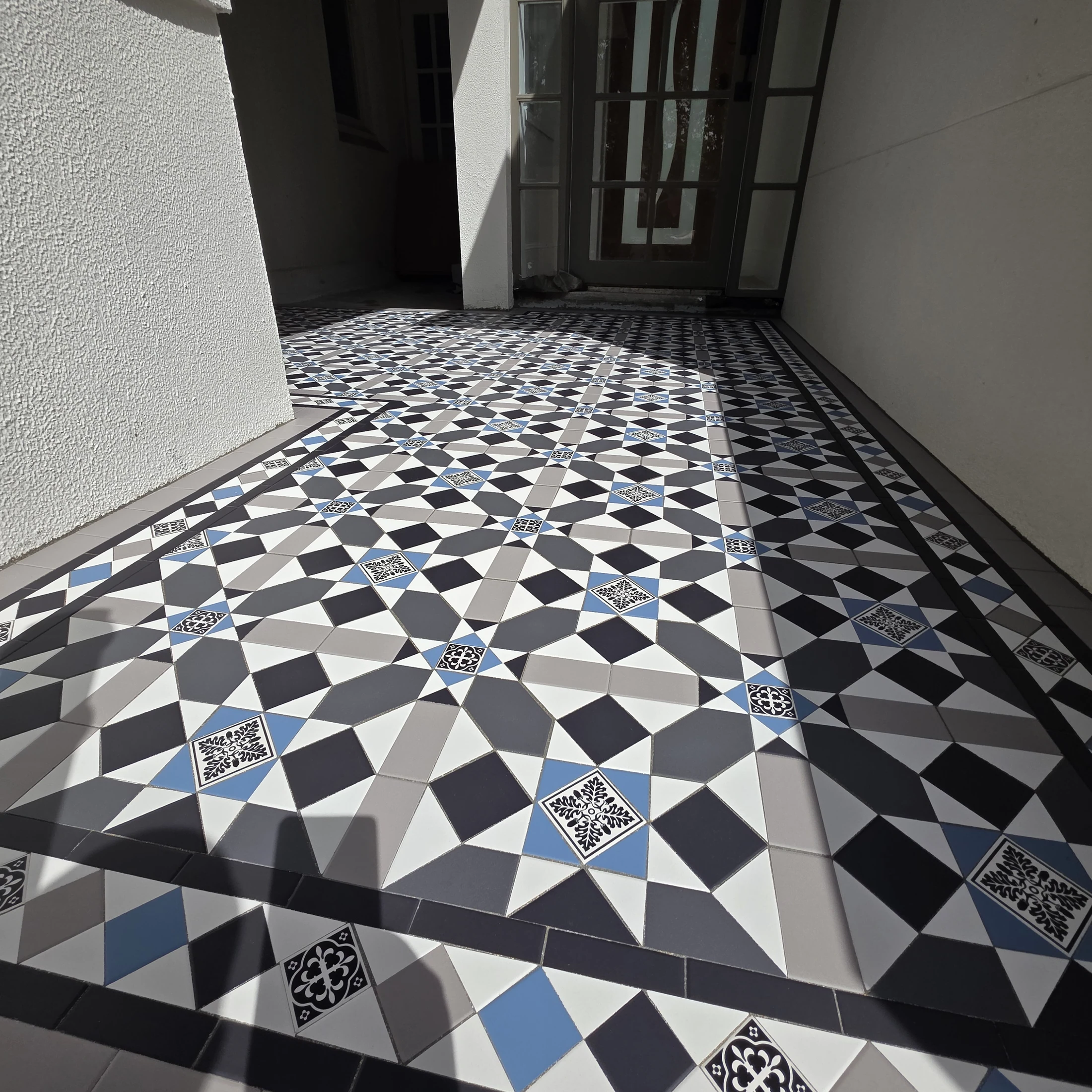
A layered Casula architectural setting
Liverpool City Library's local history records colonial land grants in Casula and surviving places including the Georgian-style Glenfield Farm homestead and Collingwood House, where colonial Georgian elements remain part of the building's story. The same history records the former Liverpool Powerhouse as a 1950s industrial building later adapted for arts use, as well as the brick arch of the Glenfield Creek Underbridge.
These places do not mean that every Casula home is old, Georgian or heritage-listed. They do provide useful context when considering proportion, edge detail and the relationship between new tile work and an existing building. A restrained border may suit a compact entry, while a larger verandah or pathway may need a layout that acknowledges steps, walls and sightlines rather than copying a historic pattern by assumption.
Design to the frontage, path and existing materials
Start with the property's dimensions and approach: the width of the entry, the direction of travel, thresholds, stairs, drainage falls and the materials already around the work. On a narrow frontage, border widths and cut positions can determine whether the pattern feels balanced. On a path or verandah, transitions and edge protection matter as much as the centre field.
Casula's mix of historic, industrial and contemporary settings makes a site-specific response more useful than a suburb-wide style label. Design consultation can help compare a new tessellated layout with the scale and texture of the building, then coordinate supply, installation and stone bullnose or edging where those details form part of the brief.
Check the individual property before changing existing fabric
If older tiles survive, photograph the overall pattern and close details before removing or covering anything. Look at borders, corners, thresholds, areas of loss and any change between internal and external surfaces. Retention, selective restoration, a sympathetic extension or a clearly new section may each be appropriate depending on the condition and the owner's brief.
Casula's current planning record includes heritage consideration of a local place at Mount Omei. That does not establish heritage protection for every property, and a historical-looking house is not automatically listed. Confirm the individual property's planning and heritage status with the relevant authority before work that may affect significant fabric.
Coordinate hard surfaces with the wider site
Liverpool's local history describes Casula through both built and environmental layers, while current strategic planning places Liverpool within Greater Sydney's Western Parkland City. For external tiling, consider how the proposed surface meets gardens, open space, walls and changes in level, not only how the pattern looks in isolation.
A site assessment should establish the existing surface, access, exposure and drainage before an installation detail is chosen. There is no universal substrate or restoration method for every Casula property. The appropriate scope depends on what is present and the performance required from the finished work.
Suburbs of Liverpool | Liverpool City LibraryGreater Sydney Region Plan: A Metropolis of Three Cities, NSW Government
Your Heritage Tiling Questions
Does living in Casula mean my property is heritage-listed?
No. Casula has documented historic places and current heritage-planning activity, but the suburb name does not establish listing for every property. Check the individual property's current planning and heritage information with Liverpool Council or the relevant authority before altering significant fabric.
Can tessellated tiles suit a Casula verandah or pathway?
They can be considered when the layout is designed to the property's proportions and practical conditions. Measure the frontage or path, review thresholds and steps, and coordinate borders, transitions, drainage and edging rather than selecting a pattern from the suburb name alone.
What should I record before asking about tile restoration?
Take an overall photograph of the layout and close views of borders, corners, worn or missing areas and junctions with other surfaces. Approximate dimensions, access information and any known history of the work can help distinguish retention and selective restoration from a new installation.
Does Casula have one defining architectural style?
No. The documented context ranges from colonial-era houses and farm buildings to industrial infrastructure adapted for cultural use and newer urban development. Use the individual building, its surviving details and the proposed work as the design starting point rather than assuming a suburb-wide style.
Should planning or heritage information be checked before tile work?
Yes, where the property may contain significant fabric or be affected by a heritage listing or planning control. The Casula heritage-planning record shows why property-specific checks matter; confirm the applicable requirements with the relevant authority before work begins.
Discuss Your Heritage Tiling Project
Share your location, project details and photographs using our enquiry form, or call 0433 932 711.