
Tessellated Tiles in Pymble
Pymble has a documented architectural history that rewards a careful approach to tiled floors, verandahs and pathways. In the Pymble Heights conservation area, Ku-ring-gai Council records an intact part of the 1892 estate subdivision, including Victorian, Federation and Inter-war period housing. For a Pymble property, the right tile layout and edge treatment should respond to the building and its setting rather than impose a generic pattern.
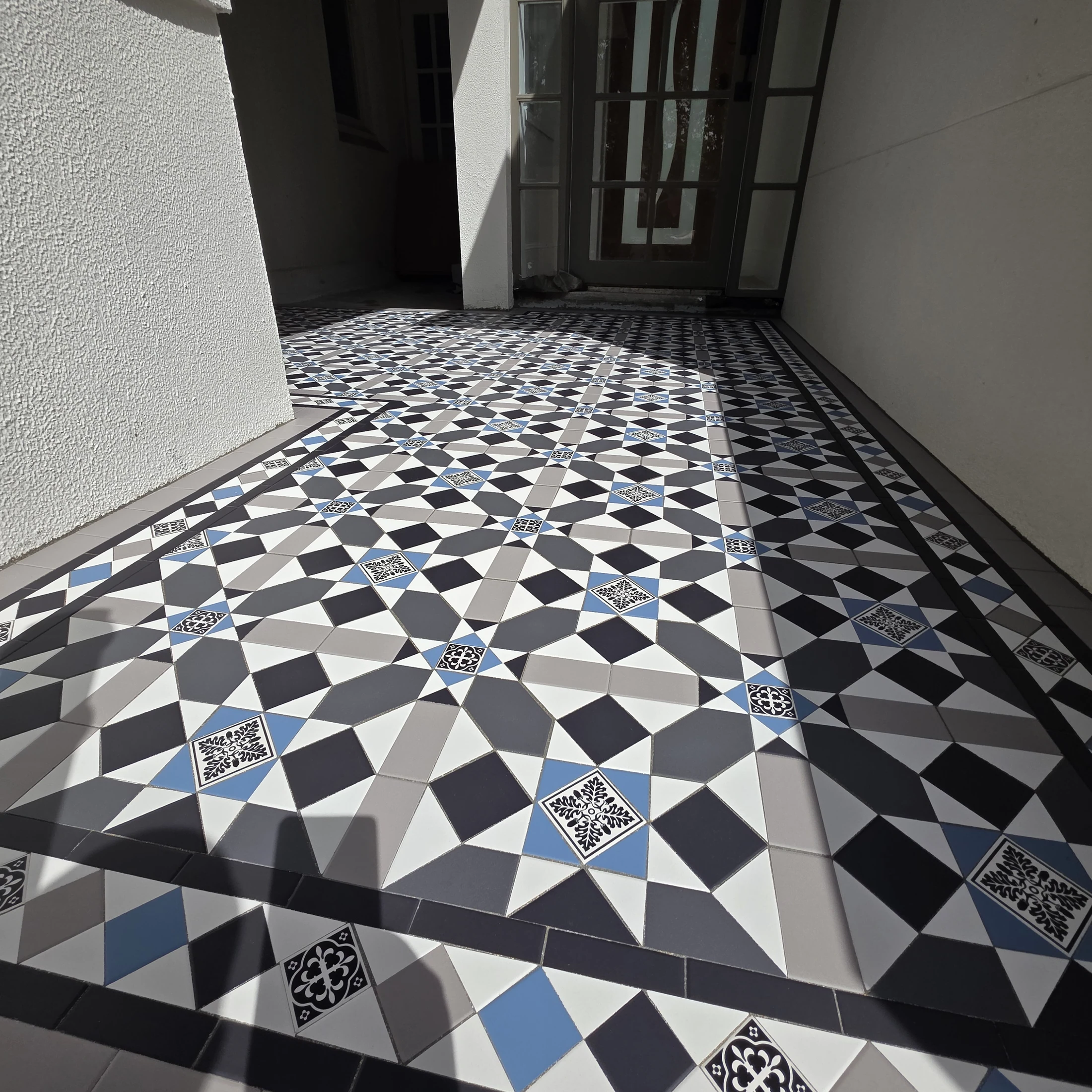
A property-led approach for Pymble homes
Pymble's documented heritage context spans more than one period. Council's Pymble Heights statement identifies particularly intact Victorian, Federation and Inter-war housing, as well as later development. That makes the first design question the character of the individual property: surviving floor fabric, porch or verandah proportions, entry sequence, garden setting and the relationship between old and new work.
Where a new tessellated floor is appropriate, pattern scale, border rhythm and colour balance can be developed as part of the architecture. Where original tiles remain, restoration or selective repair may be the better starting point. A site review can help separate a matching exercise from a new installation and coordinate tile supply, installation and stone bullnose or edging details around the existing building.
Pymble Heights Conservation Area - Ku-ring-gai CouncilKu-ring-gai Council — Heritage conservation areas
Check the property before changing heritage fabric
A suburb is not the same thing as a heritage listing. Ku-ring-gai Council advises checking the Local Environmental Plan, Schedule 5, heritage map and Development Control Plan for the individual property. The council also recommends property-specific confirmation where listing status matters, including a Section 10.7 Planning Certificate for legal purposes.
If a property is a heritage item or sits within a conservation area, the proposed work may need a heritage-sensitive assessment or an approval pathway. The council describes pre-development consultation, development applications and minor heritage works applications as possible routes depending on the work. Tile selection and detailing should follow that site-specific advice; the tiling service does not represent council approval or heritage endorsement.
Development controls and approvalsWhat is heritage — Ku-ring-gai CouncilKu-ring-gai Council — Heritage conservation areas
Design considerations for entries, verandahs and paths
For a Pymble entry or verandah, begin with the building's proportions and the way the threshold is used. A restrained border can clarify the edge of a path or landing, while a carefully scaled field can keep a small porch from feeling busy. Existing steps, thresholds, drainage and garden levels also need to be understood before a layout is finalised.
For original or heritage-sensitive work, retain what is sound where practical and distinguish new work from repairs without creating a jarring transition. Matching colour, geometry, edge treatment and joint alignment should be considered together. Design consultation, tessellated tile supply, installation and restoration can be coordinated around the property's condition and intended use.
Pymble Heights Conservation Area - Ku-ring-gai CouncilDevelopment controls and approvals
Explore Pymble's documented local history
Ku-ring-gai Library's local-history program includes a photographic display of the St Ives and Pymble area. It is a useful reminder that local character is read through streetscapes and settings as well as individual buildings. For design inspiration, use documented local context alongside a close look at the property's own surviving details.
The Pymble Heights record is a starting point rather than a blanket description of every Pymble home. A property-specific review remains the sensible way to decide whether a heritage-sensitive tile approach, restoration or new installation is appropriate.
Local History photo galleries - Ku-ring-gai CouncilPymble Heights Conservation Area - Ku-ring-gai Council
Your Heritage Tiling Questions
Does every Pymble property have heritage protection?
No. Heritage items and conservation areas apply to identified places and mapped land, not automatically to every property in the suburb. Ku-ring-gai Council advises checking the Local Environmental Plan, heritage map and the individual property's planning records.
What is significant about Pymble Heights?
Ku-ring-gai Council describes Pymble Heights as part of the 1892 estate subdivision that followed the opening of Pymble railway station in 1890. The area includes particularly intact Victorian, Federation and Inter-war period housing, together with later development.
Should original tessellated tiles be replaced or restored?
That depends on their condition, significance and the proposed use of the space. An assessment can identify sound original fabric, areas needing selective repair and locations where a new layout is more appropriate. The final approach should also account for thresholds, drainage, access and the building's existing proportions.
Could tile work in a Pymble conservation area need approval?
It may, depending on the property and the proposed changes. Ku-ring-gai Council directs owners to the Local Environmental Plan, heritage map and Development Control Plan, and describes development applications or minor heritage works applications for relevant work. Confirm the pathway for the individual property before starting.
Can a new verandah or pathway layout still suit an older Pymble home?
Yes, when the design responds to the building rather than copying a period label. Proportion, border scale, colour balance, thresholds, steps and the relationship to the garden can all guide a sympathetic new layout. Where heritage controls apply, those design choices should be considered alongside the relevant planning advice.
Discuss Your Heritage Tiling Project
Share your location, project details and photographs using our enquiry form, or call 0433 932 711.