
Tessellated Tiles Knoxfield
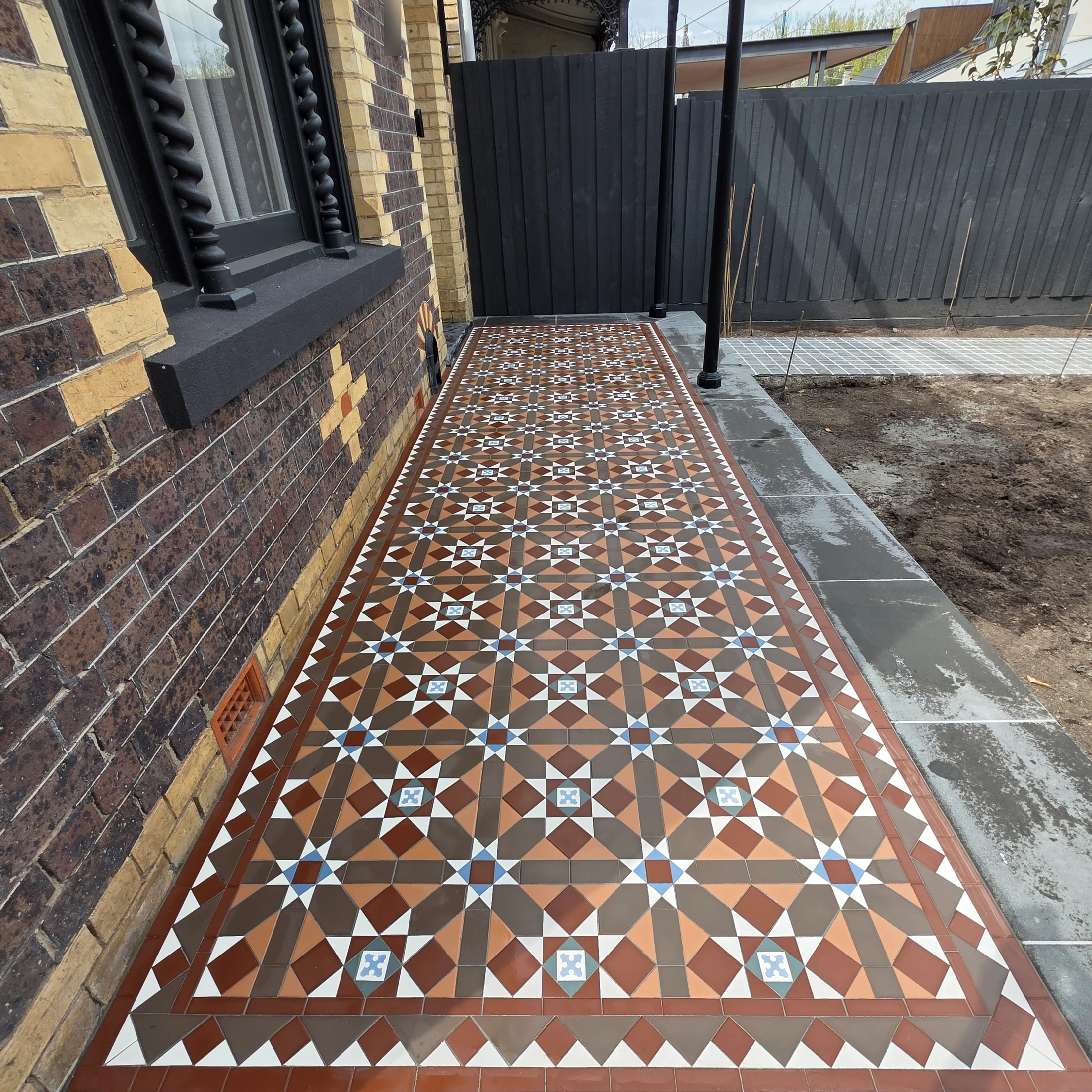
For a Knoxfield home, tessellated tiles can help define a verandah, entry, pathway or other outdoor threshold with a considered geometric surface. We can help with design consultation, tessellated tile supply, installation, restoration and stone bullnose or edging coordination. The right approach depends on the existing surface, the pattern, the property's streetscape setting and how the finished area needs to perform.
Tiling that responds to the Knoxfield setting
Knoxfield is part of the City of Knox in Melbourne's outer eastern metropolitan area. Knox Council's residential guidance describes many Knox Neighbourhood areas through their open space, backyards, trees and green, leafy streets. That context makes the relationship between a tiled surface, the front garden, existing canopy and the street edge worth considering rather than treating a pattern as an isolated finish.
A new verandah or pathway may need to sit comfortably with the dwelling's proportions, entry sequence and visible landscaping. On an existing property, retaining sound original material and matching adjoining work can be more appropriate than replacing everything. We assess the site and the intended use before recommending a design or installation approach.
Council-wide guidance is not a statement that every Knoxfield property shares one architectural style or carries heritage protection. If a property has a relevant overlay, permit requirement or other planning issue, confirm the position with Knox City Council and the appropriate authority before work begins.
Pattern, proportion and the approach to the house
For a front path or verandah, layout decisions include the available width, the direction of travel, borders, thresholds and how the pattern meets steps or edging. A restrained border can clarify the route, while a more detailed centre field may suit a broad, sheltered area. The design should be drawn from the space and the building rather than selected as a generic motif.
At a Knoxfield property with established planting, allow the proposed work to be considered alongside garden beds, canopy and drainage. The Knox planning scheme's neighbourhood-character provisions call for attention to street setbacks, visual impact, site coverage and the retention or planting of canopy trees. These are design considerations for the property, not a promise that any particular application will be approved.
Restoration, new work and careful transitions
Existing tessellated areas can require a different conversation from a new installation. We look at the condition of the surface, loose or damaged tiles, edge details, levels and the points where the tiled work meets steps, paving or garden. Where original or older fabric can be retained, the objective is to make a proportionate repair and a sympathetic transition rather than erase useful evidence of the property's history.
For new work, planning should cover the pattern, tile selection, setting out, access, falls and finishing details before installation. Stone bullnose or edging coordination can help resolve an exposed boundary or step, but the appropriate detail depends on the site and the adjoining construction. Knox Council provides planning permit and design-and-construction information; property owners should check those requirements for their own proposal.
Questions to resolve before choosing a layout
Before settling on a pattern, consider whether the work is replacing an existing tiled area or creating a new one, how rainwater leaves the surface, whether thresholds and steps need adjustment, and how the finish will meet garden edges or other paving. Photographing the area from the street and from the entry can help keep the design proportional to the house.
If the property is in a heritage overlay or another planning control applies, obtain property-specific advice before committing to demolition or new work. The local planning framework considers site conditions, visual impact, neighbourhood character and tree canopy, so a site review is more useful than assuming a standard detail will suit every Knoxfield property.
Your Heritage Tiling Questions
Can you help design a tessellated tile verandah in Knoxfield?
Yes. We can discuss the verandah's dimensions, entry sequence, border and centre pattern, adjoining steps or edging, and how the proposed surface relates to the house and garden. The final recommendation depends on the site and the intended use.
Can existing tessellated tiles in a Knoxfield home be restored?
Often, an assessment can establish whether existing tiles and edges can be retained, repaired or matched. We look at the condition of the surface and its transitions before proposing restoration or selective replacement. Not every damaged area can be repaired in the same way.
Do I need to check planning requirements before tiling a Knoxfield property?
You should check the requirements for the particular property, especially where the work changes an external area, affects a streetscape, involves an overlay or forms part of broader building work. Knox City Council publishes planning permit and design guidance, and the applicable controls can depend on the site.
What should be considered when a tiled path meets a garden or tree canopy?
Consider the path width and levels, drainage, root-sensitive areas, the visual relationship with the front garden and how the edge will be finished. Knox guidance places value on retaining and planting canopy trees, but the suitable construction detail must be assessed for the individual site.
Discuss Your Heritage Tiling Project
Share your location, project details and photographs using our enquiry form, or call 0433 932 711.