
Tessellated Tiles in Edithvale
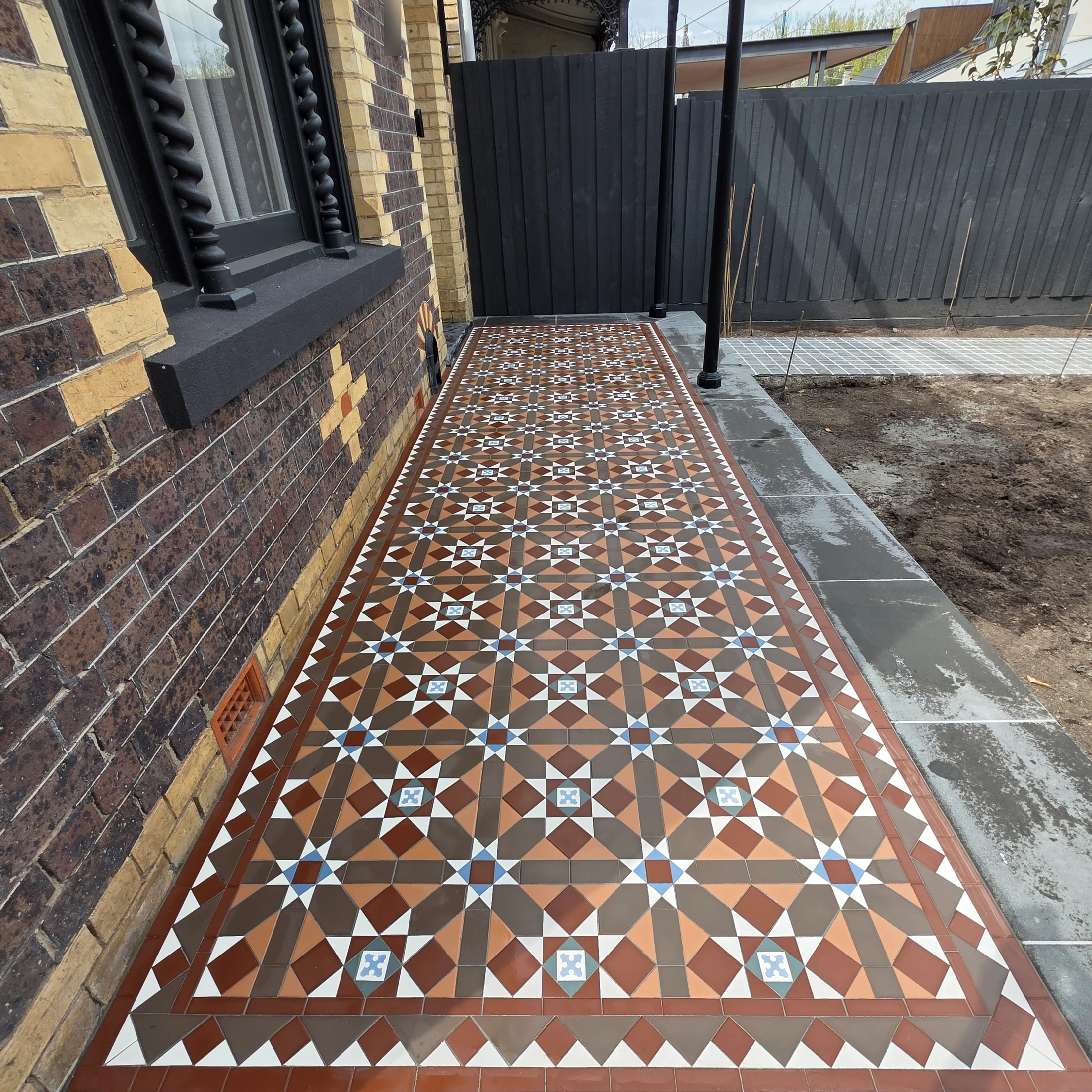
For an Edithvale home, a tessellated tile scheme should respond to the building and its setting rather than rely on a generic period label. Edithvale's early suburban growth followed the railway line, while its broader landscape history includes the former Carrum Swamp and later residential estates. That context makes proportion, transitions, drainage exposure and the treatment of surviving fabric useful starting points for a design conversation. AHTC can help with tessellated tile design consultation, supply, installation, restoration and stone bullnose or edging coordination.
A local context for tile decisions
Kingston's historical research records early twentieth-century subdivision and rail-led growth in Edithvale, including the Hyde Park estate around 1911 and the Waterloo estate in 1913. That history is a reason to inspect the house itself carefully, not a reason to assume every property has the same architectural character or heritage status.
The former Carrum Swamp landscape also matters when considering an outdoor tiled area. The local environmental history describes peaty and sandy ground, drainage and wetland change across the broader area. For a verandah, porch or pathway, the site assessment should therefore consider levels, water movement, thresholds and how new work meets the existing building.
Designing, matching or restoring tessellated tiles
Where original or older tilework remains, record its layout, border treatment, colour relationships and areas of loss before selecting replacement work. A restrained new pattern may be more appropriate than an invented historical detail, especially where the building has been altered over time.
For a new verandah or pathway, plan the field, border, edge and transition together. Tile scale and pattern should sit comfortably with the entrance, steps and surrounding surfaces. Stone bullnose or edging coordination can help resolve exposed edges, but the correct detail depends on the site and adjoining construction rather than a universal recipe.
If a property may be affected by a heritage control, confirm the relevant planning position with the responsible authority before work begins. A heritage study reference is not, by itself, proof that a particular home is protected or that approval will be required.
Edithvale tessellated tile services
AHTC's Edithvale service page can be used to discuss design direction, tile supply, installation planning, restoration of existing tessellated work and coordinated edging details. The useful first step is a property-specific review of the areas involved, the condition of existing surfaces and the desired relationship between retained and new work.
It can connect visitors to broader Melbourne guidance while keeping the Edithvale discussion focused on the actual property and its setting.
Your Heritage Tiling Questions
Are all Edithvale homes heritage-listed because the suburb has early housing?
No. Early subdivision or a period appearance does not establish a heritage control for every property. Heritage status and any planning requirements should be checked for the individual site with the responsible authority.
What should be considered for a tessellated pathway or verandah in Edithvale?
Consider the existing building, the pattern and border proportions, thresholds and steps, surface levels, water movement and exposed edges. Edithvale's broader wetland and reclaimed-land history makes site-specific levels and drainage questions particularly important, but it does not prescribe one construction method for every property.
Can older Edithvale tessellated tiles be restored rather than replaced?
Often the decision depends on what survives and its condition. A review can document the existing layout, colours, borders and damaged areas before deciding whether selective restoration, matching new work or a more limited replacement is the most suitable approach.
Does Edithvale's local history determine the tile pattern I should choose?
No. Local history provides useful context, but the building's scale, entrance, surviving details and the proposed use should guide the pattern and materials. A historically inspired design should not be presented as original fabric unless that has been established for the property.
Discuss Your Heritage Tiling Project
Share your location, project details and photographs using our enquiry form, or call 0433 932 711.