
Hornsby heritage tiling area directory
Use this Hornsby area directory to find locality-specific heritage tiling guidance. Tessellated tile work in the Hornsby area benefits from a property-led approach. Some homes and places sit within heritage listings or conservation areas, while others simply call for a period-aware verandah, path or entry design. We can help with design consultation, tessellated tile supply, installation, restoration and stone bullnose or edging coordination, with the existing fabric and the setting considered before work begins.
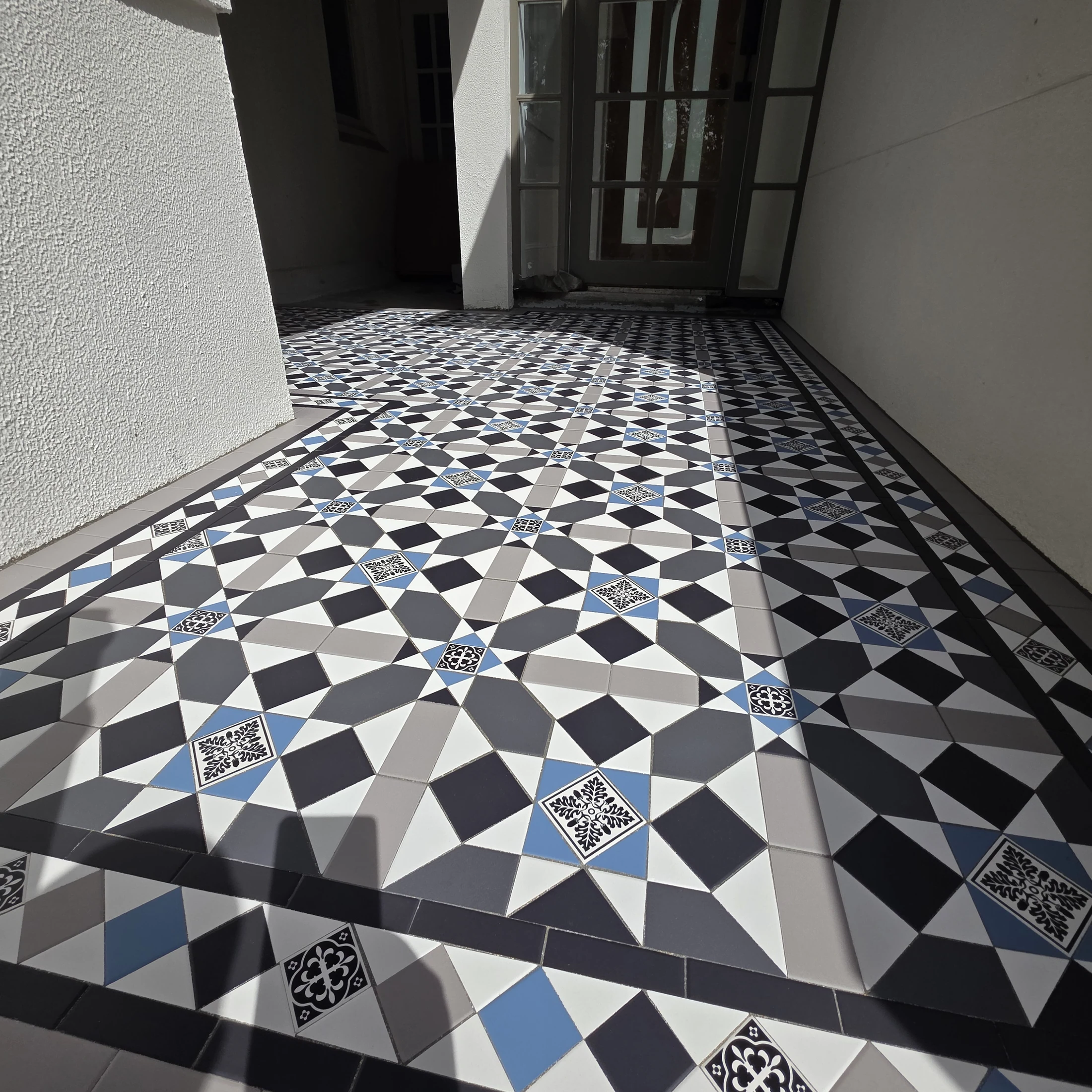
Designing for Hornsby's varied setting
Hornsby Shire's official heritage material covers built places, landscapes and archaeological heritage, alongside the area's continuing connection with Country. Council also recognises landscape values such as bushland, gardens, landscape structures, parklands, trees and viewscapes. For a verandah, path or entry, that makes proportion, edge details, transitions and the relationship with surrounding planting important design questions rather than afterthoughts.
We use the locality route for service navigation, not as a claim that every listed suburb is within Hornsby Shire Council.
Heritage | Hornsby Shire CouncilLandscape heritage | Hornsby Shire CouncilWards and boundaries | Hornsby Shire Council
Check the property before choosing the tile work
Hornsby Council identifies six statutory Heritage Conservation Areas, including Beecroft/Cheltenham, Hornsby West Side and The Crescent at Pennant Hills. A property may also be an individually listed heritage item or have landscape heritage significance. Council recommends checking the Local Environmental Plan, property enquiry tools and mapping before planning changes.
For a listed place or a property in a conservation area, the council's guidance makes materials, finishes, verandas, driveways, fences, gates and landscaping part of the design conversation. That is a useful reason to document what remains, compare new work with the property's existing character and confirm the applicable planning pathway before installation.
Heritage conservation areas - Hornsby Shire CouncilWhat can I do to my property? - Hornsby Shire CouncilHeritage | Hornsby Shire Council
A considered process for verandahs, paths and entries
A design consultation can establish whether the priority is retaining existing tessellated work, extending a surviving pattern, creating a new layout that sits comfortably with the house, or coordinating a practical border and stone bullnose edge. Supply and installation can then be planned around the agreed pattern, the setting and the condition of any existing tiles.
Where original or earlier tiles remain, restoration may be the more appropriate starting point than wholesale replacement. The right scope depends on what is present at the property, so the finished design should follow an on-site assessment rather than a standardised pattern or substrate assumption.
Hornsby area directory
Your Heritage Tiling Questions
Are all Hornsby homes heritage listed?
No. Hornsby Council distinguishes individually listed heritage items, heritage conservation areas and other places with heritage or landscape significance. Check the specific property through the Hornsby Local Environmental Plan, Council's property enquiry or its mapping and heritage-register tools before assuming a heritage control applies.
Which Hornsby areas have Heritage Conservation Areas?
Council lists six statutory areas: Beecroft/Cheltenham, Hornsby West Side, The Crescent at Pennant Hills, Wahroonga, Wahroonga North and Barker College. The relevant map and property enquiry should be checked for the individual site, because an area name alone does not establish that a particular property is included.
Can tessellated tiles be repaired at a heritage property?
The appropriate scope depends on the existing fabric and the property's status. Hornsby Council says minor repairs using the same materials and finishes may be possible, while other work may require development consent or written heritage-exemption advice. A property-specific check should come before work starts.
What should be considered for a heritage verandah or pathway?
Begin with the surviving layout, the relationship between the tiles and the building, and the transition to gardens, steps or other surfaces. Hornsby Council's guidance identifies materials, finishes, verandas, driveways, fences, gates and landscaping as relevant considerations for sympathetic changes.
Does the Hornsby service area have one council planning authority?
This service group is a navigation grouping. Hornsby Council publishes its own current ward locality lists and notes changes to former boundaries, so the responsible council and planning controls should be confirmed for the property's actual address.
Discuss Your Heritage Tiling Project
Share your location, project details and photographs using our enquiry form, or call 0433 932 711.