
Tessellated Tiles in Williamstown
Williamstown's waterfront, civic buildings, historic homes and coastal streetscapes create a thoughtful setting for tessellated tile work. Whether you are planning a new verandah or pathway, matching an existing floor, or assessing worn heritage tiles, the right approach starts with the property, its surviving fabric and the way the space is used. AHTC provides design consultation, tessellated tile supply, installation, restoration and stone bullnose or edging coordination for Williamstown projects.
A varied architectural setting from waterfront to residential streets
Hobsons Bay's heritage walks describe Williamstown as a former port town with waterfront buildings, civic structures, schools, churches, historic homes and workers' cottages. That range matters when choosing a tessellated layout: a broad front verandah, a narrow side path and an enclosed entry can each need a different scale, border treatment and transition.
For a period-facing property, design can take its cue from the building rather than applying a generic pattern. Consider the existing floor levels, sightlines from the street, doorway thresholds and any original edging before choosing colours or repeating geometry. New work should sit comfortably beside the building without presenting an unsupported claim that the whole suburb has one uniform architectural style.
Plan around existing fabric and the individual property
Where older tiles remain, an assessment can help separate sound material from loose, cracked or visually altered areas before replacement is considered. Matching is not only about colour; tile proportions, border rhythm, corner details and the relationship between the floor and adjacent steps or stone edging all influence the result.
Williamstown includes places covered by heritage listings and precinct guidance. A property-specific planning check is sensible before external alterations or work affecting a listed place. Heritage status does not mean every home is protected, and tile work does not automatically require a particular approval; the relevant controls depend on the address, the listing and the proposed work.
Verandahs, pathways and coastal exposure
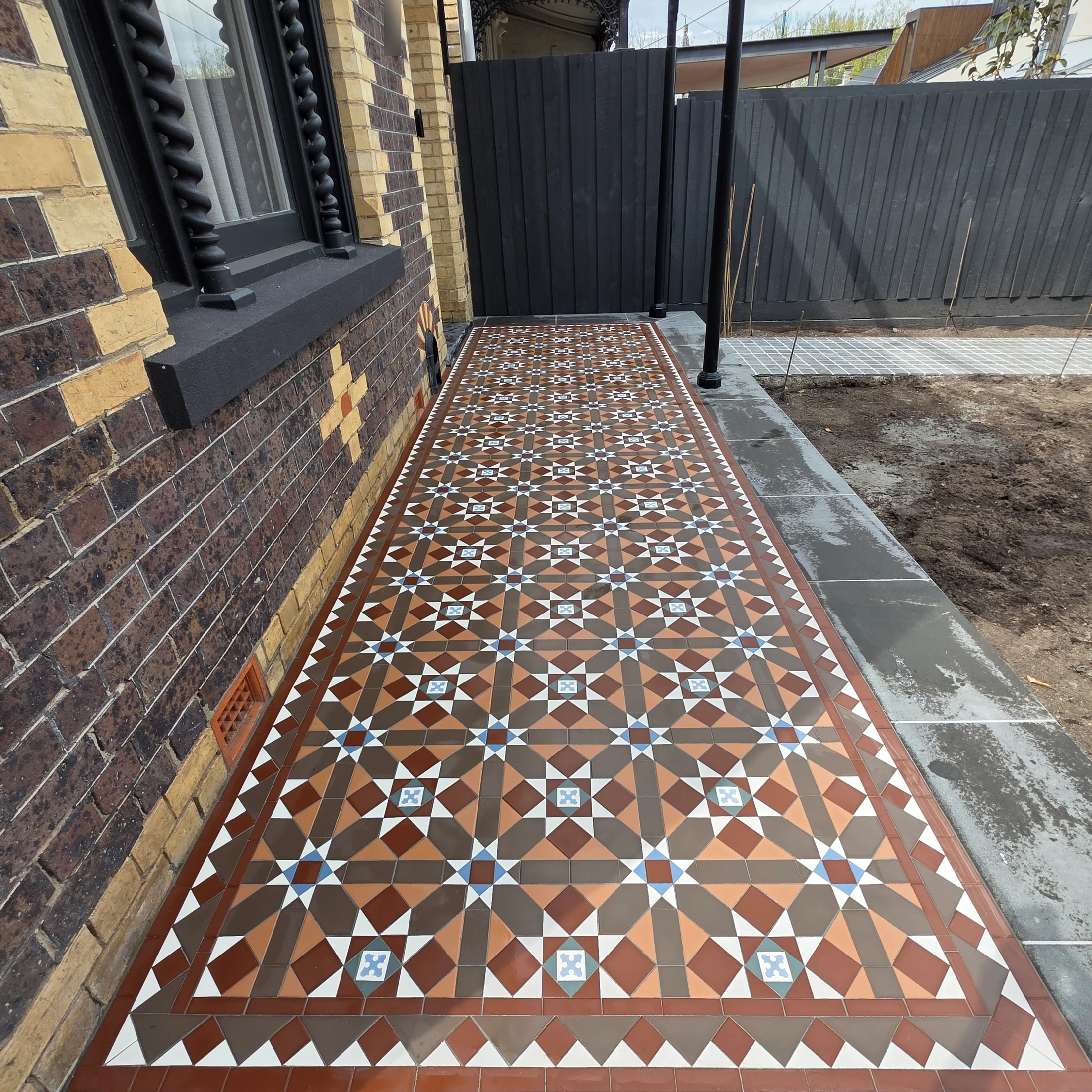
For a Williamstown verandah or pathway, practical design includes more than the central motif. Entry width, falls, drainage, movement at thresholds, exposure to weather and the junction with garden or masonry edges should be considered alongside the pattern. A restrained border can help define a long path, while a smaller repeat may keep a compact entry from feeling crowded.
Stone bullnose or edging coordination may be useful where tiled work meets steps, garden beds or a raised verandah. The appropriate detail is site-led, so the existing structure and finished levels should be reviewed rather than assuming one substrate or installation method suits every property.
A considered starting point for Williamstown tile work
A design consultation can clarify whether the project is new work, careful restoration, selective replacement or a combination. Useful information includes photographs of the existing floor, approximate dimensions, access conditions and any heritage or planning information already held for the property.
From there, tessellated tile supply, installation and restoration can be considered as one coordinated design decision. The aim is a durable, legible result that respects the building's proportions and the way the space will be used.
Your Heritage Tiling Questions
Are all Williamstown homes heritage listed?
No. Williamstown has documented heritage places and precinct guidance, but heritage status is property-specific. Check the relevant planning and heritage information for the individual property before assuming a control applies.
Can existing tessellated tiles in a Williamstown home be restored?
Often the first step is an assessment of what remains, including loose, cracked or altered areas, border details and transitions. Restoration or selective replacement should be based on the actual condition and the desired level of retention rather than a generic recipe.
What should I consider for a tessellated tile verandah or pathway?
Consider the building's proportions, path or verandah width, thresholds, finished levels, drainage, weather exposure and the junction with steps or stone edging. These details help determine an appropriate repeat, border and edge treatment.
Should I check planning information before changing tiles in Williamstown?
A property-specific check is prudent where a place or precinct may be covered by heritage controls. The responsible authority and any permit requirements depend on the property's listing and the proposed work; they should not be assumed from the suburb name alone.
Discuss Your Heritage Tiling Project
Share your location, project details and photographs using our enquiry form, or call 0433 932 711.