
Tessellated tiles in Spotswood
Spotswood combines a well-documented residential heritage character with a strong industrial and railway history. For homes, verandahs and pathways in the suburb, tessellated tile work is best planned around the property's proportions, existing fabric and the intended relationship between old and new work. We can help with design consultation, tile supply, installation, restoration and stone bullnose or edging coordination.
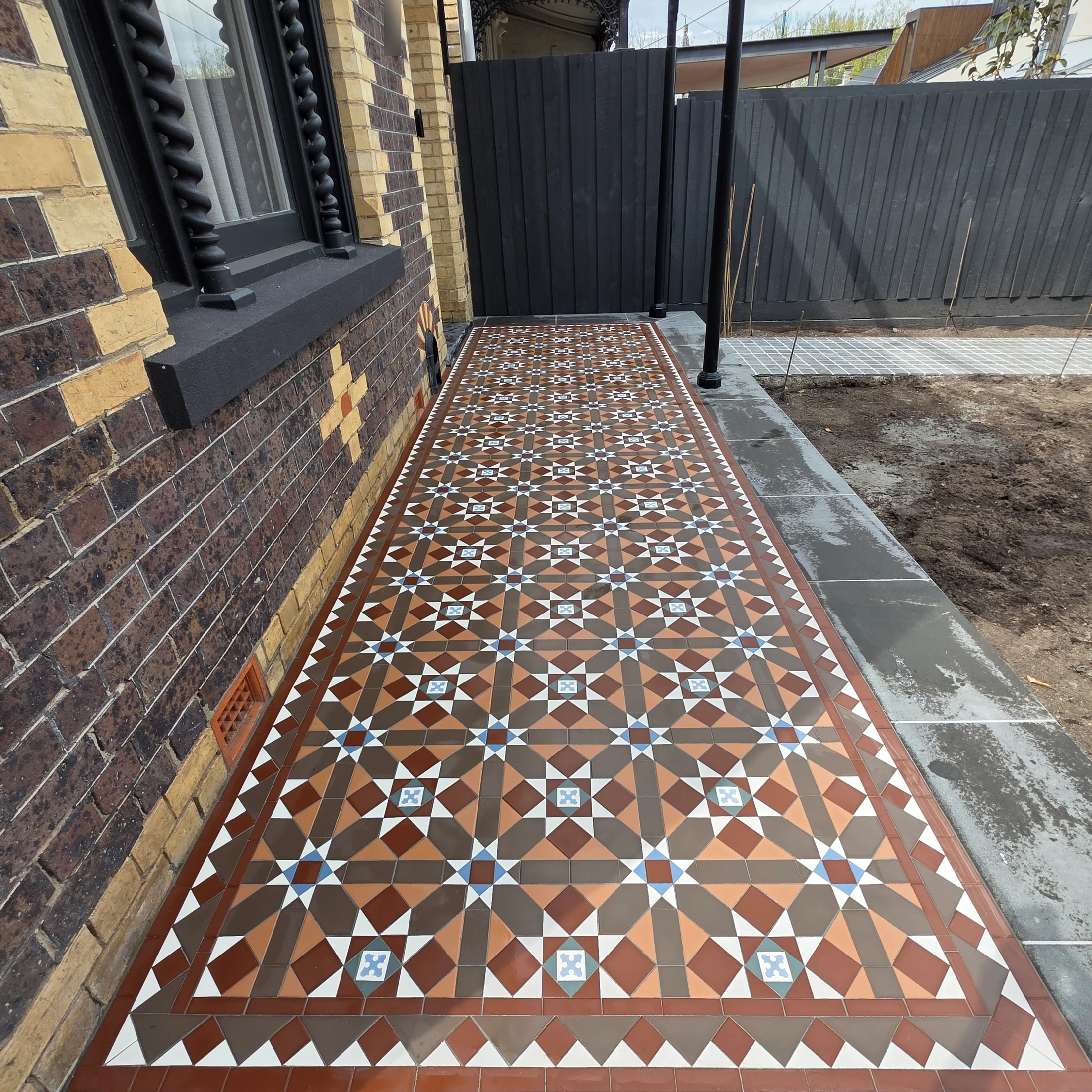
A local setting shaped by Victorian, Federation and Interwar homes
The Spotswood Residential Heritage Precinct includes streets on both sides of the railway line and records a consistent pattern of modest, predominantly single-storey detached houses. Its documented features include verandahs and porches, low front setbacks, hipped or gabled roofs, timber or brick walls, chimneys, and decorative joinery. Terracotta-tiled roofs are noted particularly in Interwar examples, alongside corrugated metal roofing in earlier houses.
That history does not make every Spotswood property heritage-listed or equally intact. The local review distinguishes between contributory and altered places, so tile choices should begin with what remains at the individual property: original thresholds, porch proportions, paths, steps, edging and any surviving tile pattern.
Plan the pattern around the house and the approach
For a Spotswood verandah or front path, a useful design process considers the width of the entry, the alignment of steps and doors, border proportions, transitions to existing paving and the way a pattern reads from the street. A restrained tessellated layout can sit comfortably with weatherboard, brick or rendered façades without pretending that a new surface is original fabric.
Where a property sits within a heritage overlay or precinct, the relevant planning controls and incorporated guidance should be checked before work is settled. Hobsons Bay's current heritage framework includes HO30 and additional Spotswood overlays introduced through Amendment C137. A property-specific planning check is more reliable than assuming that a suburb-wide rule applies to every home.
Restoration, replacement and new tile work
Existing tessellated floors can contain useful evidence in their layout, border, colour balance and edge treatment even when sections are worn or missing. Restoration work can therefore start with condition and pattern assessment, followed by a considered decision about retaining, repairing, matching or introducing new work. If a surface is beyond repair, a new design can still acknowledge the home's scale and approach without presenting it as historic.
Spotswood's documented heritage places include the locally significant railway station complex and a range of residential, commercial and industrial sites. Those records provide context for careful design, but they are not a blanket approval or a claim that private homes have the same significance.
Your Heritage Tiling Questions
Are all homes in Spotswood heritage-listed?
No. Spotswood contains a documented residential heritage precinct and other heritage overlays, but the local review distinguishes between contributory and altered places. The applicable control depends on the individual property and its location, so a property-specific check is appropriate before design or construction decisions.
Can tessellated tiles suit a Spotswood weatherboard or brick home?
They can, when the layout is scaled to the entry, verandah or path and the colours and borders work with the home's existing materials. Spotswood's heritage records describe weatherboard and brick houses with verandahs, porches, varied roof forms and modest street setbacks, all of which are useful design cues without requiring a historical imitation.
What should be checked before tiling a Spotswood verandah or pathway?
Check the condition and levels of the existing surface, the relationship to doors and steps, drainage and transitions, and whether the property is affected by a heritage overlay. The relevant Hobsons Bay controls and incorporated guidance should be considered for the specific property rather than inferred from the suburb name alone.
Can an existing tessellated floor in Spotswood be restored rather than replaced?
Often the first step is an assessment of what survives, including the pattern, border, individual tiles, substrate and edge conditions. That assessment can inform a proportionate choice between retaining, repairing, matching missing areas or designing new work where the original surface cannot be retained.
Discuss Your Heritage Tiling Project
Share your location, project details and photographs using our enquiry form, or call 0433 932 711.