
Tessellated tiles in Newtown, Geelong
Newtown's established residential streets and documented heritage areas make the relationship between a tile pattern and its setting especially important. Whether the brief is a new verandah, entry, pathway or restoration of an existing surface, AHTC can discuss design, tessellated tile supply, installation, restoration and stone bullnose or edging coordination around the property rather than applying a suburb-wide template.
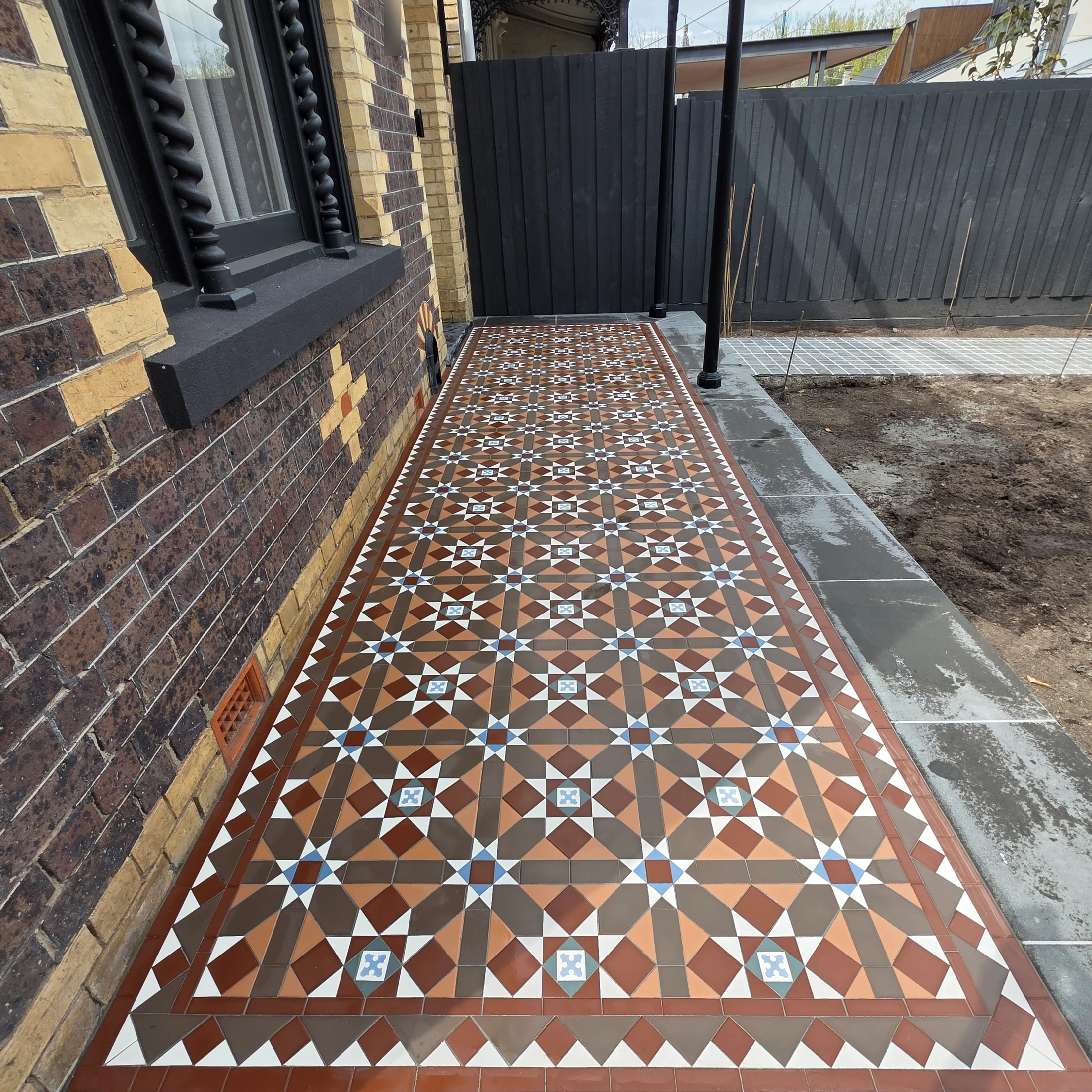
A considered response to Newtown's residential setting
Greater Geelong's thematic history records Newtown's development through early substantial residences, later subdivisions and changing streetscape infrastructure. The same history describes Victorian, Federation and Edwardian-era housing forms in the locality. That documented variety is a useful reminder to begin with the individual building, its frontage and its surrounding garden or fence line, rather than assuming that every home calls for one period pattern.
The Greater Geelong Planning Scheme identifies several Newtown heritage areas with their own guidelines and statements of significance. A tile layout can therefore be considered alongside the property's scale, setbacks, verandah proportions, entry sequence and existing masonry. These are design considerations, not a claim that every Newtown property is heritage-listed or that a particular pattern is mandatory.
Plan the tile work around the property
For a new verandah, entry or pathway, start with the available width, thresholds, steps, sightlines and junctions with existing paving or masonry. A border can help define a narrow approach, while a quieter field may keep a more substantial frontage legible. The proportions, colours and edge treatment should be tested against the home's elevation and the way people move through the site.
Supply and installation are best considered together. Confirm the layout, transitions, access, levels and drainage conditions before fixing a pattern or assuming a universal substrate or installation detail. Where a stone bullnose or other edging is required, its profile and junction with the tile field should be resolved as part of the overall design.
When existing tiles or heritage fabric remain
Photograph the whole surface and then record close views of borders, corners, worn sections, missing tiles and transitions before removing anything. Retention, selective repair, careful matching or a complementary new section may each be appropriate, depending on what survives and how the space is used.
Greater Geelong explains that heritage areas may contain individually significant, contributory and non-contributory properties, and that controls are set by the relevant overlay and schedule. Check the current property information and planning pathway with Council before committing to external changes. AHTC can keep the tile brief focused on assessment, design and coordination without implying heritage-authority endorsement.
Start with useful information about the site
For an initial discussion, useful details include photographs, approximate dimensions, access constraints, the relationship to the front door or verandah, and any visible loss or movement in an existing tiled surface. If the property sits within a heritage area or has a heritage record, include the relevant planning information so the design conversation can stay aligned with the property's actual setting.
The existing Newtown service page remains the local starting point and can connect the enquiry to broader Greater Geelong service guidance. The approach can cover design consultation, tessellated tile supply, installation, restoration and stone bullnose or edging coordination as the brief requires.
Your Heritage Tiling Questions
Does living in Newtown mean my property is heritage-listed?
No. Newtown contains documented heritage areas and individual heritage records, but the suburb name does not establish the status of every property. Check the current Greater Geelong Planning Scheme information and the property's relevant overlay or record with Council.
Can tessellated tiles suit a Newtown verandah or pathway?
They can be considered where the pattern, scale, thresholds, edging, drainage and relationship to the building are assessed together. A property-led layout is more useful than assuming one pattern suits all of Newtown's varied residential settings.
What should I photograph before asking about restoration?
Include an overall view of the tiled area and close views of borders, corners, missing or cracked tiles, worn sections, steps and junctions with other surfaces. Approximate dimensions and access details also help frame the design or restoration discussion.
Do Newtown heritage-area controls apply to every kind of tile work?
The applicable requirements depend on the property's actual overlay, schedule and proposed work. Greater Geelong explains that routine maintenance which does not change appearance can differ from external alterations or new works, so confirm the specific planning pathway with Council before proceeding.
Discuss Your Heritage Tiling Project
Share your location, project details and photographs using our enquiry form, or call 0433 932 711.