
Tessellated tiles in Caulfield
Caulfield combines a long-established civic setting with residential streets where Victorian, Edwardian and inter-war character can still influence the way a front path, verandah or entry is read. We help Caulfield property owners plan tessellated tile design, supply, installation and restoration with the existing building, garden and streetscape in view.
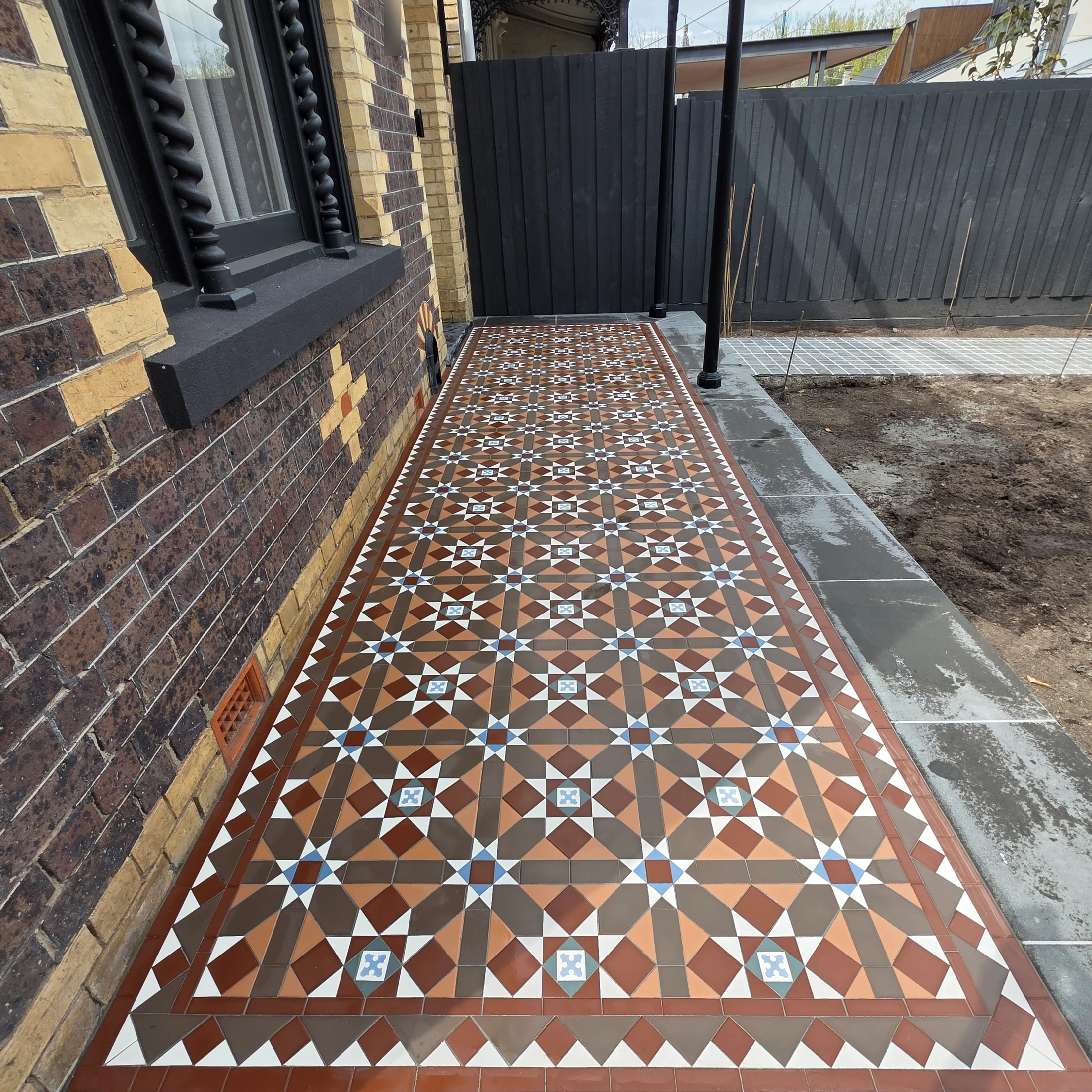
Designing for Caulfield's established streetscapes
Glen Eira's neighbourhood character work identifies parts of Caulfield as an Edwardian/inter-war base with Victorian and Edwardian elements, established gardens, mixed front setbacks and low to medium front fences. It also records inter-war Californian bungalow, Spanish Mission and Arts and Crafts examples in relevant character areas. That variety is a reason to design from the individual property rather than apply one pattern across the suburb.
For a new verandah or pathway, proportions, thresholds, garden edges and the relationship between the tiled surface and the front elevation can matter as much as the motif. A measured design consultation can test border width, colour balance, transitions and edging against the available space and the way the approach is seen from the street.
Caulfield's activity-centre context includes transport, education, recreation, retail and housing settings. The same careful approach can suit a private residence, a period-facing frontage or a more contemporary alteration, provided the tile layout responds to the building and the site rather than suggesting an unverified historical style.
When existing fabric needs a heritage-sensitive approach
A heritage reference in the area does not by itself establish that every nearby home is protected. The Victorian planning scheme lists specific Caulfield and Caulfield South places and precincts, while separately identifying Caulfield North examples. Check the individual property and its applicable controls before treating a tile removal, facade change, verandah alteration or pathway reconstruction as ordinary maintenance.
Glen Eira's heritage guidelines favour retaining significant external fabric, using appropriate materials where restoration is supported by evidence, and keeping additions from overwhelming the original building or wider streetscape. They also describe old photographs or plans as useful evidence when reconstructing a known earlier detail. For a tiled surface, that means first recording what survives, what appears altered and what can be established before choosing between careful restoration, selective repair or a new design.
AHTC can coordinate design consultation, tessellated tile supply, installation, restoration and stone bullnose or edging requirements. The suitable sequence depends on the condition of the surface, access, drainage and the property's design context, so recommendations should follow an inspection rather than assume a universal substrate or installation method.
A local setting with more than one architectural story
Council history records the Caulfield name in use from 1853 around the racecourse and describes the area's changing civic form over time. The current structure plan likewise positions Caulfield as a significant centre shaped by the racecourse reserve, university campus and transport hub. This layered setting is useful context when deciding whether a tiled entry should quietly support an existing period character or introduce a clearly contemporary surface.
The practical question is not whether a property can be assigned a suburb-wide style. It is how the existing facade, roofline, garden, fence, path geometry and retained materials work together. A design that respects those relationships can be purposeful without copying historic details that have not been evidenced.
Your Heritage Tiling Questions
Does every Caulfield home have heritage protection?
No. The Glen Eira Heritage Overlay schedule identifies particular places and precincts, so the relevant controls must be checked for the specific property rather than inferred from the suburb name. A property-specific planning check is sensible before altering an existing verandah, facade or pathway.
Can tessellated tiles suit a Caulfield period home?
They can, but the layout should respond to the actual building and surviving evidence. Caulfield character work records a mix of Victorian, Edwardian and inter-war homes, including Californian bungalow, Spanish Mission and Arts and Crafts examples in relevant areas. Proportion, border treatment, thresholds and the relationship to the verandah or front path should be assessed on site rather than selected from a generic period label.
What should be checked before restoring an old tiled path or verandah?
Record the existing pattern, condition, edges and any later repairs, then look for reliable evidence such as photographs or plans if an earlier appearance is being reconstructed. The heritage guidelines emphasise conserving significant fabric, using appropriate materials and avoiding work that overwhelms the original building or streetscape.
Can new tessellated tiles be planned for a contemporary Caulfield alteration?
Yes, subject to the property's design and any applicable controls. A contemporary layout can be developed around the entry, path, verandah or transition areas while keeping scale, drainage, edging and the relationship to the existing facade clear. Where a Heritage Overlay applies, obtain the relevant property-specific planning advice before work begins.
Discuss Your Heritage Tiling Project
Share your location, project details and photographs using our enquiry form, or call 0433 932 711.