
Tessellated tiles in Hurstville
Hurstville's town centre brings together layers of Sydney development, from its railway-era growth to Victorian, Federation, inter-war and Art Deco buildings. For a Hurstville home or commercial property, a tessellated tile scheme works best when its scale, borders, colour relationships and transitions respond to the building and its setting. AHTC provides design consultation, tessellated tile supply, installation and restoration guidance, with stone bullnose and edging coordination where appropriate.
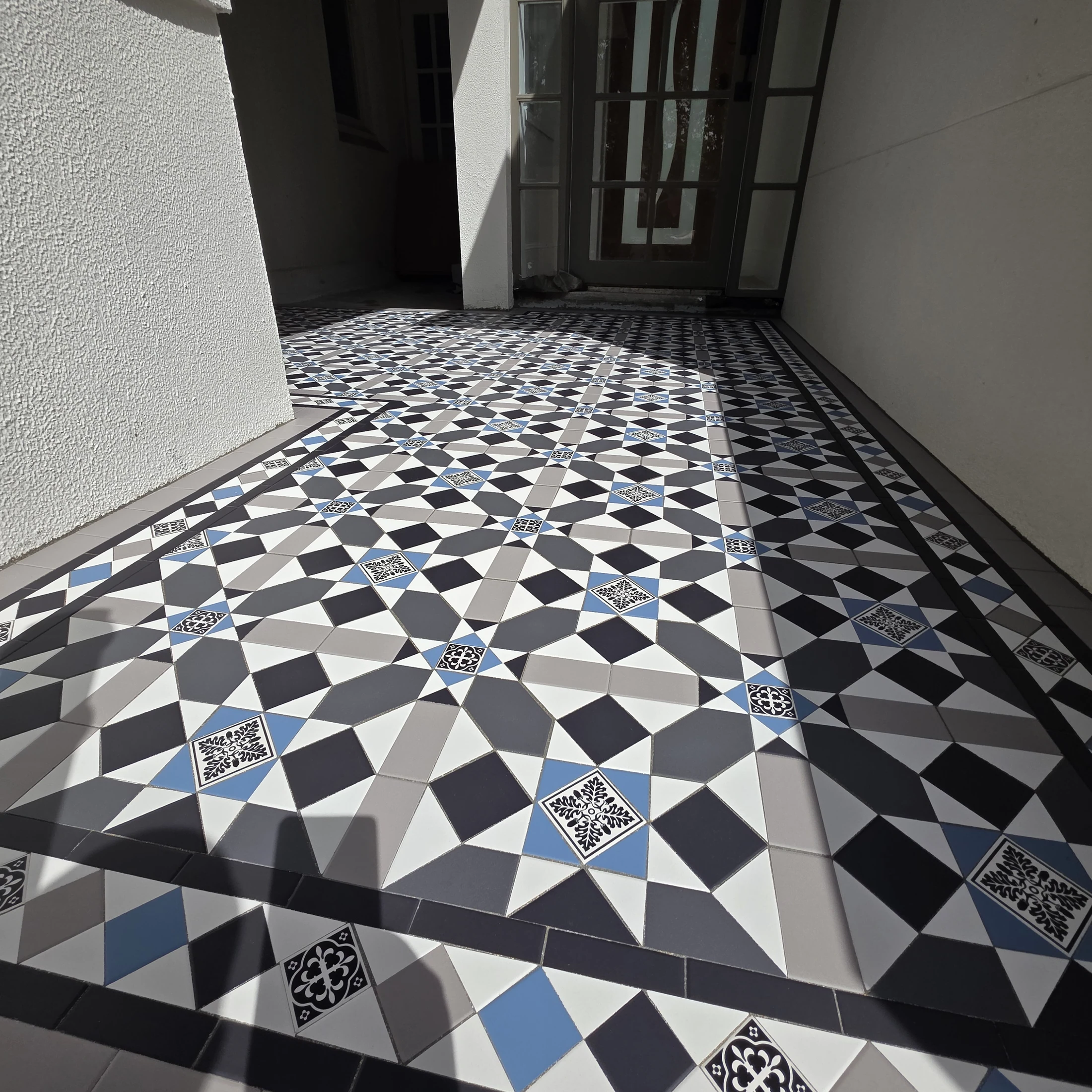
Work with Hurstville's layered streetscape
The Hurstville Town Centre Heritage Study describes a cohesive townscape in which buildings from different periods sit within a shared urban character. It also identifies an intact group of inter-war and Art Deco retail buildings and describes Forest Road as a record of the town centre's social and architectural history.
That context is useful inspiration, not a template for every property. A new verandah, path or entry should be considered against the building's own proportions, sightlines, existing finishes and the way the work meets the public-facing edge of the property.
Choose a pattern and edge treatment for the property
For a period-influenced Hurstville property, pattern density, border width and tonal contrast can be kept visually compatible with the facade rather than treated as isolated decoration. On a more recent or altered building, a restrained layout can connect the entry, verandah or pathway to the architecture without pretending that the property shares the town centre's heritage status.
External areas also need site-led decisions about falls, drainage, thresholds, exposure and pedestrian movement. Layout drawings and material selections should be reviewed together before installation, particularly where a path or verandah meets existing masonry, steps or stone edging.
Hurstville Town Centre Heritage Study — Volume 1Heritage Conservation | Georges River Council
Check heritage status before changing significant fabric
A heritage reference in the Hurstville area does not mean that every nearby property is heritage-listed. Georges River Council distinguishes individual heritage items from heritage conservation areas and directs owners to its planning and heritage information before works begin.
If a property is listed or is within a relevant conservation area, retain records of the existing floor, verandah, path, thresholds and adjoining details before deciding whether to repair, match, replace or add tiles. Council advice may be needed for work that could affect heritage significance; AHTC can help frame the tiling questions for that discussion but does not provide heritage approvals.
Heritage Conservation | Georges River CouncilHeritage Studies
Plan supply, installation or restoration as one property decision
A Hurstville project may involve a new tessellated layout, supply for an owner-managed installation, installation planning, or careful restoration of existing tiles. The appropriate path depends on what survives, what needs to be retained, the intended use and how the work joins adjacent surfaces.
Where existing tiles have significance or a strong relationship to the building, begin with condition and pattern documentation. Where the work is new, begin with the property's architecture and circulation. This page is a starting point for local context; the relevant design, supply, installation, restoration and edging services provide the next step.
Heritage Conservation | Georges River CouncilHurstville Town Centre Heritage Study — Volume 1
Your Heritage Tiling Questions
Is every older Hurstville property heritage-listed?
No. Georges River Council distinguishes listed heritage items from heritage conservation areas, and a heritage study's discussion of the town centre does not place every Hurstville property under the same controls. Check the property's current planning and heritage information before assuming a restriction or exemption.
What should I consider when choosing tessellated tiles for a Hurstville verandah or pathway?
Consider the building's proportions, the relationship between the entry and facade, border and field scale, thresholds, drainage, exposure and adjoining stone or masonry. Hurstville's documented mix of architectural periods is useful context, but the design should respond to the individual property rather than copy a town-centre facade.
Can existing tessellated tiles be restored instead of replaced?
Possibly. Start by recording the existing pattern, condition, edges and areas of loss. A property-led assessment can then distinguish repair and retention from carefully matched new work. If the property is a heritage item or in a conservation area, seek the relevant Georges River Council heritage advice before work that may affect significance.
Does a Hurstville tile project require council approval?
The answer depends on the property, the work and whether heritage significance is affected. Georges River Council states that some minor works may be exempt from development consent only in specified circumstances and advises owners to seek advice; written confirmation is required before exempt works commence. AHTC does not grant approvals.
Are there Hurstville projects I can view in the AHTC gallery?
Any future project reference should use an approved record with an accurate location label.
Discuss Your Heritage Tiling Project
Share your location, project details and photographs using our enquiry form, or call 0433 932 711.