
Tessellated Tiles in Seaford
Seaford’s coastal setting and mix of established residential streets, later homes and recognised heritage places call for tile choices that suit the property rather than a one-size-fits-all pattern. Authentic Heritage Tiling Co. can help Seaford property owners work through tessellated tile design, supply, installation and restoration for verandahs, entrances, pathways and interior floors.
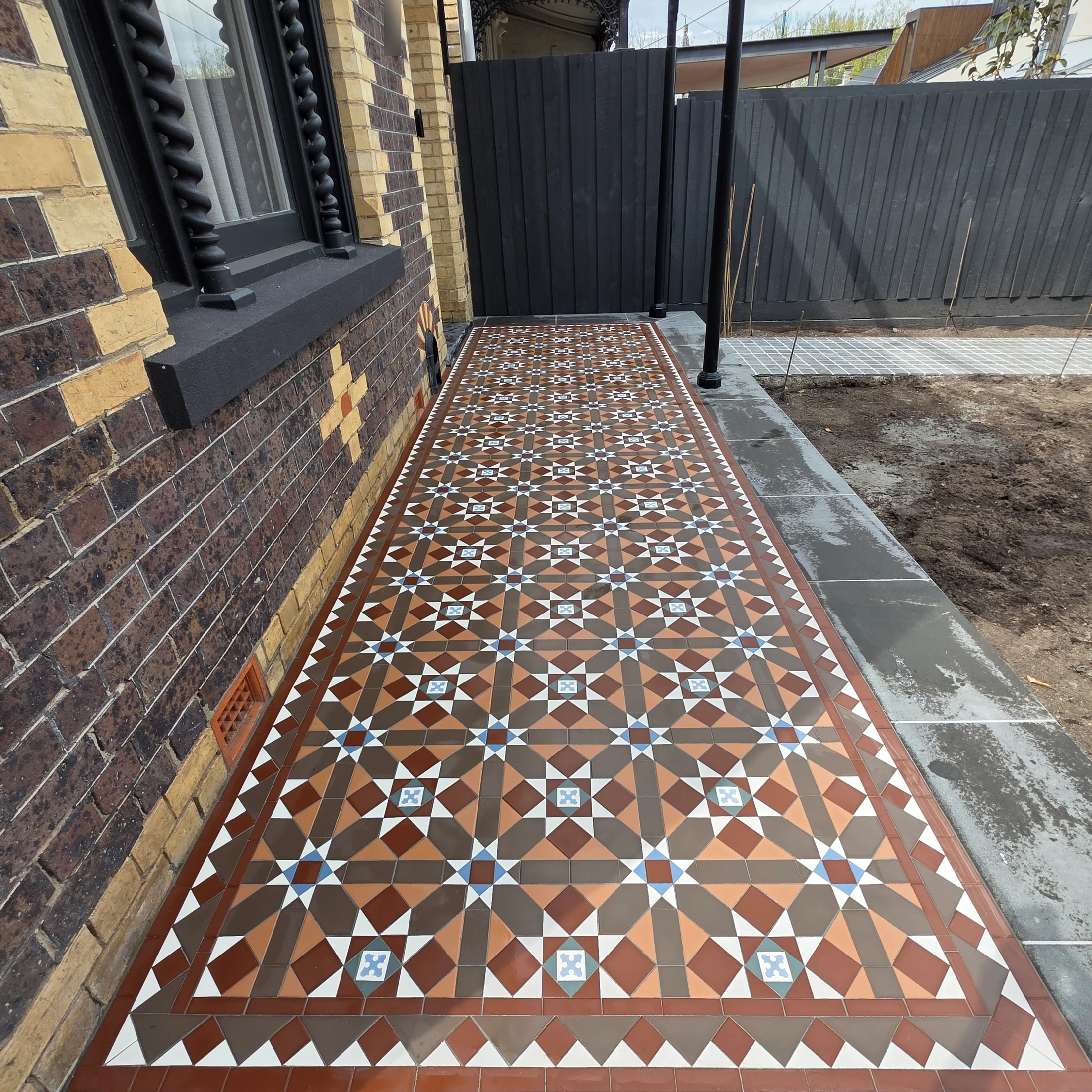
Tiling choices for Seaford homes and coastal settings
Seaford sits within Frankston City on Melbourne’s southern bayside. The local setting includes coastline, open space and the Seaford Wetlands, while the housing fabric ranges across different periods and forms. For a new tiled area, consider how the entry, verandah or pathway meets the garden, street edge and existing building materials before settling on a pattern.
A design consultation can test border widths, field geometry, colour balance and transitions against the scale of the property. On exposed external areas, layout and detailing should also be considered alongside falls, drainage, movement and the way the finished surface meets thresholds and landscaping.
Heritage-sensitive tile decisions in Seaford
Seaford’s heritage record includes Stokesay, a 1922 seaside home noted by Heritage Victoria for its intact Knitlock construction, pyramid-roofed form and carefully related outbuildings. This is a specific registered place, not a description of every Seaford house. It does show why the original fabric, proportions and setting should be understood before replacing or extending tilework at a period property.
The former railway substation is another documented 1922 Seaford landmark, with an interwar Classical character. For any property with suspected heritage value, check the current planning information and overlays for that individual site before external changes. Tile repair or new work should be planned to respect significant fabric without assuming that a particular approval pathway applies.
Tessellated tile services for Seaford projects
For a new verandah, pathway or floor, the process can begin with pattern development and tile selection, followed by supply coordination and installation planning. A site-led review helps resolve scale, edges, junctions and the relationship between the tiled area and adjoining surfaces.
For older or damaged work, restoration starts with assessing what remains. Matching decisions may involve colour, geometry, border composition and the condition of the existing surface. Where a project includes stone steps or a bullnose edge, those details can be coordinated with the tile layout so the transition reads as part of the design.
Check the property before external tile work
Frankston City Council explains that permit needs depend on the zones, overlays and policies applying to the individual property. A Heritage Overlay can affect external changes, including some repairs and maintenance that alter appearance or are not carried out to the same details, specification and materials. Confirm the current controls with council before committing to external work.
This check is especially useful where a tiled verandah, front path, retaining edge or other visible element contributes to an established streetscape. The tile design can then be developed with the property’s actual constraints in view, rather than treating all Seaford homes as if they shared one heritage status.
Your Heritage Tiling Questions
Can you help design a tessellated tile pattern for a Seaford verandah?
Yes. The design can be developed around the verandah’s proportions, thresholds, border, adjoining materials and the character of the home. A site review is useful where the area is exposed or connects directly to a garden path or front entry.
Does every older Seaford home need heritage approval for tiling?
No general assumption should be made. Frankston City Council says permit requirements depend on the individual property’s zones, overlays and planning policies. If a Heritage Overlay applies, external changes may require a planning permit, so check the property before work begins.
Is Stokesay representative of all Seaford houses?
No. Stokesay is a specific Victorian Heritage Register place with an unusually distinctive 1922 Knitlock design. It is useful local context, but it should not be used to assume that every Seaford property has the same construction, period or heritage controls.
Can existing tessellated tiles in Seaford be restored rather than replaced?
Often the first step is an assessment of the surviving tiles, substrate, edges and areas of damage. Restoration, selective replacement or a new adjoining section can then be considered against the condition and significance of the existing work.
Are outdoor tile layouts suitable for Seaford’s coastal setting?
They can be, provided the design and installation respond to the particular site. Falls, drainage, movement, thresholds, exposure and the transition to landscaping should be considered alongside the pattern and material selection.
Discuss Your Heritage Tiling Project
Share your location, project details and photographs using our enquiry form, or call 0433 932 711.