
Tessellated Tiles in East Melbourne
East Melbourne's leafy streets bring together terrace houses, historic mansions and later homes beside some of Melbourne's best-known gardens. For a tiled verandah, entrance, path or interior floor, the design needs to suit the building, the way the space is used and the condition of any existing work. AHTC can help with tessellated tile design consultation, supply, installation and restoration, including coordination of stone bullnose or edging where it is appropriate to the scheme.
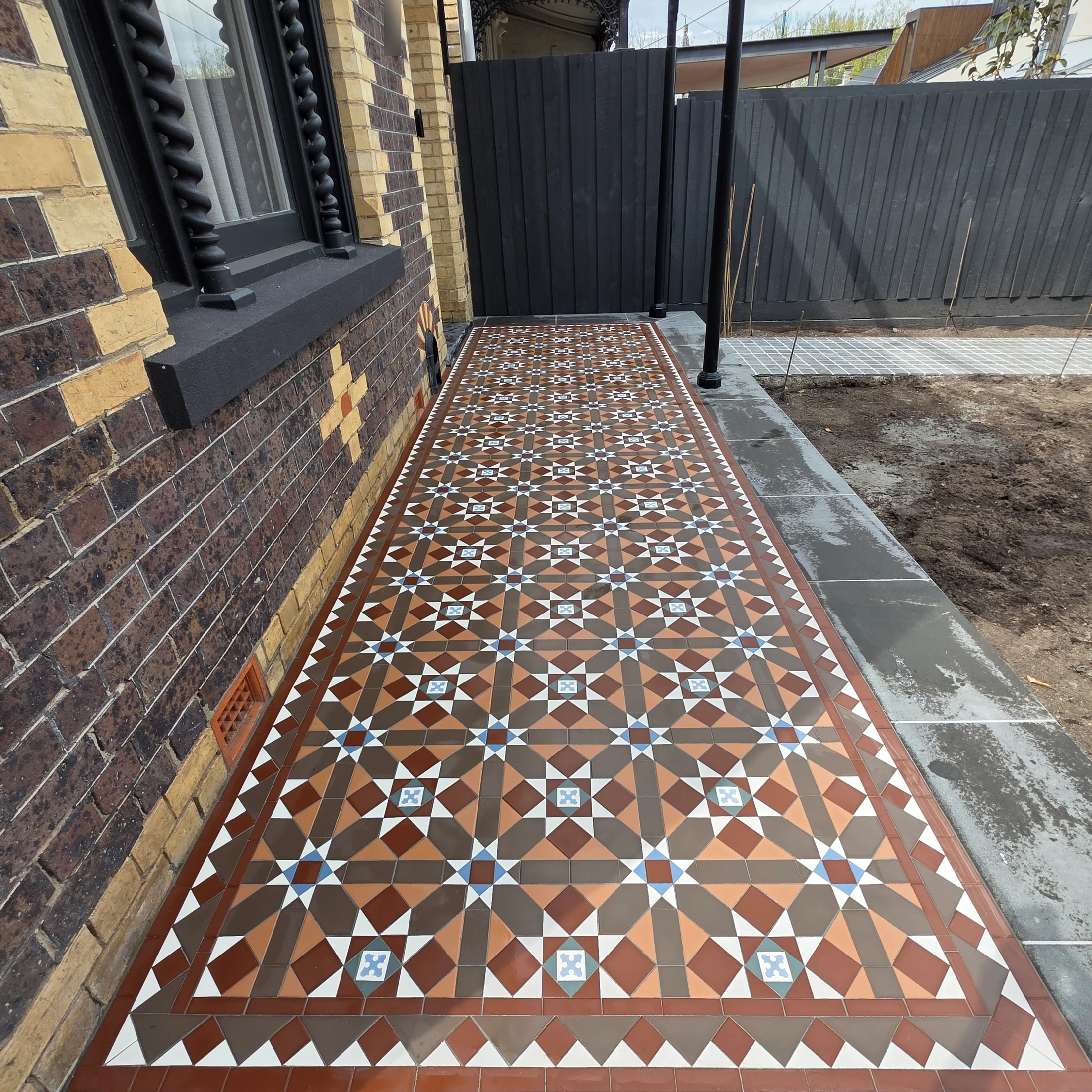
Working with East Melbourne's established character
The City of Melbourne describes East Melbourne as an established area east of the central city, with many nineteenth-century homes. Its leafy streets include terrace houses and historic mansions, while Fitzroy, Treasury and Parliament gardens are identified as heritage listed. That mix calls for a measured approach: a new tessellated pattern should complement the proportions and material cues of the property rather than imitate a period detail without evidence.
For an older entrance or verandah, useful early questions include whether the existing layout is original, whether thresholds and steps have moved, and how the proposed border will meet walls, stairs or garden edges. Where an existing floor survives, careful assessment can help separate sound original fabric from later repairs before any replacement is considered.
Plan the pattern, edges and practical use together
Tessellated tiles can be planned around the proportions of a hallway, porch, verandah or pathway. The main field, border and corner treatment should be considered as one composition, with transitions resolved at doors, steps and changes of level. A consultation can also address tile selection and supply before installation sequencing is settled.
Outdoor areas need a site-led review of exposure, drainage, access and the condition of the supporting surface. There is no single treatment that suits every East Melbourne property. Existing edging, steps and adjacent stone may need to be coordinated so the finished work reads as part of the building rather than an isolated patch.
Check the property's heritage position before changing it
Some East Melbourne homes are heritage listed, but a suburb-wide assumption is not enough. The City of Melbourne explains that heritage overlays apply to identified properties and precincts, and that precinct controls can affect buildings within the mapped area. Before external alterations or work that may affect significant fabric, check the property against the Melbourne Planning Scheme and obtain the relevant council or heritage advice for the proposed scope.
AHTC's role is to help develop a practical tiling response. It does not replace a planning-permit assessment, heritage consultant's advice or any approval required for a particular property. Retaining sound fabric and making new work legible, proportionate and removable where feasible can support a more careful design discussion.
Your Heritage Tiling Questions
Are all East Melbourne homes heritage listed?
No. The City of Melbourne describes some East Melbourne homes as heritage listed and separately explains that heritage overlays apply to identified properties and precincts. Check the individual address on the planning maps and relevant heritage records rather than relying on the suburb name alone.
Can tessellated tiles work on an East Melbourne terrace verandah?
They can be considered where the pattern, scale, thresholds and edge details suit the property and the site conditions. An initial design consultation can review the existing verandah, access, drainage and any surviving floor fabric before supply or installation is planned.
What should I check before altering tiles at an East Melbourne property?
Check whether the property is individually listed or within a heritage precinct, then confirm any planning-permit triggers for the proposed work. The City of Melbourne's heritage map, Heritage Overlay schedule and heritage guidance are useful starting points; the required process depends on the property and the scope.
Can existing East Melbourne tessellated tiles be restored rather than replaced?
That depends on the condition, extent and significance of the surviving work. Assessment can identify sound original areas, later repairs and practical limits before a repair, partial replacement or new layout is selected. Where heritage values are relevant, retaining significant fabric should be considered before removal.
Discuss Your Heritage Tiling Project
Share your location, project details and photographs using our enquiry form, or call 0433 932 711.