
Tessellated Tiles in Woodville South
Woodville South has a distinctive early twentieth-century residential character. Its documented character area includes predominantly single-storey bungalow and Tudor homes, along with Spanish Mission, Dutch Gable and Art Deco examples. For a verandah, entry, pathway or interior floor, tile proportions and edging can be considered alongside the home's roofline, masonry, joinery and garden setting rather than treated as an isolated pattern choice.
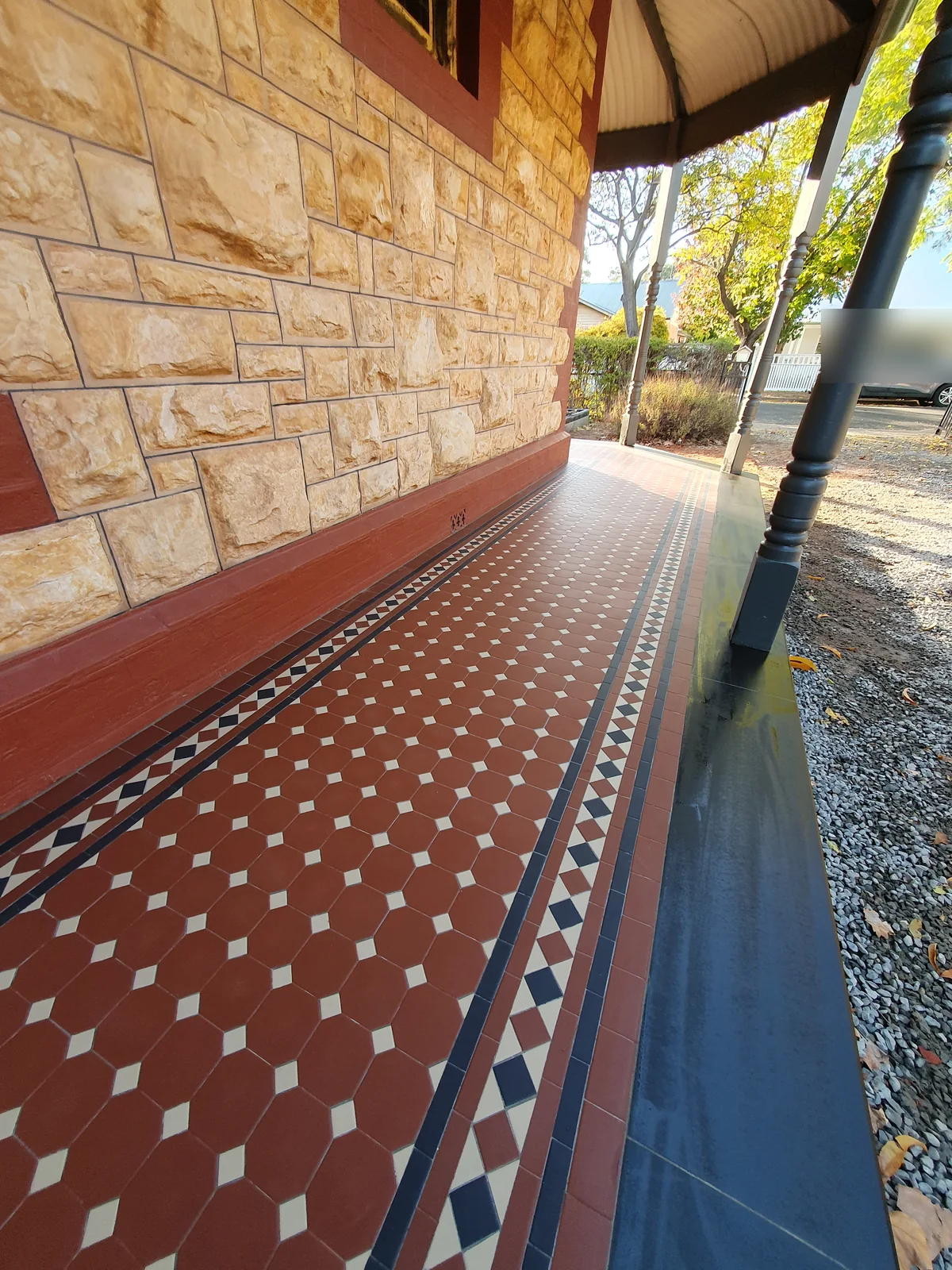
A local character to work with
The Woodville South character schedule describes development mainly from the 1910s to the 1940s, with substantial allotments and a cohesive scale, particularly around the Glen Streets and Angus Street. Streets are described as tree lined, with mature vegetation and a predominantly single-storey built form.
That context can inform a restrained tile scheme. A broad bungalow verandah may call for a border and field that sit comfortably with freestone, red brick, stucco or glazed brick. A Tudor or Spanish Mission home may need a different balance of geometry, contrast and threshold detail. The right response depends on the existing fabric and the specific space, not on assuming every Woodville South property is identical.
Plan the pattern around the property
For front paths and verandahs, set out the usable width, thresholds, steps, drainage falls and edge conditions before settling on a repeating pattern. A scheme can then be developed to suit the approach to the house, the verandah line and the relationship between paving and planting.
Where an existing floor or border survives, matching should be approached as a design and condition question. Existing colours, dimensions, wear and previous alterations can all affect whether careful retention, selective restoration or a new complementary layout is the more sensible direction.
Respect the setting and check the property
Council planning material describes the Woodville character precinct as having an objective of preserving existing development patterns and built form, with limited opportunities for infill. It also notes that many properties contribute to the area's heritage character. That makes a property-by-property review useful before altering an established verandah, pathway or floor.
A character description is not the same as an individual heritage listing, and it does not determine an approval outcome for a particular address. If the property has a heritage or character control, confirm the current requirements with the relevant authority before work begins.
Tessellated tile help for Woodville South projects
AHTC can assist with design consultation, tessellated tile supply, installation and restoration, with stone bullnose or edging coordination where it suits the project. A useful first discussion can cover the room or outdoor area, the existing surface, access, preferred character and whether the aim is a close match or a sympathetic new scheme.
Share photographs and practical dimensions when requesting guidance. The final recommendation should follow a site-specific review of the existing surface and the intended use.
Your Heritage Tiling Questions
What tile style suits a Woodville South bungalow?
There is no single mandatory style, but the local character schedule records bungalow homes, broad verandahs, masonry piers, terracotta roofs and timber details. A tile layout can be developed to sit comfortably with those features, taking the home's existing colours, proportions and threshold into account.
Can tessellated tiles be used on a Woodville South verandah or pathway?
Yes. Verandahs and pathways can be planned around their width, border, steps, drainage and transitions to the garden or house. The surface and edge conditions should be assessed before the pattern and materials are finalised.
Does Woodville South character information mean every home is heritage listed?
No. The council material describes a character area and notes that some properties contribute to that character. It does not mean every property is individually listed or that the same requirements apply to every address. Check the property's current planning and heritage position before making changes.
How should an existing tessellated floor be approached?
Begin with condition and pattern assessment. Record loose, cracked, worn or missing areas, look at the surrounding border and thresholds, and decide whether the goal is retention, selective restoration or a complementary new installation. A site-specific review is more reliable than assuming a universal repair method.
Discuss Your Heritage Tiling Project
Share your location, project details and photographs using our enquiry form, or call 0433 932 711.