
Tessellated Tiles in Fulham Gardens
Fulham Gardens has a varied suburban story: market-gardening land was progressively reshaped by post-war housing and substantial development in the 1960s and 1970s. For a home in the area, the right tessellated tile approach depends on the building's era, the condition of any surviving surface and the way the verandah, entry or path meets the rest of the property. A careful design consultation can help distinguish restoration of existing fabric from a well-considered new installation.
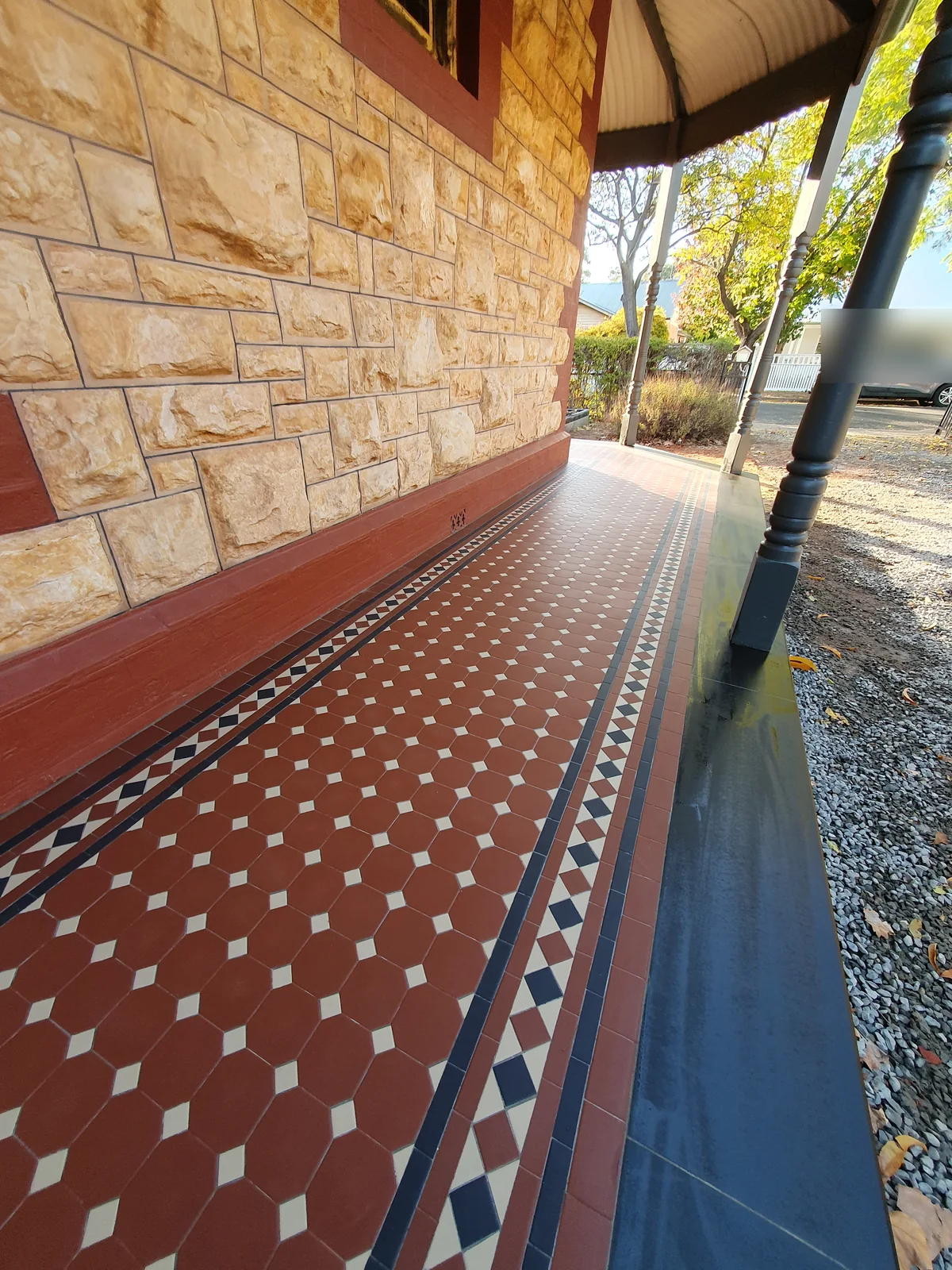
Tiling decisions for Fulham Gardens properties
The council's local history records Fulham Gardens' transition from farming and market gardening to post-war housing and heavier suburban development in the 1960s and 1970s. That history means a local address may contain an original surface, a later replacement or a newer home with no historic tilework to retain. Before selecting a pattern, inspect what is actually there rather than assuming a period finish from the suburb name.
For an existing verandah, porch or entry, compare the surviving tile layout with thresholds, steps and adjacent floor levels. Where a new pathway or verandah is planned, proportions, edge treatment and transitions should be resolved together so the pattern fits the architecture and remains practical at doors and changes in level.
Restoration, replacement or a new tessellated design
If original or older tiles remain, document their pattern, colours, borders and condition before lifting or replacing anything. Matching may involve more than finding a similar colour: module size, repeat, border relationship and the visual connection to the entry or verandah all matter. Selective restoration can be appropriate where the existing fabric is repairable; a new layout may be more suitable where the surface is substantially altered or incomplete.
For a new installation, design consultation can coordinate tessellated tile supply, setting-out, installation and stone bullnose or edging details. Surface preparation should be assessed on the property rather than prescribed as a universal recipe. The locality's recorded former reedbeds and soft alluvial conditions are a reminder to consider levels, movement, drainage and thresholds carefully, but they do not establish the ground conditions of every individual site.
Property-specific checks before work begins
The South Australian planning map identifies Fulham Gardens policy and precinct areas within the Charles Sturt planning area. That map is useful context, but it does not mean every home is heritage listed or that tile work automatically requires approval. Check the property's current planning and heritage position with the relevant authority when the work affects a character element, a regulated area or an existing historic surface.
A site review should also consider drainage, falls, door clearances, step edges and the junction between tilework and surrounding paving. These practical details help a design remain coherent while reducing avoidable changes after installation.
Your Heritage Tiling Questions
Do all homes in Fulham Gardens have heritage tiles?
No. Fulham Gardens includes post-war housing, homes from the major 1960s and 1970s suburban expansion, and later development. The suburb's history does not establish that every property has original tessellated tiles or heritage protection. Assess the individual floor, verandah or path before choosing restoration or replacement.
Can existing tessellated tiles in Fulham Gardens be restored?
Often the first step is a condition and layout assessment. Record the pattern, borders, loose or damaged areas and the way the surface meets thresholds. If enough original fabric survives, selective restoration may be considered; where the layout is incomplete or heavily altered, a carefully matched replacement or new design may be more practical.
What should be checked before tiling a Fulham Gardens verandah or path?
Review levels, drainage, falls, step edges, door clearances and transitions to adjoining paving. These checks are especially important when a new surface changes the finished height. The property's actual conditions should guide preparation and detailing rather than a generic substrate assumption.
Does a Fulham Gardens address automatically need heritage approval for tile work?
No automatic conclusion should be drawn from the suburb name. The South Australian planning map provides area-level planning context, while any approval or heritage requirement depends on the individual property, the proposed work and the applicable rules. Confirm those details with the relevant authority before starting regulated work.
Discuss Your Heritage Tiling Project
Share your location, project details and photographs using our enquiry form, or call 0433 932 711.