
Tessellated tiles in Fulham, SA
Fulham's built setting brings together a long Reedbeds history, surviving individually significant places and layers of later residential subdivision. A tessellated tile scheme can acknowledge that context without copying a historic pattern by assumption. We can help you work through layout, colour, edging, condition and installation choices for a home, verandah or pathway, with the property's own fabric and planning context kept central.
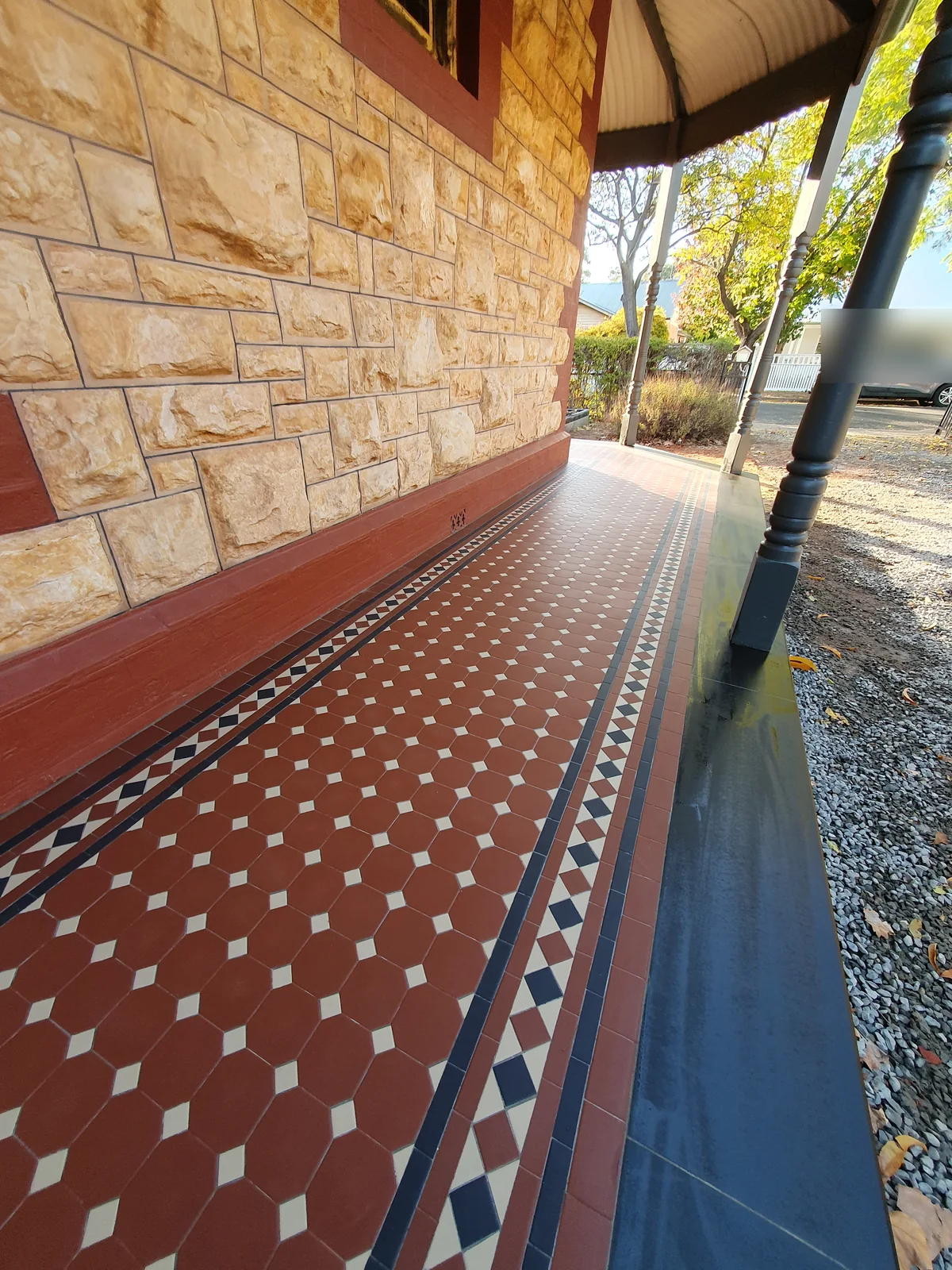
A Fulham setting shaped by the Reedbeds and later subdivision
The City of West Torrens historical account records the district as part of the Reedbeds, with John White settling there in 1836 and William White establishing the suburb of Fulham in 1877. The same account links Fulham Farm with the site now occupied by The Oaks. That history can inform a restrained design conversation, but it does not prescribe one pattern for every property.
The West Torrens heritage review describes early farming, market gardens and horticulture supported by fertile soil and reliable water, then notes that residential subdivision has left limited physical evidence of those activities. For a current project, the useful question is therefore what survives at the property: original tilework, verandah proportions, masonry, thresholds, garden edges or later alterations.
South Australian planning guidance separates neighbourhood character from heritage. Both can matter to a tile decision, but neither should be assumed from a suburb name alone. A property-specific check is sensible before changing an older frontage or removing surviving fabric.
Design choices for Fulham verandahs, entries and pathways
For an older or characterful home, begin by recording what is already present. Existing tile dimensions, border proportions, stair geometry, brickwork and adjoining paving can guide a compatible scheme more reliably than choosing a pattern from a catalogue in isolation.
On a verandah or front path, the design needs to work at the scale of the approach as well as at close range. A clear field, considered border and suitable transition at steps or doorways can make a new installation feel settled without pretending it is original. Where a surviving floor is sound, selective repair or careful matching may be preferable to wholesale replacement.
Fulham's former low-lying, water-associated setting also makes site conditions worth discussing early. Levels, drainage, exposure and the relationship between the tiled surface and surrounding ground should be assessed on site rather than treated as a universal installation recipe.
Restoration and new work with the property in view
The West Torrens review identifies The Oaks and Weetunga in Fulham as State Heritage Places. Those individual listings are an important reminder to check the status and constraints of the particular property; they are not evidence that every Fulham dwelling is listed or that tile work carries heritage endorsement.
For restoration, the first step is to distinguish original or established fabric from later additions and to document condition before selecting a repair approach. For new work, design consultation can consider pattern, tone, edging and junctions with existing masonry. Supply, installation, restoration and stone bullnose or edging coordination can then be planned around the actual site and brief.
Your Heritage Tiling Questions
Does every Fulham home need heritage approval for tessellated tiling?
Not on the basis of the suburb name alone. The West Torrens heritage review identifies particular State Heritage Places in Fulham, so the relevant property and proposed work should be checked through the applicable South Australian planning and heritage information before changes begin.
Can a new Fulham verandah pattern reflect the area's history?
Yes, but it should respond to the property rather than use a historical label as a shortcut. Existing frontage proportions, masonry, thresholds, garden setting and any surviving tiles can guide a balanced design that acknowledges Fulham's layered history without claiming to recreate a documented original.
Is restoration or replacement better for an older tiled entry?
That depends on what survives and its condition. A site assessment can separate sound original fabric from later work, consider selective repair or matching, and plan transitions where new sections meet existing masonry or steps.
What should be considered for a Fulham pathway installation?
Discuss the pathway's proportions, falls, drainage, exposure, thresholds and connection to adjoining ground before finalising the pattern. The practical details should be resolved for the site rather than assumed from general suburb conditions.
Discuss Your Heritage Tiling Project
Share your location, project details and photographs using our enquiry form, or call 0433 932 711.