
Tessellated Tiles in Croydon, SA
Croydon combines an inner-western Adelaide setting with a documented historic-area character in the part of Croydon and West Croydon south-west of the railway line. If your home has a verandah, front path or patterned floor to renew, the design should respond to the property's proportions and existing details rather than treating every older house as identical. AHTC can help with tessellated tile design consultation, supply, installation, restoration and stone bullnose or edging coordination.
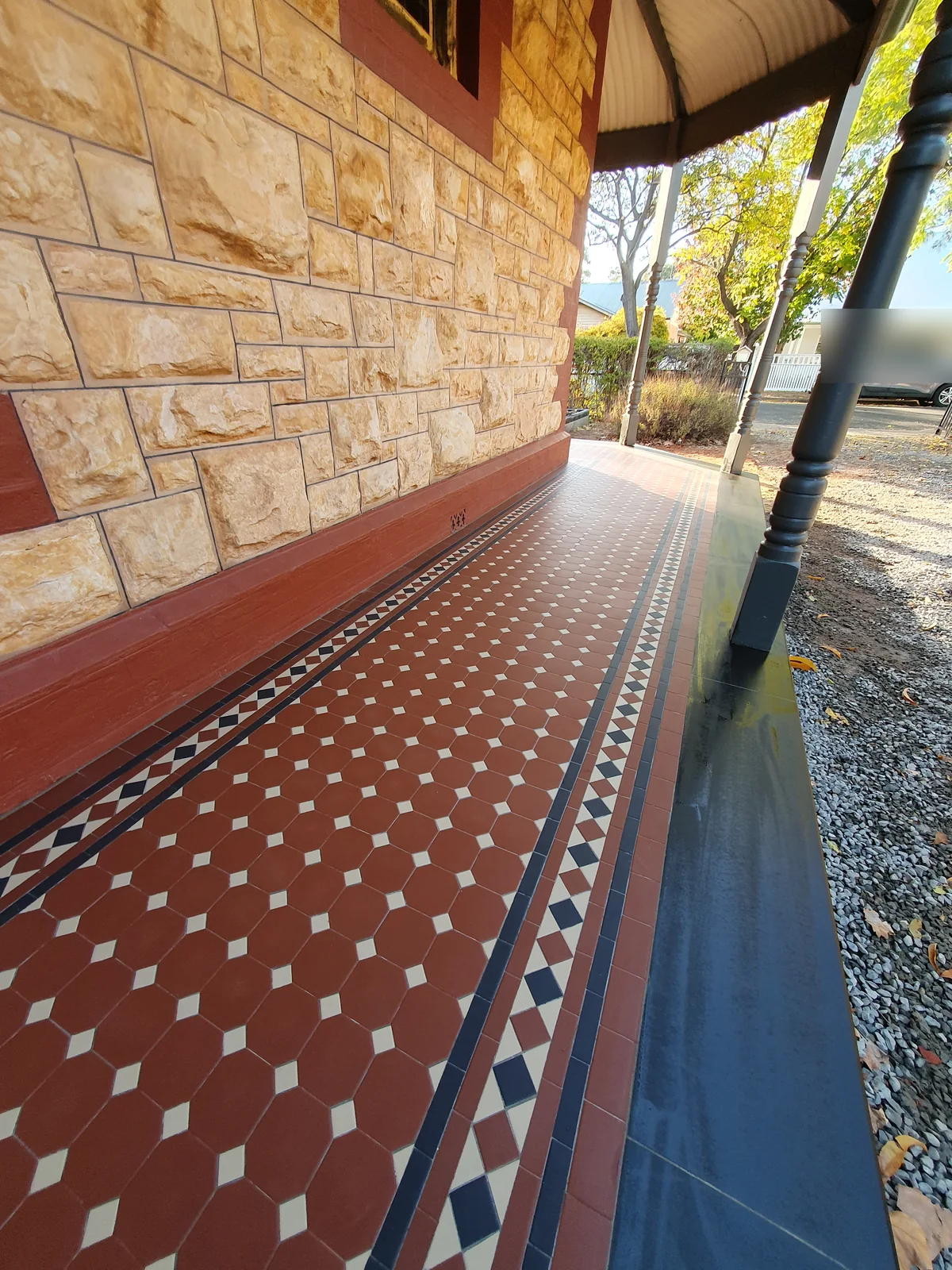
A tile approach suited to Croydon's older streetscapes
South Australia's Croydon / West Croydon Historic Area Statement describes 1890s–1910s development with villas and symmetrical cottages, including some earlier worker's cottages. It also records hipped and gable roofs, separate verandahs, single-storey form, and small to medium front setbacks. Those observations can inform proportion, border scale and the relationship between a new tiled surface and the front elevation, while each property still needs to be considered on its own terms.
Bluestone, sandstone and redbrick are identified in the statement, alongside low masonry and cast-iron fencing. For a Croydon verandah or pathway, tile colours, edge treatment and transitions can therefore be considered alongside the existing masonry and fence line. The aim is a coherent addition or repair, not an assumption that one pattern belongs to every house.
Historic Area Statements and Character Area Statements — City of Charles Sturt, PlanSA
Design, restoration and installation for verandahs and paths
For a new tessellated floor, the useful starting points are the space's dimensions, thresholds, drainage exposure, access and the visual weight of the building. A design consultation can resolve the field, border and transition before supply and installation are coordinated.
Where an existing floor survives, restoration begins with observing what remains: loose or damaged tiles, previous repairs, edge conditions and the way the surface meets steps or masonry. Selective restoration may be more appropriate than removing sound original fabric. If the work includes a stone bullnose or other edging, that junction should be planned with the tile layout rather than added as an afterthought.
Check the property's planning and heritage setting
A character description is not a blanket heritage listing. Before altering an older Croydon property, confirm the site's current planning and heritage controls and whether the proposed work needs approval. South Australia's Heritage Standards explain that heritage assessment is linked to the relevant State Heritage Area Overlay and development-referral setting; the applicable requirements are property-specific.
For an initial discussion, photographs of the existing floor, the front elevation, steps and adjoining masonry can make the design conversation more useful. The final approach should follow the actual condition and the relevant planning advice for the property.
Historic Area Statements and Character Area Statements — City of Charles Sturt, PlanSA
Your Heritage Tiling Questions
Does every Croydon home sit within a heritage area?
No. The official Croydon / West Croydon statement identifies a historic area south-west of the railway line, and a character statement does not make every home heritage-listed. Check the individual property's current planning and heritage setting before designing work.
What should I consider for tessellated tiles on a Croydon verandah?
Consider the verandah's proportions, thresholds, existing masonry, fence line, drainage exposure and access. In the documented historic-area context, separate verandahs, small to medium setbacks and bluestone, sandstone or redbrick details can be useful design references without dictating one pattern for every property.
Can an existing tessellated floor be restored rather than replaced?
Often the first step is an inspection of what remains, including loose tiles, damaged areas, earlier repairs and edges. A condition-led assessment can help decide whether selective restoration, careful matching or a new design is the more suitable path for that floor.
Does a Croydon tile project automatically need heritage approval?
Not automatically. Approval and referral depend on the property's planning and heritage controls and the proposed work. South Australia's heritage guidance describes assessment in relation to the relevant overlay and referral setting, so confirm the site's requirements before work begins.
Discuss Your Heritage Tiling Project
Share your location, project details and photographs using our enquiry form, or call 0433 932 711.