
Tessellated tiles in Roselands
Planning a tessellated tile floor, verandah or pathway in Roselands? The right approach starts with the property: how the existing surface is built, how the new work meets adjoining areas, and whether a heritage listing or conservation-area control applies. We can help you consider design, supply, installation and restoration as one coordinated project.
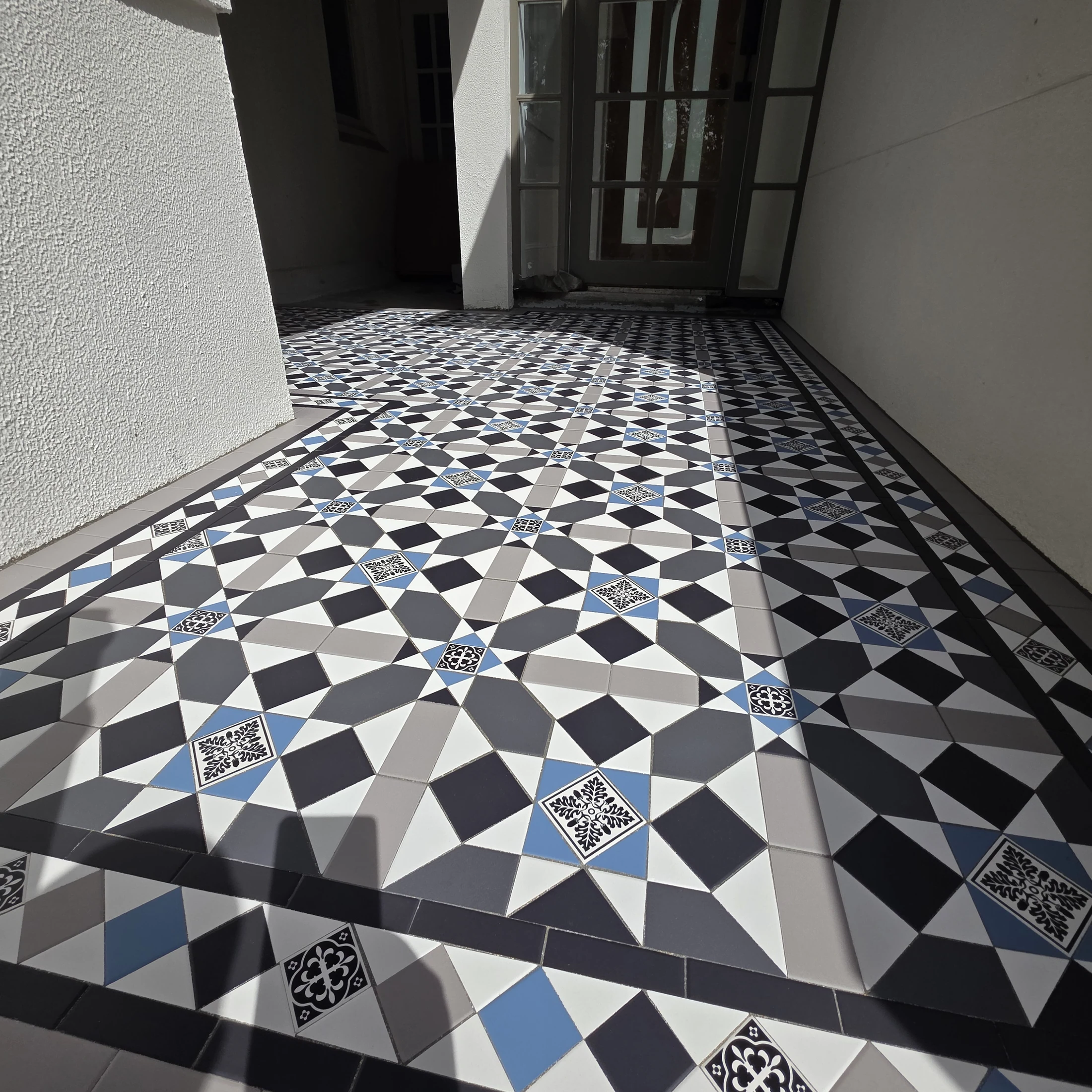
A property-led approach for Roselands homes
Roselands sits within the City of Canterbury-Bankstown local-government context. Council's heritage guidance distinguishes individual heritage items from heritage conservation areas and explains that heritage significance can relate to a building, group of buildings, streetscape or landscape. That means a locality name alone cannot determine the right tile treatment for a particular home.
Before selecting a pattern, look at the existing entry, verandah, stair, pathway and threshold details together. Retaining sound original work, matching a surviving border, or introducing a clearly considered new layout may each be appropriate, depending on the property's condition and controls.
Heritage | City of Canterbury BankstownCo-naming of Council Wards | City of Canterbury BankstownStatement of Environmental Effects — Roselands NSW
Design details that make a tile scheme feel settled
For a Roselands project, begin with the dimensions and movement of the space rather than a pattern chosen in isolation. A border can clarify the edge of a verandah or pathway, while a measured field layout can keep doorways, steps and changes in direction legible. Colours should be tested against the brickwork, paint, joinery and garden setting that will remain around the tiles.
On an existing floor, careful inspection matters before any repair or replacement decision. Photograph the pattern, note loose or damaged areas, and identify transitions to other finishes. New work should be designed to sit comfortably with the building without pretending that every element is original.
Heritage | City of Canterbury BankstownStatement of Environmental Effects — Roselands NSW
Check the property before changing an older floor
Canterbury-Bankstown Council says the Local Environmental Plan 2023 provides statutory protection for listed heritage items and heritage conservation areas. Its guidance also notes that listed status does not mean change is impossible; proposed work should be compatible with or complement the heritage place. Check the individual property and speak with the relevant authority where heritage controls may apply before work begins.
A planning assessment for one Roselands site found no heritage item or conservation-area status for that particular property. That is a site-specific finding, not a suburb-wide exemption.
Heritage | City of Canterbury BankstownStatement of Environmental Effects — Roselands NSW
Plan supply, installation or restoration together
We can discuss a new tessellated layout, tile supply, installation planning, restoration of an existing tiled area, and stone bullnose or edging coordination. The scope should follow the property review: access, levels, adjoining finishes, drainage exposure and the condition of the existing work all affect the appropriate sequence.
For broader local context, use the Canterbury-Bankstown service area page alongside this Roselands guide. It is a service grouping for navigation, not a statement that every nearby property shares the same heritage controls.
Heritage | City of Canterbury BankstownCo-naming of Council Wards | City of Canterbury Bankstown
Your Heritage Tiling Questions
Does every Roselands home have heritage protection?
No. Heritage status is property- and area-specific. Canterbury-Bankstown Council says its LEP protects listed heritage items and heritage conservation areas, and a planning assessment for one Roselands site recorded neither status for that particular site. Check the individual property before relying on a general locality assumption.
Can tessellated tiles be used on a newer Roselands renovation?
They can be considered as new work when the layout, scale, colour and edge details suit the building and site. The design should be based on the actual entry, verandah, pathway or interior rather than assuming a historic pattern belongs everywhere.
What should I check before restoring an existing tiled area?
Record the existing pattern and borders, inspect damaged and loose areas, note thresholds and adjoining surfaces, and check whether a heritage item or conservation-area control applies. Where a heritage question arises, seek property-specific advice before altering the work.
Can the pathway, verandah and floor be designed as one scheme?
Yes. Considering the areas together can help align borders, transitions and proportions, while still allowing each surface to respond to its exposure, access and condition. The final approach should be based on an inspection and the requirements of the property.
Discuss Your Heritage Tiling Project
Share your location, project details and photographs using our enquiry form, or call 0433 932 711.