
Tessellated tiles in Homebush
Homebush has a distinctive local setting for considered tile work. Strathfield Council describes Homebush Village as a heritage-ambience town centre near the historic railway station, with many early-1900s federation and interwar-style buildings. For a Homebush property, the right approach starts with the existing building, the space being tiled and whether the work is intended to retain an established character or introduce a new pattern with a compatible scale.
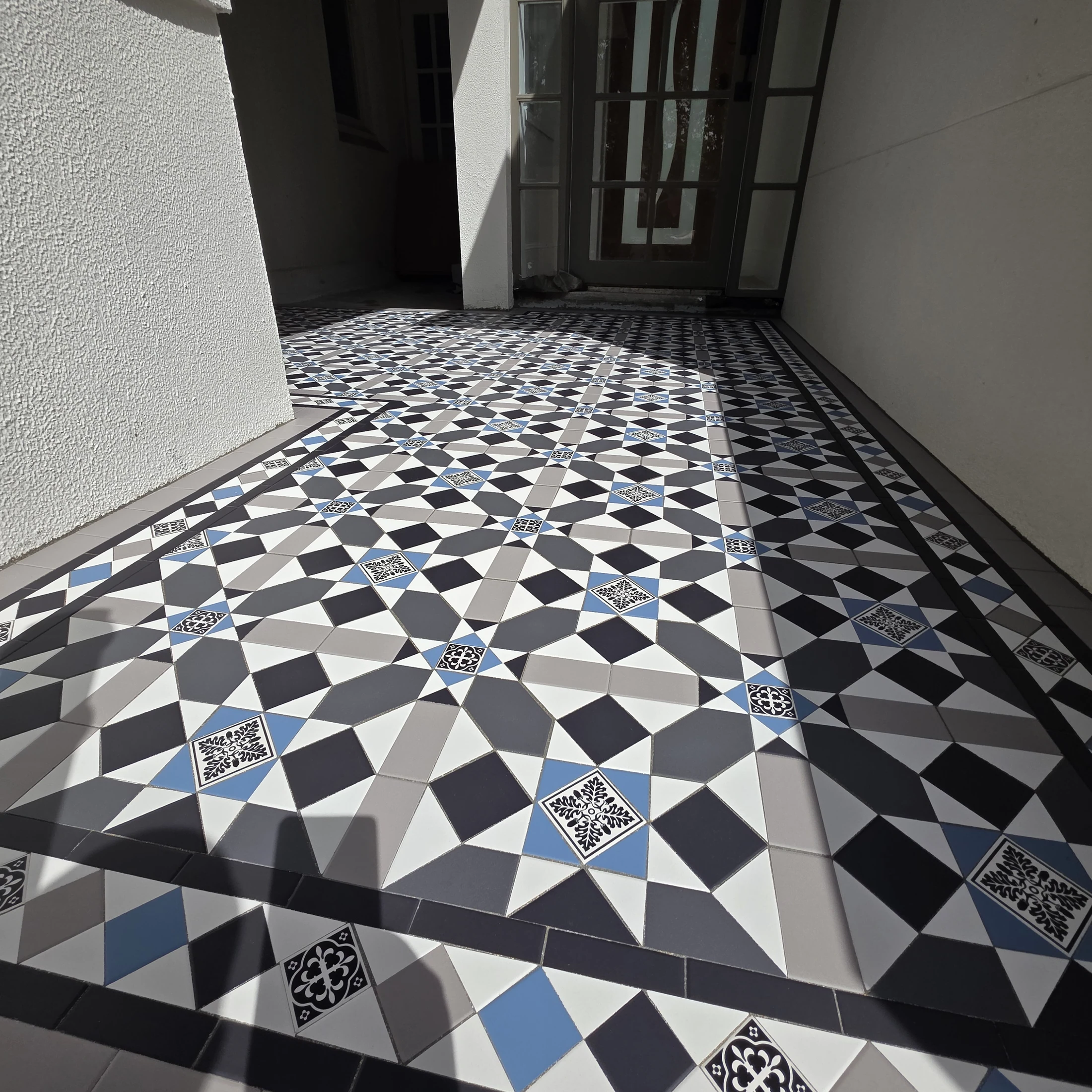
A documented Homebush streetscape context
Homebush Town Centre is associated with the 1878 Village of Homebush estate and sits close to Homebush railway station, which Strathfield Council identifies as one of Sydney's first rail stations, built in 1855. Council also notes the presence of early-1900s federation and interwar-style buildings. That context can inform proportion, border treatment and colour restraint, but it does not mean every Homebush property is heritage-listed or belongs to one uniform architectural period.
Homebush Village is on the south side of the station and is separated from it by Homebush Primary School. A site visit or clear photographs can help establish how a verandah, entry, path or interior floor relates to the property's own frontage, thresholds and adjoining materials.
Homebush Town Centre | Strathfield CouncilHeritage | Strathfield Council
Design choices for period homes and new work
For a period-facing entry or verandah, a tessellated layout can be developed around the geometry of the space rather than applied as a generic repeat. Existing steps, door thresholds, garden edges and the width of a pathway all affect how a border and field pattern will read when viewed from the street.
Where a property has surviving tiles, matching should begin with what is actually present: dimensions, colours, pattern, wear and the relationship between the tiled surface and its edge. Where there is no surviving fabric, a new design can still take cues from the scale and restraint of the surrounding building without presenting the result as historic work.
Design consultation, tessellated tile supply, installation, restoration and stone bullnose or edging coordination can be considered as separate stages. The appropriate sequence depends on the condition of the surface, access and the intended use of the area.
Homebush Town Centre | Strathfield CouncilHeritage maintenance guides | Heritage NSW
Check the property's heritage status before work
Strathfield Council distinguishes individual heritage items from heritage conservation areas and advises property owners to check the relevant property status. Homebush's documented town-centre character is useful design context, but it is not proof that a particular dwelling is listed or that approval is required for a proposed tile project.
If the property is listed or sits within a conservation area, confirm the applicable controls with the relevant authority before committing to changes. Heritage NSW's maintenance guidance also recommends considering conservation, renovation, access, fire safety and climate impacts together. A tile proposal should therefore be developed around the property's actual evidence and the work's scope, not an assumed approval pathway.
Heritage | Strathfield CouncilHeritage maintenance guides | Heritage NSW
Craftsmanship that follows the site
Good tessellated work depends on careful setting-out, clean transitions and an honest response to the substrate and existing fabric. On an older Homebush property, the most useful early questions are whether original tiles remain, which edges are visible, how water and access affect the area, and whether the goal is repair, sympathetic replacement or a wholly new installation.
Restoration and new installation are not interchangeable. Retaining sound original material may call for a different design and installation conversation from creating a new pathway or verandah surface. The finished pattern should support the property's proportions and daily use while keeping the distinction between existing and new work clear.
Heritage maintenance guides | Heritage NSWHomebush Town Centre | Strathfield Council
Your Heritage Tiling Questions
Is every Homebush home heritage-listed?
No. Homebush's documented town-centre character does not establish that every property is listed. Strathfield Council distinguishes heritage items from conservation areas and provides guidance for checking a specific property's status.
What should be checked before replacing old tiles in Homebush?
Record the existing tiles, pattern, dimensions, edges, thresholds and condition before removing anything. If the property is listed or in a conservation area, check the applicable council and heritage guidance first. Heritage NSW recommends considering conservation and renovation together with access, fire safety and climate impacts.
Can a new tessellated pathway suit a Homebush period property?
It can be designed to respond to the property without claiming to be original fabric. Path width, steps, thresholds, visible borders and the building's proportions should guide the layout, colour balance and edge treatment.
Discuss Your Heritage Tiling Project
Share your location, project details and photographs using our enquiry form, or call 0433 932 711.