
Tessellated Tiles in Waterfall Gully
Waterfall Gully's steep creek setting, reserves and long history of gardens, stone buildings and public recreation call for a property-led approach to tessellated tile work. Whether the brief is a new entry, verandah or pathway, or the care of existing tilework, pattern, scale, edges and transitions should be considered alongside the building and the way the site meets the gully landscape.
A steep gully and creekside setting
National Parks and Wildlife Service South Australia describes Waterfall Gully as part of Cleland National Park, with steep hills, native vegetation and stringybark forest. The City of Burnside's local trail material records First Creek flowing through the gully towards Hazelwood Park and the Torrens River. For an external tiled area, that setting makes the relationship between the finished surface, steps, drainage and adjoining ground an important part of the design conversation.
The local history also records creekside gardens, orchards and small stone or bluestone buildings. These are useful reminders that a Waterfall Gully project may sit within a layered landscape, but they do not establish one uniform architectural style or heritage status for every property.
Designing entries, verandahs and pathways around the property
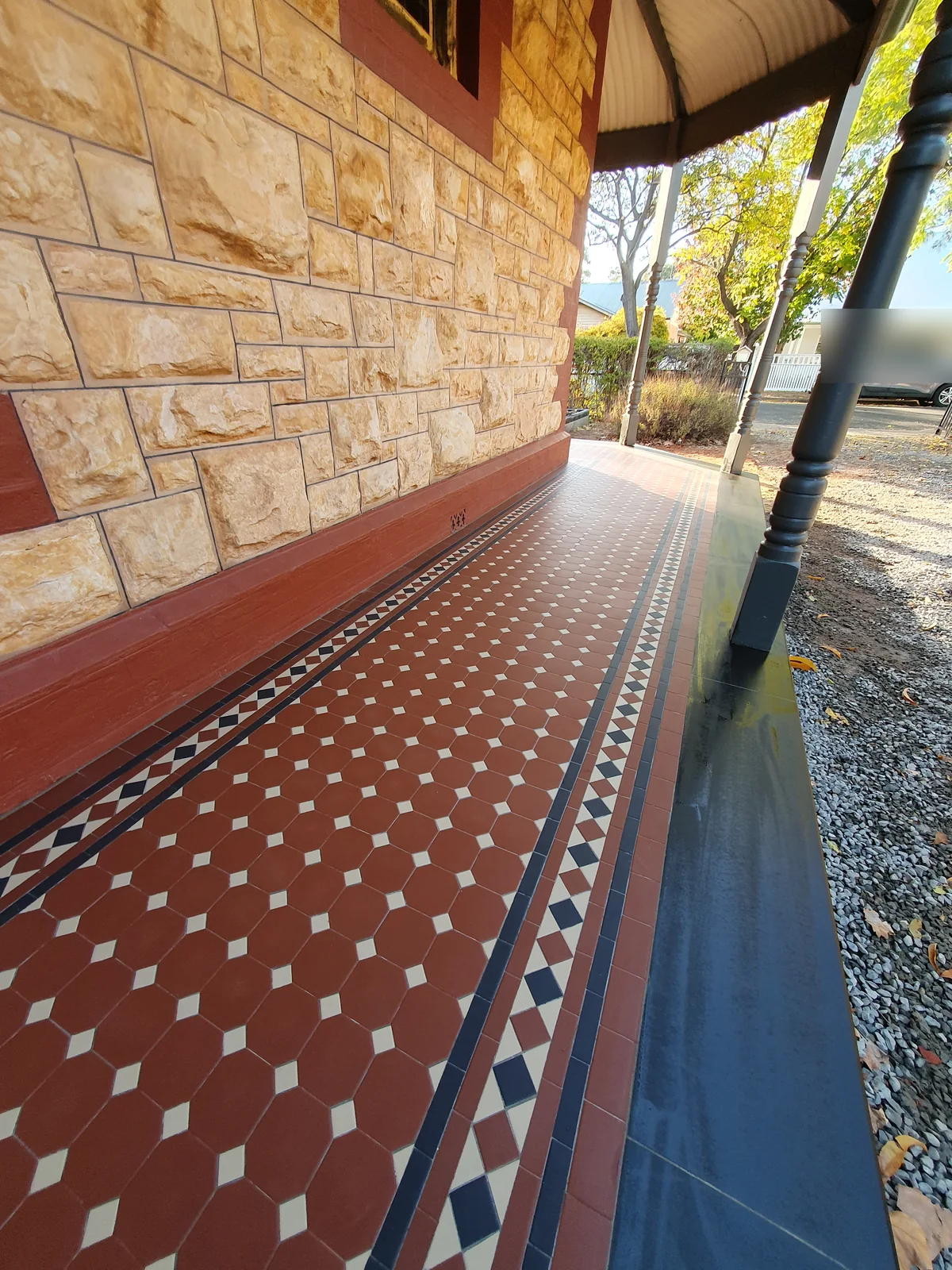
For a new entry, verandah, courtyard or pathway, begin with the property's proportions, sightlines and existing materials. A border can define a route or threshold, while a simpler field may keep a small area calm. On a sloping site, the layout also needs to be considered with steps, falls, junctions and the transition to other paving or garden edges.
Where an older surface remains, photograph the whole layout before disturbing it. Note the direction of the field, border relationships, areas of wear, missing tiles and junctions with walls or other finishes. That record helps separate careful restoration from a sympathetic extension or a clearly new design.
Use heritage context without assuming a listing
The South Australian Heritage Places Database identifies the Waterfall Gully Kiosk in Cleland Conservation Park as a State Heritage Place constructed in 1912. That is a specific registered place, not evidence that every home or garden in Waterfall Gully is listed or subject to the same controls.
For a property-specific question, check the current planning and heritage information with the relevant authority before work begins. A tile consultation can then focus on the practical brief: what is original, what needs to be retained, what the new work should communicate and how design, supply, installation, restoration or stone bullnose and edging coordination should be approached.
A measured starting point for local tile work
Useful first information includes photographs from several distances, approximate dimensions, access constraints and the relationship between the tiled area and nearby steps, garden edges or other finishes. For surviving tessellated work, include close views of corners, borders, worn sections and missing areas so restoration and any new work can be considered together.
The existing Waterfall Gully service page remains the local starting point for design consultation, tessellated tile supply, installation, restoration and edging coordination. It can connect the property-led discussion to the wider Burnside directory and to the relevant service guidance without treating the service grouping as a complete statement of statutory jurisdiction.
Your Heritage Tiling Questions
Does living in Waterfall Gully mean my property is heritage-listed?
No. The registered Waterfall Gully Kiosk is a specific State Heritage Place in Cleland Conservation Park. That listing does not establish heritage protection for every home or site in the locality. Check current property-specific planning and heritage information with the relevant authority before work begins.
Can tessellated tiles suit a Waterfall Gully verandah or pathway?
They can be considered where the pattern, scale, edges, transitions, access and site conditions are assessed together. A sloping or garden-connected site may need particular attention to steps, drainage and the junction with adjoining surfaces; the right arrangement depends on the property rather than a suburb-wide template.
What should I photograph before asking about restoration?
Photograph the overall layout as well as close views of borders, corners, worn areas, missing tiles and junctions with walls or other finishes. Approximate dimensions and access details also help distinguish selective restoration from a new or extended design.
Why does the local landscape matter to an external tiled area?
Waterfall Gully is described as a steep hills and creek setting with native vegetation, reserves and trails. Those conditions make the relationship between a tiled surface, steps, drainage, garden edges and adjoining ground worth considering alongside the visual pattern.
Discuss Your Heritage Tiling Project
Share your location, project details and photographs using our enquiry form, or call 0433 932 711.