
Tessellated Tiles in Stonyfell
Stonyfell sits in Adelaide’s eastern foothills within the City of Burnside. Its Residential East setting includes sloping streets and verges, native vegetation and a mix of established and later residential architecture. For a tessellated tile project, the site’s approach, drainage, thresholds and relationship to the existing house matter as much as the pattern. AHTC can discuss design, tessellated tile supply, installation, restoration and stone bullnose or edging coordination around the property’s actual conditions.
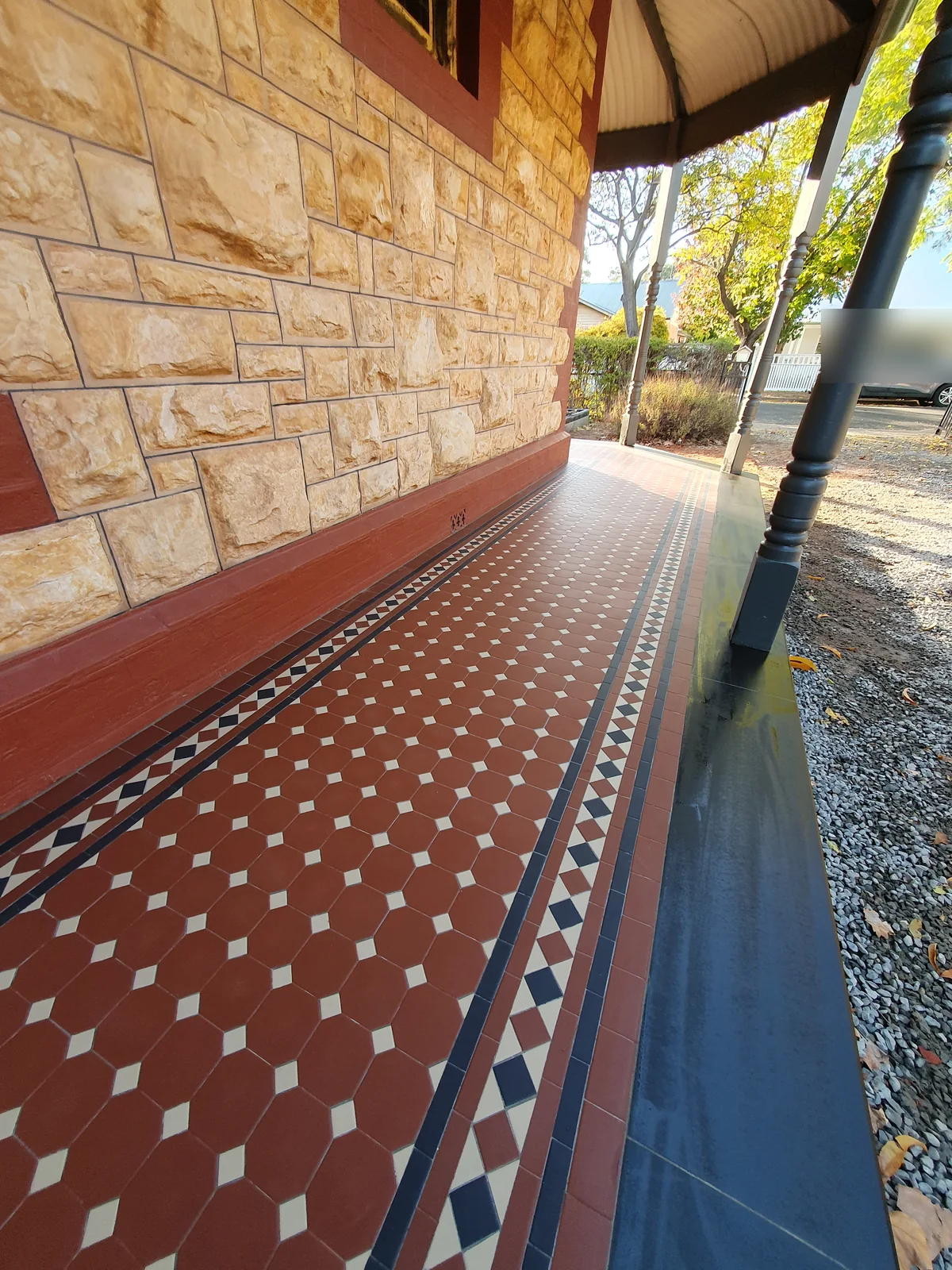
A foothill setting calls for a site-led tile layout
Burnside’s streetscape guidance places Stonyfell in the Residential East Precinct, where residential streets can meet sloping verges and uneven pedestrian conditions. On a verandah, entry path or terrace, that setting can affect falls, transitions, edge treatment and how a pattern meets steps or garden levels. The right layout should be developed from measured conditions rather than from a standard plan.
The Burnside Heritage Survey records both historic foothill places and later Stonyfell housing, so a project may involve original fabric, a sympathetic addition or a newer home. Tile scale, border proportions, colour balance and edging can be selected to sit comfortably with the building without asserting an architectural period that has not been established for the property.
Burnside Heritage Survey (South Australia), Part One General Report
Check the property before altering older tilework
The South Australian Heritage Places Database records several Stonyfell heritage entries. A listing is property-specific, and the database advises checking the relevant record and the Planning and Design Code or council before development work. That check is useful before removing, extending or changing older tiled areas; it does not mean every Stonyfell home is listed or that tiling work automatically requires approval.
Where existing tiles remain, an assessment can help separate sound original material from later repairs and identify what may be retained, repaired, matched or replaced. Design consultation can then address pattern continuity, thresholds, perimeter details and a practical installation sequence for the actual access and substrate conditions.
Burnside Heritage Survey (South Australia), Part One General Report
Tessellated tile services for Stonyfell properties
AHTC’s service discussion can cover tessellated tile design, tile supply, installation and restoration, together with stone bullnose or edging coordination where those details suit the setting. For sloping or garden-connected approaches, the brief should consider water movement, step and door thresholds, pattern orientation, edge protection and the junction between new work and existing surfaces.
For an older verandah or pathway, photographs and dimensions of the area can help frame an initial conversation. The final recommendation should follow inspection and design review, with any heritage or planning question directed to the relevant authority for the property.
Your Heritage Tiling Questions
Is every Stonyfell home heritage listed?
No. The South Australian Heritage Places Database records particular places in Stonyfell, but listing status is property-specific. Check the relevant property record and current planning guidance before making assumptions about a home or proposed work.
Are tessellated tiles suitable for a sloping Stonyfell entry or pathway?
They can be, but the layout and construction need to respond to the actual levels, steps, thresholds, drainage and edge conditions. A measured site review is more reliable than applying a universal pathway detail.
Can older Stonyfell tiles be restored rather than replaced?
Often the first step is an assessment of the existing tiles, bedding, joints and surrounding edges. That helps identify which areas may be retained or repaired and where careful matching or new work may be needed. The appropriate option depends on the condition and significance of the particular installation.
Can a new tessellated pattern work with a later Stonyfell house?
Yes. Stonyfell includes both historic places and later housing. Pattern scale, border proportions, colour and the relationship to the façade can be designed for the building that is actually there, without claiming a period style that has not been verified.
Should I check planning or heritage requirements before changing a tiled area?
If the property or nearby setting may be heritage-listed or otherwise subject to planning controls, check the relevant South Australian Heritage Places Database entry and current Planning and Design Code or council advice before work begins. Requirements depend on the property and proposal.
Discuss Your Heritage Tiling Project
Share your location, project details and photographs using our enquiry form, or call 0433 932 711.