
Tessellated Tiles in Glenside
Glenside combines an established metropolitan residential setting with the continuing story of the former Glenside Hospital precinct and its heritage-listed buildings. For a Glenside home, apartment, renovation or landscape project, tessellated tiles can be considered as a carefully matched new finish or as part of a measured response to surviving architectural character. AHTC can assist with design consultation, tessellated tile supply, installation, restoration and stone bullnose or edging coordination.
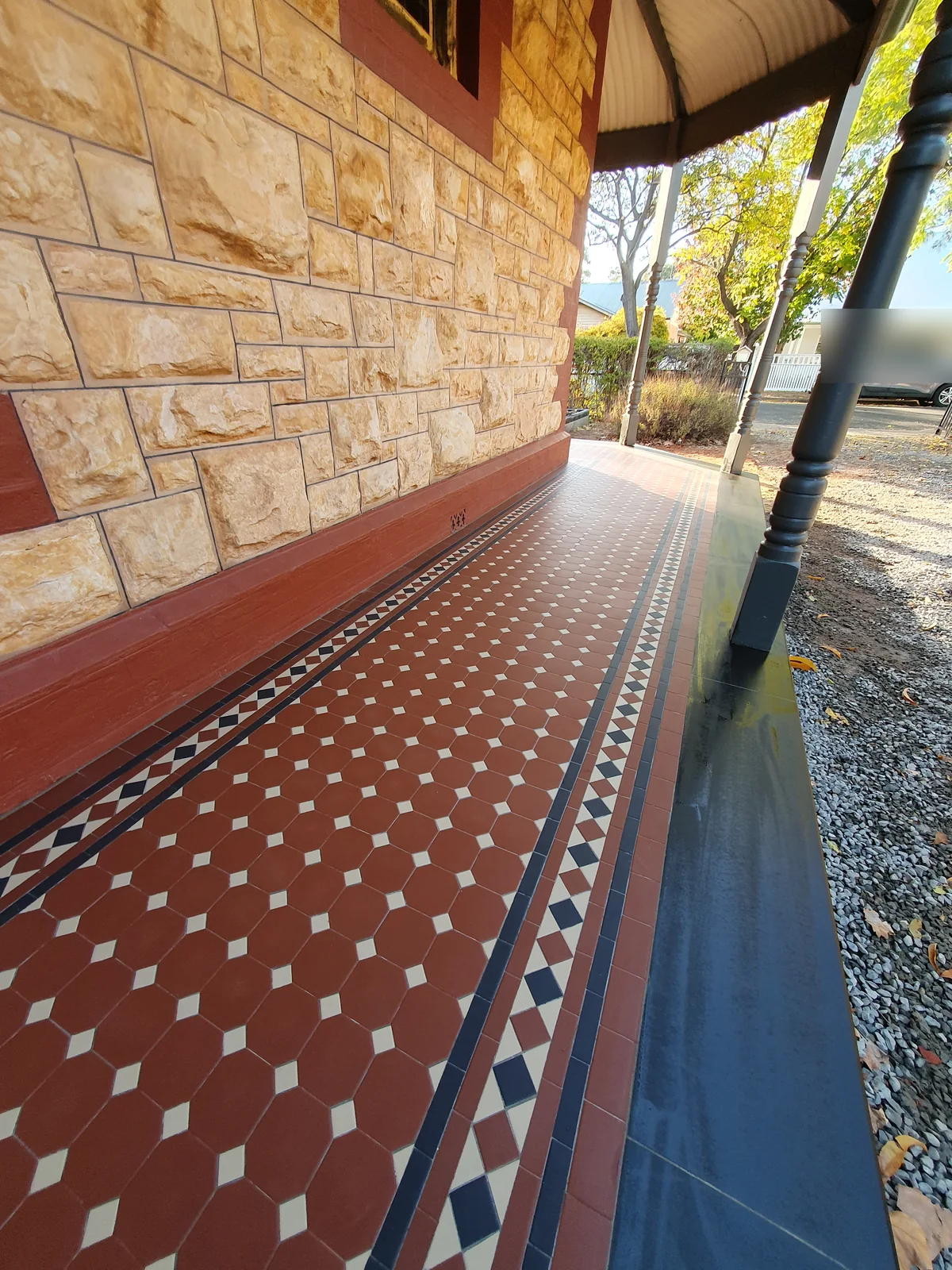
A heritage setting with more than one architectural story
South Australia's Heritage Places Database records State Heritage Places associated with the former Glenside Hospital, formerly the Parkside Lunatic Asylum. The former cottage wards are significant for their domestic, less custodial approach to institutional design, while other listed hospital buildings reflect the site's broader historical development. These are identified heritage places and should not be taken to mean that every Glenside property is heritage listed.
Burnside's heritage survey also records a wider residential history of cottages, villas and solid masonry housing across the municipality. In Glenside, that broader context sits alongside newer residential development. The useful design question is therefore property-led: what fabric, proportions, thresholds and adjoining surfaces already exist, and what new tiling will sit comfortably with them?
Burnside Heritage Survey (South Australia), Part One General Report
Designing tessellated floors, verandahs and pathways in Glenside
For an older Glenside house or a home near a heritage setting, begin with the existing building rather than a catalogue pattern. Review the entry sequence, verandah width, steps, wall finishes, sightlines and any surviving tile fragments before choosing a field, border or geometric arrangement. Matching can be close without pretending that a new installation is original fabric.
For newer homes and apartments, tessellated tiling can still be used with restraint at an entry, courtyard, terrace or sheltered pathway. Scale, edge treatment, drainage, exposure and the transition to adjoining paving matter as much as the pattern. A design consultation can test whether a traditional layout, a simplified repeat or a contemporary interpretation best suits the setting.
Burnside Heritage Survey (South Australia), Part One General Report
Restoration and property-specific checks
Where original or earlier tiles remain, restoration should start with condition assessment and careful documentation. Colour variation, worn edges, loose pieces, damp or movement can affect the right balance between retaining, repairing and replacing. New work should be distinguishable enough to be honest while still relating to the building's proportions and palette.
A heritage listing or nearby heritage place can change how proposed work is assessed. The South Australian Heritage Places Database notes that development controls can extend to a listed place's setting and nearby structures. Check the relevant listing and current planning requirements before work begins; tile advice does not replace a property-specific heritage or planning assessment.
A practical local tiling brief
A useful Glenside brief can include photographs of the existing floor or verandah, approximate dimensions, access information and the intended relationship between old and new work. AHTC's service scope includes design consultation, tessellated tile supply, installation, restoration and coordination of stone bullnose or edging details. The final layout and method should follow the particular site, substrate and retained fabric rather than a universal recipe.
Where a project sits within the broader Glenside redevelopment or close to a heritage-listed setting, allow for the relationship between private surfaces, shared paths, levels and adjoining landscape. The City of Burnside's planning commentary highlights the importance of visual, privacy, access, tree-canopy and infrastructure outcomes in this evolving area.
Your Heritage Tiling Questions
Are all Glenside homes heritage listed?
No. State heritage listings identify particular Glenside Hospital buildings and former cottage wards, not every home or apartment in Glenside. The heritage status and planning requirements of an individual property should be checked separately.
Can tessellated tiles suit a newer Glenside home or apartment?
Yes. A simplified repeat, restrained border or carefully scaled layout can work in a newer setting. The choice should respond to the entry, courtyard or pathway proportions, adjoining materials, exposure and drainage rather than assuming that a historic pattern is required.
What should I check before tiling near a heritage place in Glenside?
First identify whether the property or its setting is affected by a State or local heritage listing and confirm current planning requirements with the relevant authority. The South Australian Heritage Places Database cautions that development affecting a listed place can include its setting and nearby structures.
Can existing Glenside tessellated tiles be restored rather than replaced?
Often the decision depends on the condition of the original surface, the extent of loss, available matching tiles and the cause of movement or deterioration. Begin with an assessment and record the existing layout before deciding between selective repair, sympathetic replacement or a new adjacent surface.
Discuss Your Heritage Tiling Project
Share your location, project details and photographs using our enquiry form, or call 0433 932 711.