
Tessellated tiles in Glen Osmond
Glen Osmond's early village history and foothills setting create a useful context for thoughtful tile work. The City of Burnside's local trail records early stone and brick buildings, established gardens, churches and residences across the area. For a Glen Osmond home, a good tessellated-tile scheme starts with the property itself: the surviving floor or verandah fabric, the proportions of the room, the approach to the street and the way new work sits beside older materials. Authentic Heritage Tiling Co can help with design consultation, tessellated tile supply, installation, restoration and stone bullnose or edging coordination.
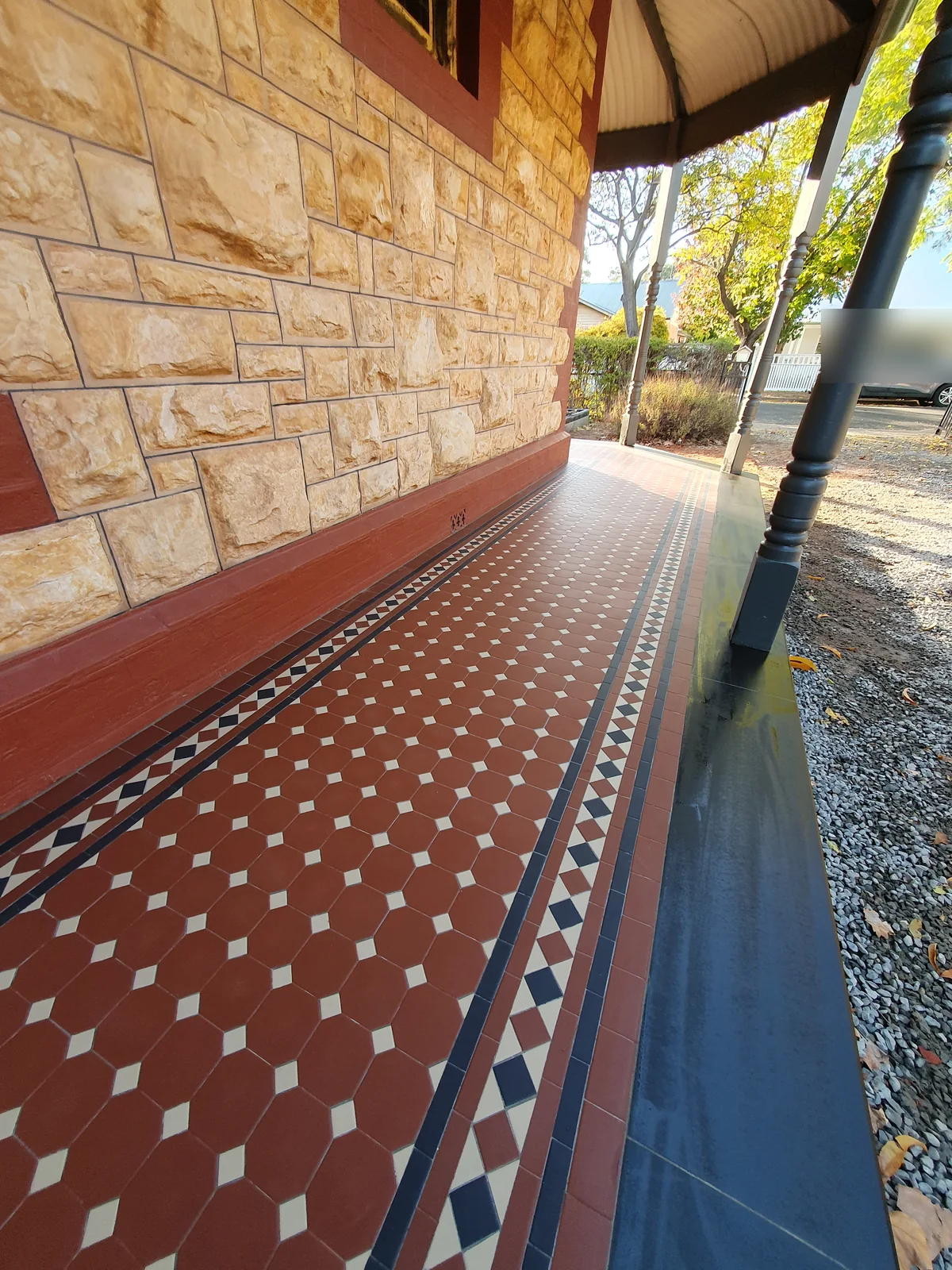
A layered local setting for considered tile design
Glen Osmond is not defined by one repeated house style. Burnside's historic walk describes an early village with stone and brick cottages, larger residences, churches, former commercial buildings, gardens and later twentieth-century homes. That layered setting makes proportion and transitions important: a new verandah, entry or pathway can acknowledge the character of the property without pretending that every building is heritage listed.
The local record also connects Glen Osmond with the foothills and early mining history. Those broad facts are useful design context, not a reason to prescribe one pattern or colour. Tile selection should follow the building's scale, light, existing masonry and intended use.
Plan around original fabric and the setting
Where an older tiled surface remains, begin by documenting its layout, borders, levels, damaged areas and relationship to doors, steps and thresholds. A repair may be more appropriate than wholesale replacement when the existing floor contributes to the property's character. Where new work is proposed, a restrained border, a compatible scale and carefully resolved edges can help the addition sit comfortably with stone, brick, render or timber surroundings.
Burnside's heritage guidance is property-specific. It advises that changes affecting a Local Heritage Place should be compatible in scale, form, siting and colour, and that significant original fabric should not be removed or concealed without careful justification. A State Heritage Place or its setting requires its own check with the relevant authority before design decisions are finalised; tile services do not provide heritage approvals.
A practical Glen Osmond tile brief
For a Glen Osmond enquiry, useful early information includes photographs of the existing surface, approximate dimensions, the intended area and any known heritage or planning status. This helps separate restoration from new installation and clarifies whether a verandah, entry, internal floor, pathway or stair edge needs to be considered as part of one connected design.
The work can be planned around tessellated tile supply, installation or restoration, with stone bullnose or edging coordination where the site calls for it. Exact detailing depends on the property and the condition of the existing substrate; no single construction method should be assumed before an assessment.
Check the property before changing a heritage place
A historic appearance alone does not establish listing. Burnside's fact sheet explains that Local Heritage Place controls are property-specific, while the South Australian Heritage Places Database identifies State Heritage Places and cautions that development affecting a listed place can extend to its setting. Confirm the status of the actual property and seek the appropriate council or Heritage South Australia guidance before external changes proceed.
This check is especially relevant when tile work changes steps, verandahs, visible front paths, thresholds, drainage interfaces or other elements that can alter the way a building meets the street. The aim is a well-resolved design that respects the place without treating every Glen Osmond home as protected.
Your Heritage Tiling Questions
Can tessellated tiles suit a Glen Osmond home that is not heritage listed?
Yes. Glen Osmond includes a mix of early and later buildings, so the design should respond to the individual home's proportions, materials and setting rather than assume a heritage status. A consultation can explore a suitable layout for a new floor, entry, verandah or pathway.
How should existing tessellated tiles be assessed before restoration?
Record the existing pattern, borders, levels, damaged tiles and transitions before deciding between selective repair and replacement. Photographs and approximate measurements are useful starting information, followed by an assessment of the surface and its surrounding fabric.
Do I need to check heritage requirements before tiling in Glen Osmond?
If the property or a nearby affected place is heritage listed, or if the work changes visible external fabric, check with the City of Burnside and, where relevant, Heritage South Australia before proceeding. Listing and approval requirements are property-specific; a historic-looking house is not automatically listed.
Can a new pathway or verandah use a period-aware tessellated layout without copying an old floor?
Yes. A new layout can take cues from the home's scale, masonry, garden approach and existing thresholds while remaining clearly new work. Borders, transitions and edging should be designed for the actual site rather than selected from a generic period label.
Discuss Your Heritage Tiling Project
Share your location, project details and photographs using our enquiry form, or call 0433 932 711.