
Tessellated tiles in Dulwich
Dulwich has a distinctive older residential setting within the City of Burnside, including documented local heritage places and streets shaped by late-nineteenth- and early-twentieth-century development. A tessellated tile scheme for a Dulwich verandah, entry, pathway or interior floor should respond to the proportions and materials of the property rather than treating heritage style as a fixed template. AHTC can help with design consultation, tessellated tile supply, installation, restoration and coordination of stone bullnose or edging where appropriate.
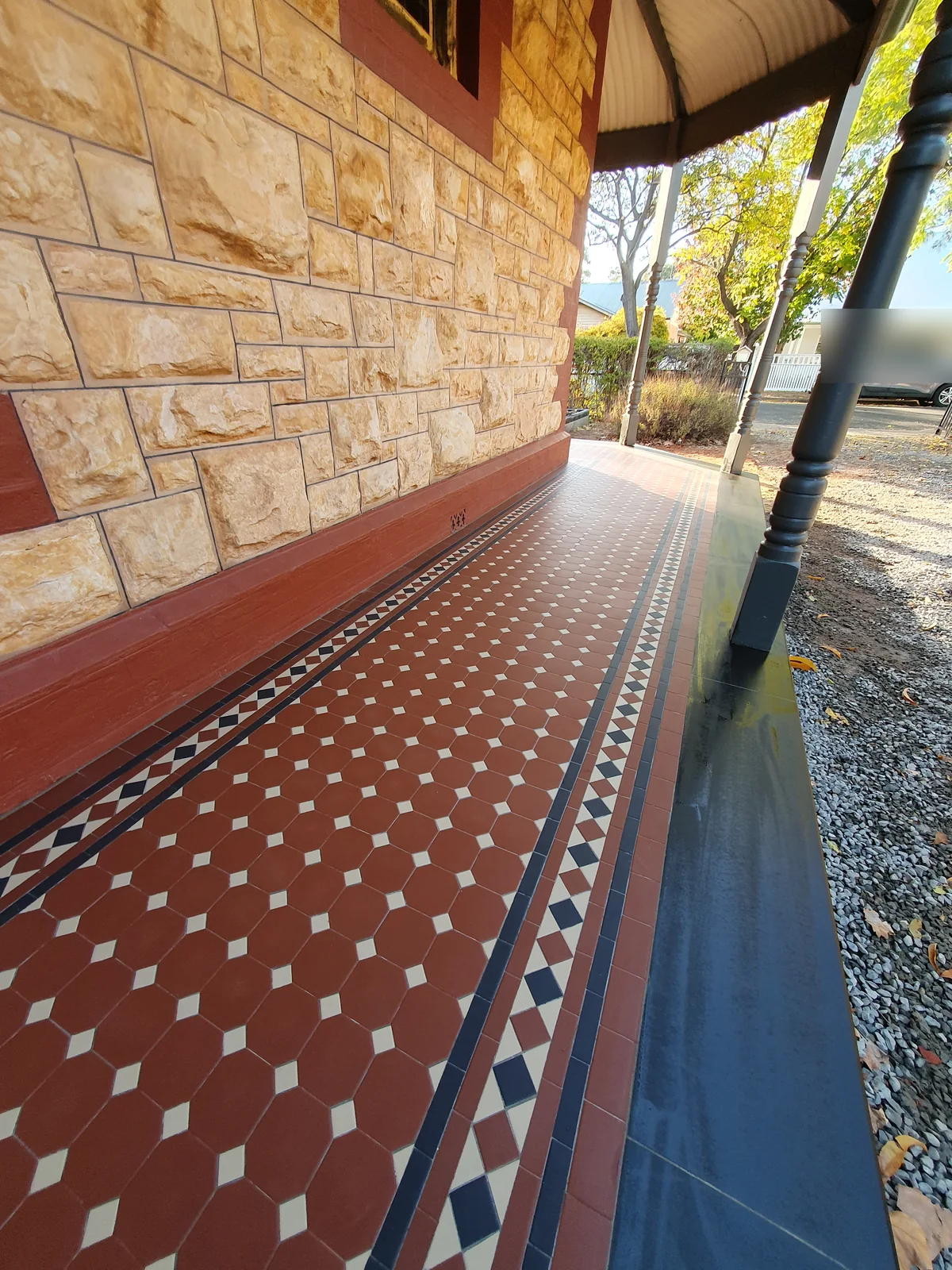
Working with Dulwich's older housing context
The Burnside heritage survey records Dulwich's growth through the 1880s and 1890s, including many bluestone villas and a village-scale shop context. That history can inform proportion, border treatment and colour selection, but it does not mean every house has the same period details or heritage status.
For an older Dulwich property, begin by looking at the existing threshold, verandah line, wall materials, roof and joinery. New tessellated work can be designed to sit comfortably with those elements, while an existing floor may call for careful assessment before any tiles are lifted or replaced.
Burnside Heritage Survey (South Australia), Part One General Report
Design, restoration and practical detailing
Design consultation can help resolve the relationship between a repeating tessellated pattern, the available floor area and the way a verandah or path meets the garden, steps or driveway. Supply and installation planning should then account for the property's measured conditions, access and intended use rather than applying an assumed standard detail.
Where original or older tiles survive, restoration decisions should separate sound fabric from later repairs and additions. Colour, scale, edge lines and transitions can be reviewed together so that a retained section and new work read as a considered whole. Stone bullnose or edging coordination may be useful at steps and exposed boundaries when the site and design call for it.
Burnside Heritage Survey (South Australia), Part One General Report
Check the property before work begins
Several Dulwich places are recorded as Local heritage places. A listing is property-specific, so owners should confirm the status of their own site and any applicable planning requirements before altering an existing verandah, entry or external floor. The South Australian Heritage Places Database notes that its records should be read with the Planning and Design Code and the relevant council guidance.
Burnside's broader planning work also recognises the value of residential character, gardens and tree canopy while considering growth. That context supports a measured, property-led approach, but it is not a promise that a proposed design will be approved or that a particular overlay applies.
Your Heritage Tiling Questions
Are all Dulwich homes heritage listed?
No. The official database records particular Local heritage places in Dulwich, including houses and shops. Listing status is property-specific, so check the individual property and current planning guidance before assuming a heritage control applies.
Can tessellated tiles suit a Dulwich bluestone villa?
They can, when the pattern, border, scale and transitions are designed around the villa's existing proportions and materials. The Burnside survey's description of Dulwich's bluestone villas is useful context, but each property should be assessed on its own fabric and later changes.
What should I check before restoring an older Dulwich verandah floor?
First establish whether the floor is original, later or already repaired, and document its condition, edges and transitions. Then confirm whether the property is listed or affected by applicable planning controls before deciding on removal, repair or new work.
Can a new tessellated pathway be designed for an established Dulwich garden?
Yes, with the route, thresholds, drainage and edge treatment considered alongside the garden and existing house. A measured site review is important where mature planting, steps or older paving affect the proposed layout.
Discuss Your Heritage Tiling Project
Share your location, project details and photographs using our enquiry form, or call 0433 932 711.