
Tessellated Tiles Beaumont
For Beaumont homes, verandahs and pathways, tessellated tile decisions can be shaped by both the property and its setting. Beaumont's documented early village layout, historic buildings and surviving landscape features make proportion, transitions and the treatment of existing fabric worth considering before new work begins. AHTC can assist with design consultation, tessellated tile supply, installation, restoration and stone bullnose or edging coordination.
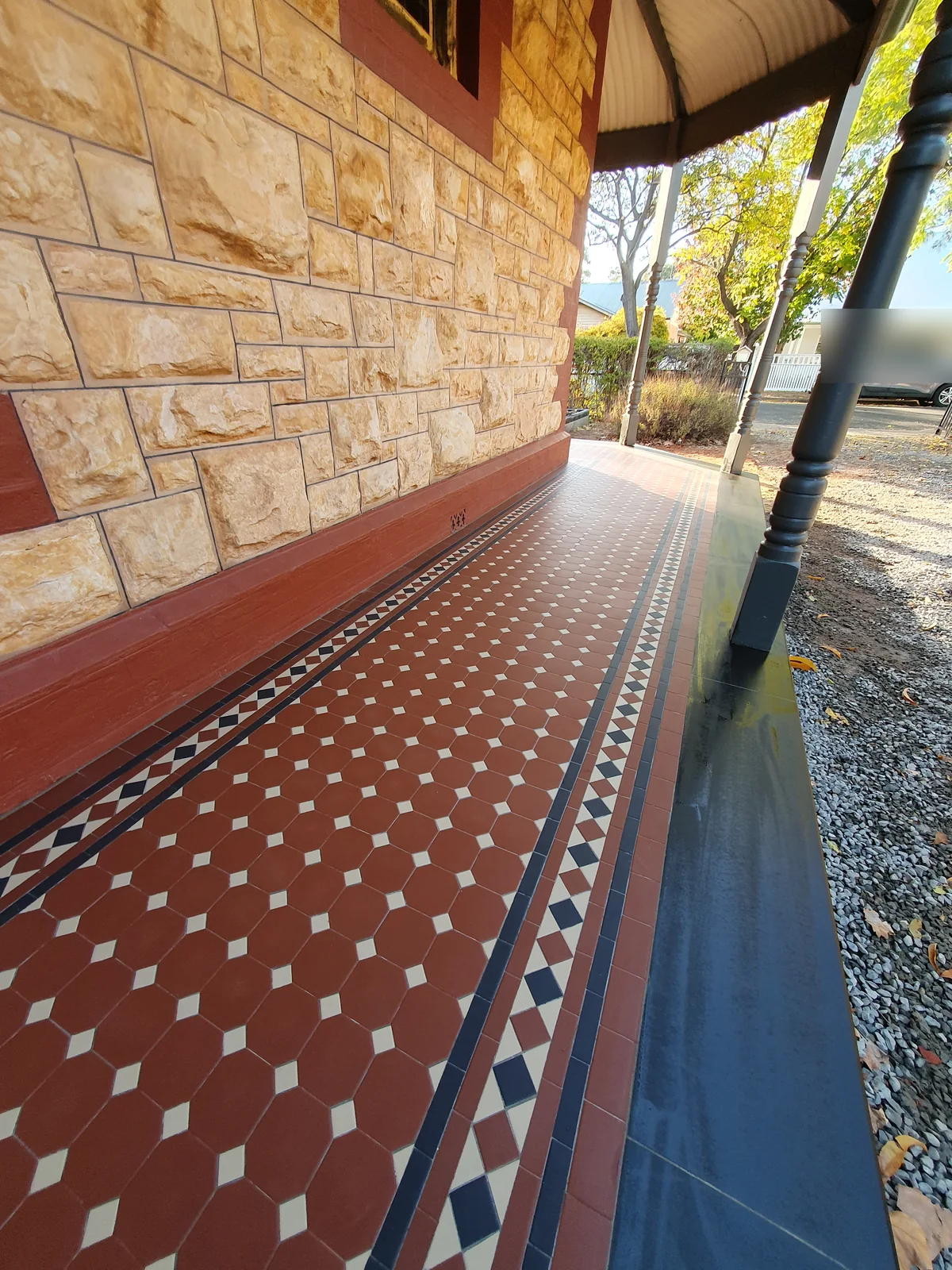
Working with Beaumont's early village and hillside character
The historic Beaumont walk records an English-village layout formed around Beaumont Common after subdivision in 1849. It also describes a district that now includes hilly land beyond the original holding. For a tile scheme, that context can make the relationship between a path, verandah, steps and the front approach as important as the pattern itself.
A design consultation can look at sightlines, changes in level, thresholds and the scale of the house frontage before a layout is selected. The aim is not to assume that every Beaumont property is heritage listed, but to make new or repaired tiling sit comfortably with the particular building and its landscape.
Existing tiles, verandahs and careful transitions
Where original or older tiles remain, assessment should separate sound areas from loose, cracked or altered sections before decisions are made. Restoration may involve matching the visual rhythm of surviving work, while a new installation may need a clear transition between old and new rather than an artificial imitation.
Beaumont's recorded historic places include an early cottage that developed through later additions and a building noted for its decorative brick parapets. Those examples do not define every home, but they reinforce the value of considering additions, edges and façade relationships when selecting a tile design.
Pathways and verandahs in a leafy Burnside setting
The City of Burnside describes its area as having tree-lined streets, period architecture, reserves and gardens. Its streetscape guide also calls for coordinated elements that respect a neighbourhood's history and sense of place. On a Beaumont site, pathway width, border treatment, drainage exposure, planting and accessible movement can therefore be considered alongside colour and geometry.
AHTC's service scope includes design consultation, tile supply, installation and restoration, with stone bullnose or edging coordination where the site calls for it. The appropriate approach depends on the existing surface, access, falls and the intended use of the area rather than on a universal recipe.
Check the individual property before work
A suburb's historic character does not by itself establish that a particular home or work proposal is heritage protected. Before altering an older verandah, pathway or other visible fabric, owners should check the property's applicable planning, heritage and development requirements with the relevant authority. Tile design advice can then respond to the confirmed condition and constraints of that property.
The existing Beaumont service page remains the place to discuss the project, site conditions and whether supply, installation or restoration is the better fit.
Your Heritage Tiling Questions
Can tessellated tiles suit a Beaumont verandah or front path?
They can, subject to the building, levels, access and existing surfaces. A design review can consider proportion, borders, thresholds and transitions so the result responds to the individual property rather than assuming one pattern suits every Beaumont home.
Does Beaumont's historic character mean my home automatically needs heritage approval?
No automatic conclusion should be drawn from the suburb name alone. Heritage or planning controls are property and proposal specific, so check the applicable requirements with the relevant authority before altering older fabric or undertaking visible work.
Can existing tessellated tiles be restored instead of replaced?
Often the first step is an assessment of what remains, including loose, cracked, stained or altered areas. If the surviving fabric is suitable, restoration and carefully planned repairs may be considered; replacement is not assumed before the condition and desired use are understood.
What should be considered for a sloping Beaumont site?
The design discussion should cover levels, steps, thresholds, drainage, edge details and safe movement as well as the tile pattern. Beaumont's documented hillside setting means site-specific measurement and sequencing are more useful than applying a standard layout without checking the property.
Discuss Your Heritage Tiling Project
Share your location, project details and photographs using our enquiry form, or call 0433 932 711.