
Tessellated Tiles in Strathdale
For homes in Strathdale, tessellated tiling is best planned around the property's proportions, approach and existing materials. The local Kennington–Strathdale character guidance describes a varied residential area where brick and timber, mixed roof forms, modest setbacks, open fencing and established trees shape the streetscape. We can help with design consultation, tessellated tile supply, installation, restoration and stone bullnose or edging coordination for verandahs, paths and other considered residential details.
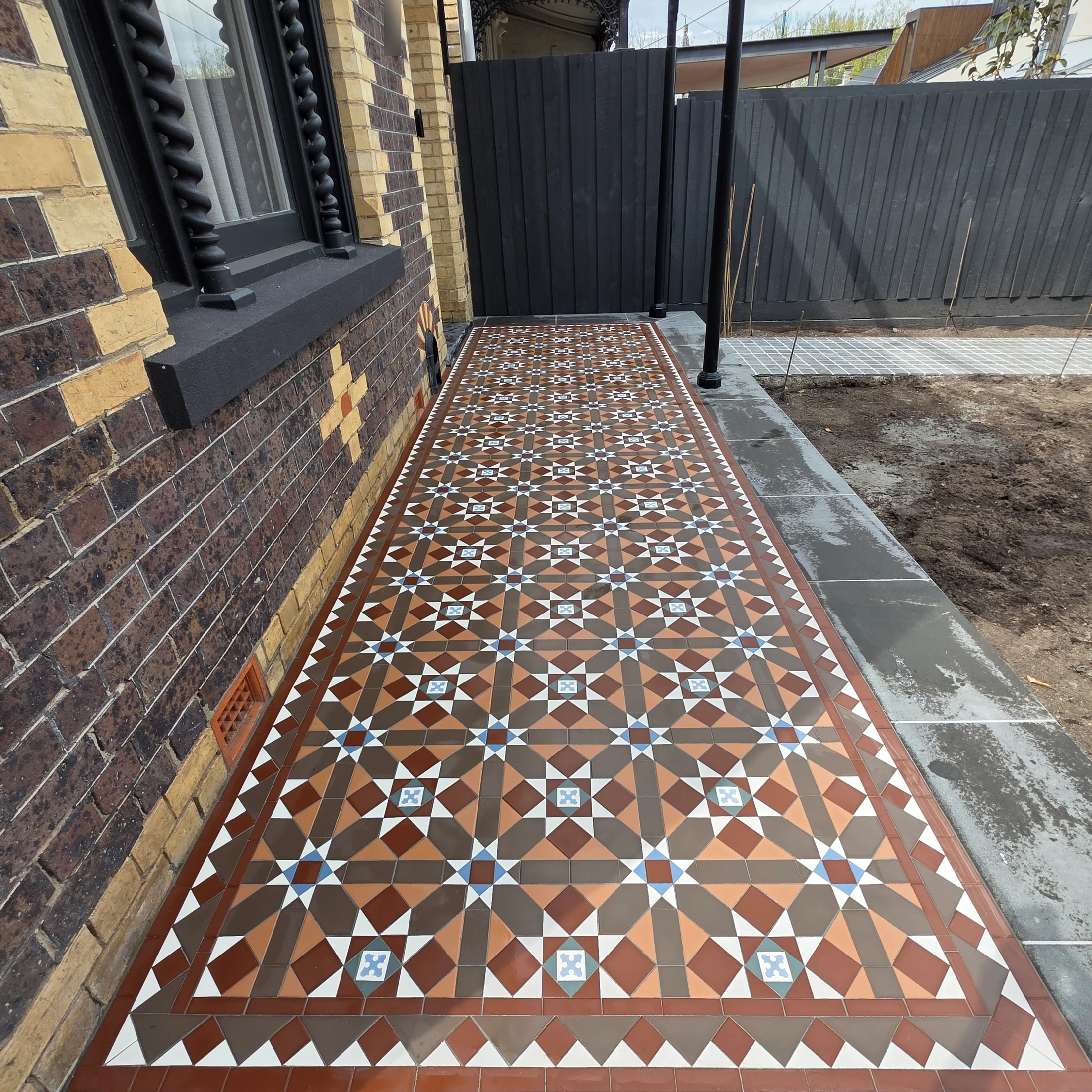
Tile design that sits comfortably in Strathdale streetscapes
The Strathdale–Kennington precinct is not defined by one house style. Its official character material notes a predominantly interwar setting alongside Victorian and 1950s homes, with brick and timber buildings, mixed roofs, small front setbacks, open front fences and established street trees. A tessellated layout should therefore be selected with the individual frontage in mind rather than imposed as a period template.
For a new verandah or pathway, design decisions can respond to the entry width, the relationship between the house and front garden, and the visual weight of the fence and roof. Borders, field patterns, thresholds and stone edging can be coordinated so the tiled work supports the existing facade and garden setting.
Where a property retains older tiles, careful inspection comes first. Matching colour, size, pattern and the condition of the underlying area helps distinguish restoration from a new installation. The aim is a practical design that respects the character of the home without suggesting that every Strathdale property is heritage-listed.
A property-led approach to heritage-sensitive work
The Victorian Heritage Database records Nanga Gnulle in Strathdale as an individually significant Heritage Overlay place. Its record describes a split-level timber and mudbrick house with skillion roofs, clerestory windows, reclaimed brick chimneys and brick paving. That is a specific heritage record, not evidence that all homes in the suburb have the same status or fabric.
If your property is affected by a Heritage Overlay or has identified heritage values, tile work should be considered alongside the place's statement of significance and the setting, form, materials and appearance of the building. The Greater Bendigo planning policy also highlights retaining significant architectural elements and treating additions and alterations carefully. Property owners should confirm current planning requirements with the relevant authority before work begins.
Our role is to help you assess the tile brief, develop a suitable pattern and coordinate supply, installation, restoration or stone bullnose and edging details. We do not represent council or provide heritage approvals.
Planning a verandah, pathway or restoration project
A useful first step is to document the area with clear photographs and dimensions, including thresholds, steps, drainage edges and any tiles that may be retained. For a new design, note the house's existing brick or timber finishes and the amount of pattern that can be seen from the street. For restoration, keep loose or damaged pieces where possible so colour and geometry can be reviewed before replacement decisions are made.
The City character guidance places value on established trees, garden settings, setbacks and low or open fencing. Access, protection of adjoining finishes and the relationship between a new tiled edge and the garden should be considered in the site plan. A consultation can then focus on the actual space, its use and the level of pattern that suits the property.
Your Heritage Tiling Questions
Are all homes in Strathdale heritage-listed?
No. The local evidence distinguishes neighbourhood character from heritage protection, and the Victorian Heritage Database records particular places rather than the whole suburb. Check the property-specific planning controls and any statement of significance that applies to your address before altering existing fabric.
What should I consider when choosing tessellated tiles for a Strathdale verandah?
Start with the house's frontage, roof and existing brick or timber finishes, then consider the verandah proportions, entry threshold, garden setting and the amount of pattern visible from the street. The local character guidance supports designs that respect established setbacks, building form and open streetscape qualities.
Can older tessellated tiles in Strathdale be restored?
Often, the first step is a condition and pattern assessment. Existing tiles can be checked for stability, missing pieces, staining, movement and compatibility with replacement work. A restoration or partial renewal approach should be based on the actual surviving fabric rather than assuming a standard method.
Does a Heritage Overlay mean tile work is automatically prohibited?
A Heritage Overlay does not by itself answer every project question. The relevant controls and statement of significance should be checked for the property, and the proposed work should be assessed for its effect on setting, form, materials and significant architectural elements. Seek current advice from the relevant planning authority before proceeding.
Discuss Your Heritage Tiling Project
Share your location, project details and photographs using our enquiry form, or call 0433 932 711.