
Tessellated Tiles Maiden Gully
For a Maiden Gully verandah, entry, pathway or interior floor, tessellated tile choices work best when they respond to the property rather than follow a generic pattern. The locality's bushland setting, growth areas and Bendigo goldfields context make the relationship between surface, setting and existing fabric worth considering from the first design conversation.
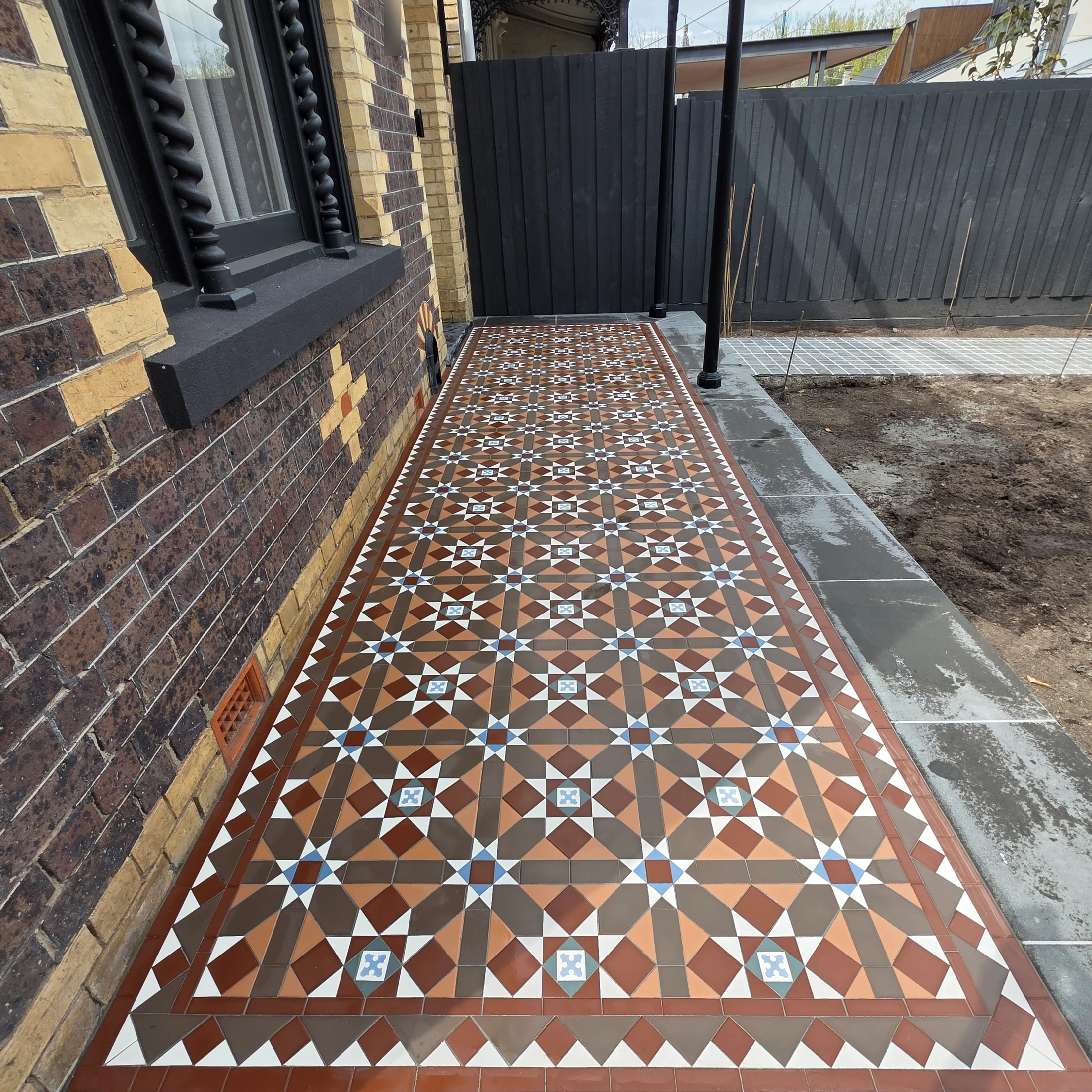
Tile design for Maiden Gully's setting
Maiden Gully is planned as a growing, community-minded locality with a strong relationship to surrounding vegetation and open space. On a new or updated home, a restrained tessellated layout can help connect a verandah, porch or path to the landscape without making the paving compete with mature trees, garden edges or views.
The most useful starting point is the property's proportions, daylight, access and drainage. Border width, repeat scale, thresholds and the transition between covered and exposed areas should be considered together, particularly where a path links a house to a future garden, town-centre-facing frontage or shared outdoor area.
Existing fabric and the Bendigo goldfields context
The recorded Maiden Gully Diggings are a specific archaeological place associated with the Great Eastern Gully lead and the wider history of gold mining around Bendigo. That context can encourage a careful approach to older local buildings and landscape traces, but it does not by itself establish heritage protection for an individual house or pathway.
Where original tiles, steps, edging or a verandah survive, document what is present before removing or covering it. Matching colour, size, joint rhythm and border geometry may be more appropriate than replacing a coherent older surface with an unrelated new pattern. A property-specific heritage and planning check should be made where a place is identified on a relevant register or overlay.
Design, supply, installation and restoration
AHTC can discuss tessellated tile design, supply, installation and restoration for Maiden Gully projects. The brief may involve a new verandah or pathway, a period-sensitive floor, repair of a worn area or coordination of stone bullnose and edging. The appropriate sequence depends on the existing surface, levels, moisture, access and the intended use of the space.
For a property in a changing activity-centre or residential setting, consider how the tiled area will meet doors, garden paths, driveways and future works. A measured design discussion can keep the pattern legible at the entry while allowing practical transitions at edges and thresholds.
Your Heritage Tiling Questions
Does a Maiden Gully property automatically need heritage approval for tessellated tiles?
No. The presence of local goldfields history or a nearby heritage inventory place does not automatically make every property heritage-listed. Check the individual property's planning controls and seek the relevant advice before work if a register or overlay may apply.
What should I consider for a tessellated pathway in Maiden Gully?
Consider the path's width, border, changes in level, drainage, exposure, access and its relationship to planting and the house. A layout should be selected for the actual site rather than assuming one pattern suits every block.
Can existing tiles be restored rather than replaced?
Often the first step is to inspect and document the surviving tiles, substrate, edges and damaged areas. Restoration, selective repair or a carefully matched replacement can then be considered against the condition and intended use of the space.
Can tessellated tiles work with a newer Maiden Gully home?
Yes. The design can be scaled and detailed to suit a contemporary home while taking cues from the property's proportions, landscape and entry sequence. The result does not need to imitate an older building to use a considered geometric surface.
Discuss Your Heritage Tiling Project
Share your location, project details and photographs using our enquiry form, or call 0433 932 711.