
Tessellated tiles in Kennington
For a Kennington home, a tessellated tile choice works best when it responds to the building and the way the front of the property meets the street. We can help with design consultation, tessellated tile supply, installation, restoration and stone bullnose or edging coordination for verandahs, paths and other suitable areas across Bendigo and surrounds.
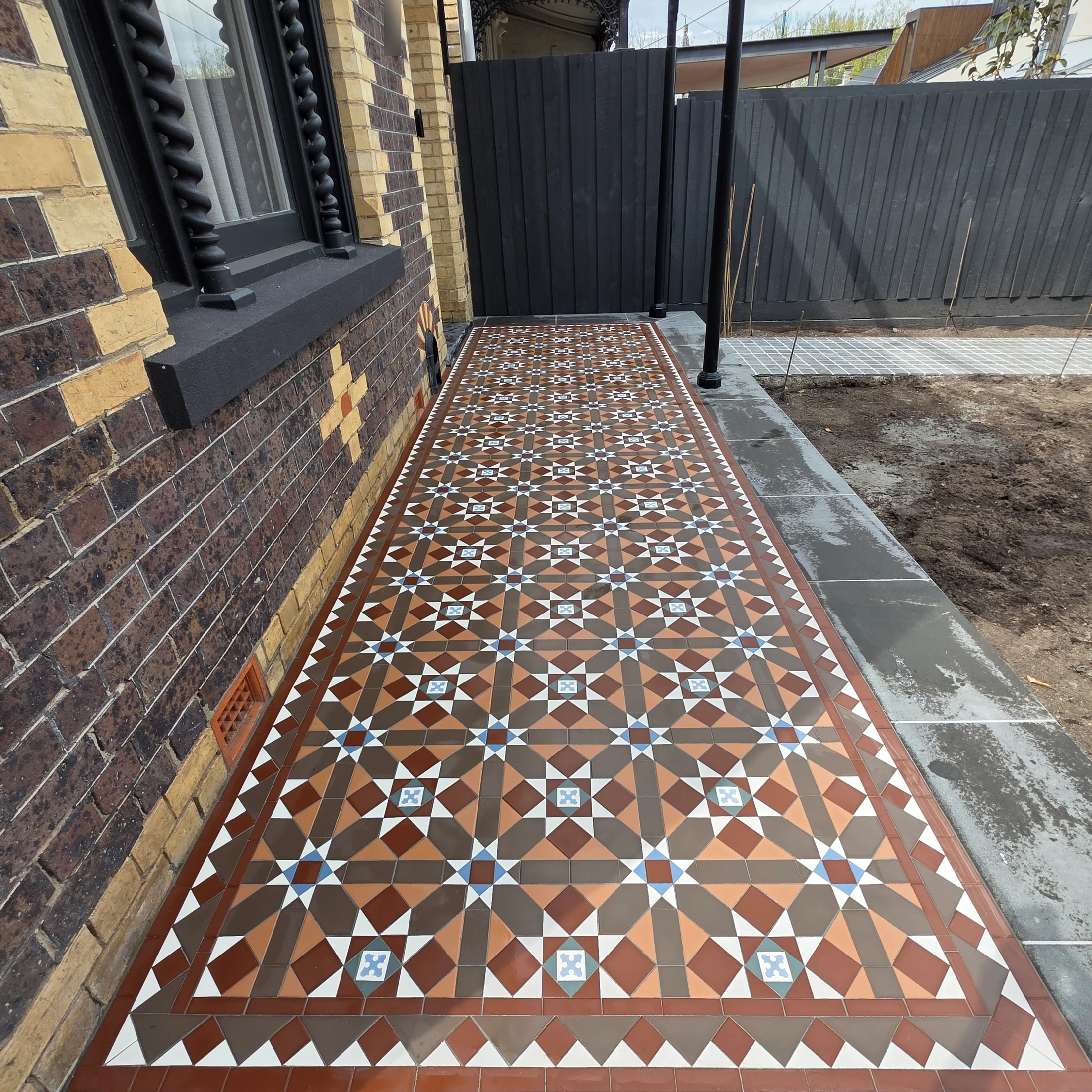
Designing with Kennington’s residential character
Greater Bendigo’s Kennington and Strathdale character guidance describes streets where building position, garden space and the spaces between homes matter as much as the dwelling itself. It identifies interwar homes alongside Victorian and 1950s examples, with mature street trees, low or transparent front fences and mixed brick or timber construction contributing to the streetscape. For a new verandah or path, tile scale, border treatment and colour should sit comfortably with those existing relationships rather than overwhelm them.
The same guidance highlights late-interwar streetscapes with broad gabled roofs, verandahs and strong horizontal lines. A measured layout can echo those proportions through a restrained field, considered borders and transitions that keep thresholds legible. A site review is useful before selecting a pattern, especially where an existing porch, step or garden edge is being retained.
When an older home needs a careful tile approach
The City’s heritage gaps analysis records areas of pre-WWII housing and early post-WWII residential development in Kennington and Strathdale. That is useful context, but it is not a suburb-wide heritage listing and does not establish that every alteration needs heritage approval. If a property or streetscape has a specific heritage control, check the applicable planning information before work begins.
For an older floor or pathway, restoration starts with understanding what remains: pattern, dimensions, edging, movement, moisture and previous repairs. Where replacement is needed, new tessellated work should be designed as a clear, compatible intervention rather than an invented historical claim. Restoration, new installation and stone edging can each be scoped to the actual condition of the site.
A Bendigo setting with its own local cues
Kennington is part of Greater Bendigo, a regional Victorian municipality north-west of Melbourne. Its local setting includes the Kennington Reservoir, a historic water-storage place constructed in 1861 and repaired and widened in 1929. That history is a reminder to consider how a property’s materials, paths and garden edges meet an established setting, while keeping the tile design specific to the house rather than borrowing a generic goldfields pattern.
Plan the surface, edges and transitions together
For a Kennington verandah, pathway or entry, consider the relationship between tile modules, steps, drainage, garden levels and the existing threshold before installation. Open front gardens and established trees can make edge detailing especially visible. A consultation can work through pattern proportions, tile supply, restoration or new installation, and stone bullnose or edging coordination without assuming a universal substrate or construction method.
Your Heritage Tiling Questions
Are all Kennington homes heritage-listed?
No. Greater Bendigo’s heritage research identifies particular places and areas for assessment, while the City separately uses neighbourhood-character guidance for streetscape design. Check the controls applying to the individual property before planning work.
What should I consider when choosing tessellated tiles for a Kennington verandah?
Start with the dwelling’s period, roof and verandah proportions, existing brick or timber, front setback, garden edge and any surviving original tilework. A restrained field and border can support the late-interwar or other period character described in the local precinct guidance without pretending to reproduce a documented original.
Can an existing tessellated path in Kennington be restored?
Often the first step is an on-site assessment of the surviving pattern, tile condition, movement, moisture and previous repairs. Restoration may be more appropriate than replacement where useful original fabric remains, but the right approach depends on the actual surface.
Does neighbourhood character mean I automatically need heritage approval?
No. The City explains that neighbourhood-character controls differ from heritage controls. If a property is affected by a heritage control or another planning requirement, obtain property-specific advice before starting work.
Discuss Your Heritage Tiling Project
Share your location, project details and photographs using our enquiry form, or call 0433 932 711.