
Tessellated Tiles in Epsom
For Epsom homes and renovations, tessellated tile work should respond to the property's proportions, the way the entry or verandah is used, and the balance between established details and new work. Authentic Heritage Tiling Co. can help with design consultation, tessellated tile supply, installation, restoration and stone bullnose or edging coordination across the Bendigo region.
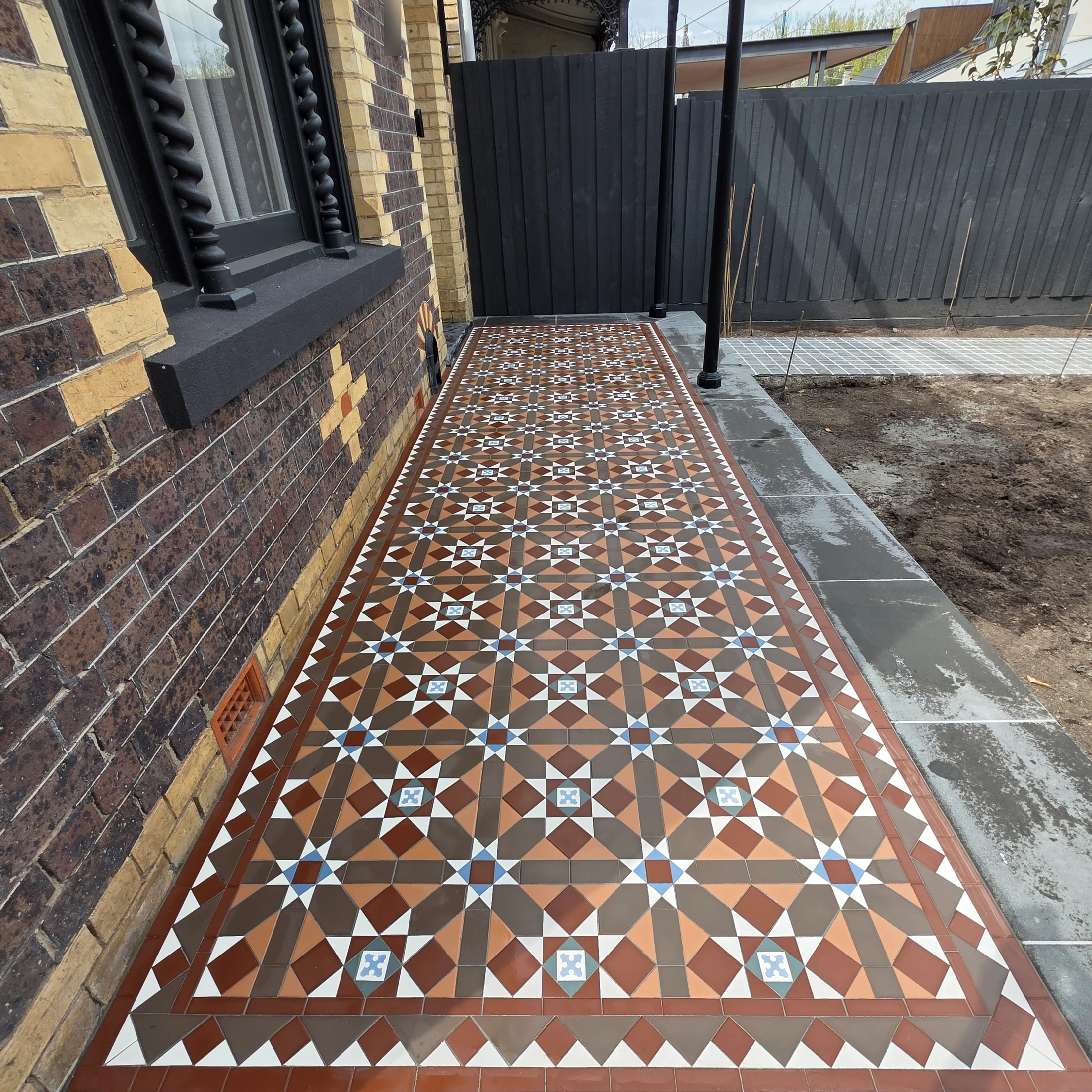
Tile design for Epsom homes and new work
Epsom sits within the regional City of Greater Bendigo and includes a predominantly separate-house dwelling pattern in the 2021 locality snapshot. That does not prescribe one architectural style, but it makes the relationship between a front path, porch, verandah, thresholds and the wider garden particularly important when selecting a tessellated layout.
The Epsom Village Centre planning schedule emphasises neighbourhood integration, landscape quality, active street frontages and safe pedestrian movement. For a residential project, those principles are useful design prompts: consider how a tiled approach meets the public-facing entry, how borders frame the path, and how changes in level and drainage are resolved without making the pattern fight the building.
Plan the pattern, edges and transitions together
A consultation can establish the intended period character, colour balance, border proportion and direction of the pattern before tiles are ordered. For a new verandah or pathway, the layout should be considered with the entry width, steps, door clearance and adjoining paving rather than treated as an isolated rectangle.
Existing floors and paths need a condition-led assessment before restoration or selective replacement. Matching decisions may involve surviving tiles, adjacent finishes, edge details and the visual rhythm of the room or approach. Stone bullnose or other edging coordination can help resolve exposed transitions where the design calls for a defined boundary.
Check the property before heritage-sensitive work
Not every Epsom property is heritage-listed. If a home, outbuilding or site may have heritage significance, check the individual Planning Property Report and the applicable Greater Bendigo controls before external alterations, demolition, construction or other works. The City of Greater Bendigo explains that permit requirements and exemptions depend on the Heritage Overlay and the specific proposal.
A tile specialist can help document the existing finish, discuss retention and propose a compatible repair or new installation. Planning or permit advice remains a matter for the relevant authority and the property owner’s project team; tile work should not be presented as council-endorsed by default.
Your Heritage Tiling Questions
Can tessellated tiles suit a newer Epsom home?
Yes. The pattern, border, scale and colour balance can be selected for the proportions and entry sequence of the home rather than assuming a historic style. A design consultation can test how the tiles sit with the porch, path, steps and surrounding landscape.
How should an Epsom verandah or pathway tile project begin?
Start with the dimensions, levels, access, drainage and adjoining finishes, then settle the layout and edge treatment before supply is finalised. This helps the pattern align with doors, steps and transitions instead of leaving awkward cuts at the most visible points.
Does every Epsom property need heritage approval for tile work?
No blanket answer applies. The City of Greater Bendigo advises checking the individual Planning Property Report and the relevant Heritage Overlay requirements. Permit needs and exemptions depend on the property and the proposed works, so confirm the position before starting regulated external or structural work.
Can existing tessellated tiles be restored rather than replaced?
Often the first step is an assessment of what remains: condition, loose or damaged areas, previous repairs, pattern continuity and available matching options. A restoration recommendation should follow that inspection rather than assuming a full replacement or a universal repair method.
Discuss Your Heritage Tiling Project
Share your location, project details and photographs using our enquiry form, or call 0433 932 711.