
Tessellated Tiles in California Gully
California Gully's goldfields setting calls for tile decisions that respect both the property and the way it meets the street. The locality's documented heritage character includes modest cottages, shops and community buildings, with brick or stucco walls, corrugated-iron roofs and a mixture of gabled and parapeted forms. AHTC can help with tessellated tile design, supply, installation, restoration and stone bullnose or edging coordination for California Gully and the wider Bendigo region.
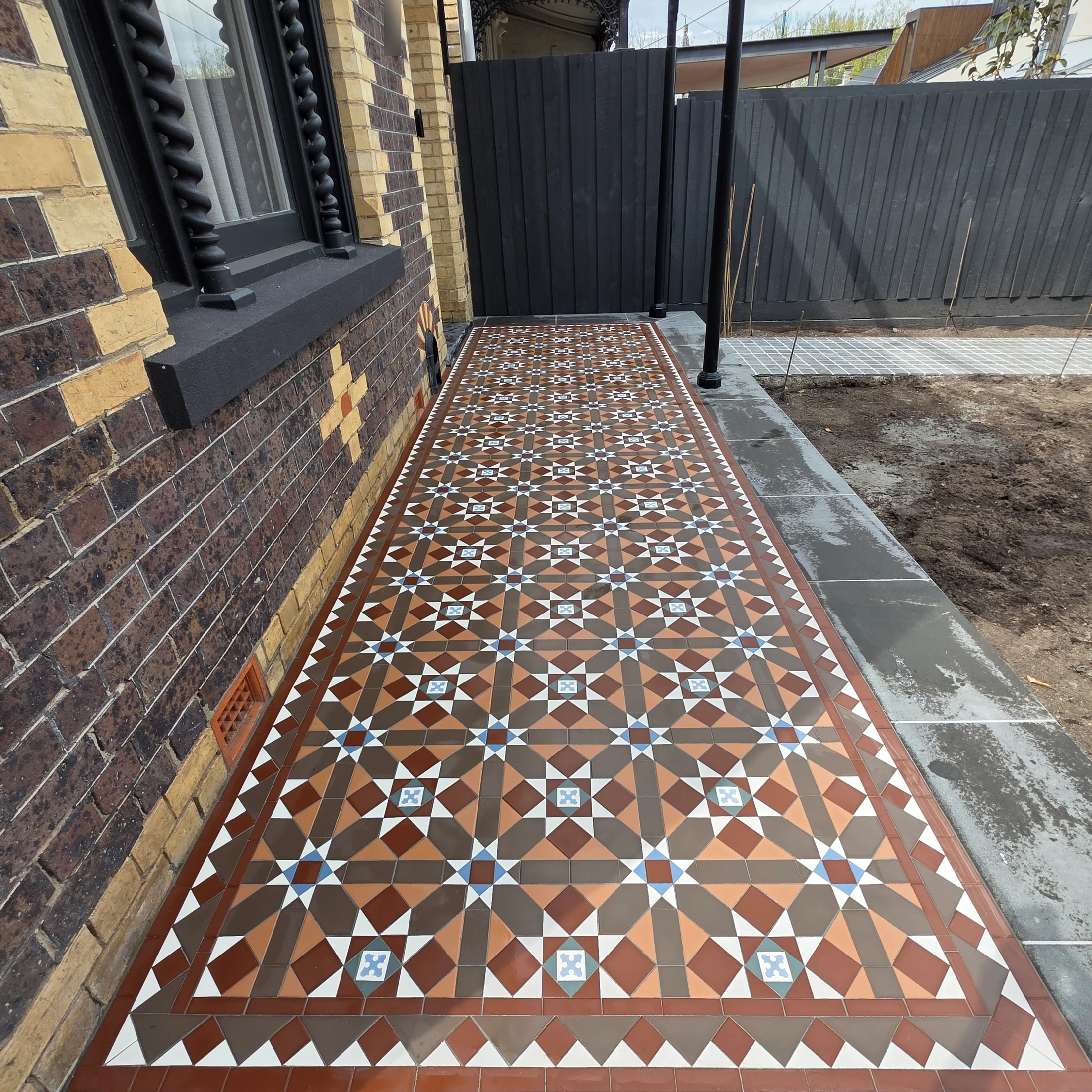
A goldfields streetscape with varied layers
The California Gully Precinct is described as a nineteenth-century mining village whose cottages, shops, chapel and remaining mining landforms still read together as a place. Its listed streetscape is not a single house style: the record notes one-storey Victorian buildings, brick and stucco walls, corrugated-iron roofs, parapets and gables. That combination is useful context when considering a new verandah, porch or pathway, but it is not a claim that every property in California Gully has heritage protection.
For a period property, begin by looking at the existing proportions, threshold levels, front setback and relationship between the house and the street. A restrained tessellated pattern can reinforce a small cottage entry, while a broader verandah or path may need a border and transition that sit comfortably with the building rather than competing with it. The right layout depends on the actual site, surviving fabric and intended use.
Plan around the property, not a generic period recipe
The former California Gully National School shows how a local building can accumulate changes over time: brick and stucco work, a steep gable, later additions, decorative brick motifs and a verandah are all part of its recorded story. For a private project, that is a reminder to assess what is already there before deciding whether to match, repair, replace or introduce a new tiled surface.
AHTC's design consultation can help compare pattern scale, colour balance, edge treatment and the visual weight of a proposed floor or path. Supply and installation planning should also account for levels, drainage, access and the junctions with existing masonry, timber or stone. Where a surface is already worn or altered, restoration may be more appropriate than wholesale replacement.
Check heritage requirements before altering a listed place
The Greater Bendigo planning scheme lists the California Gully Precinct as Heritage Overlay HO16, and individual local places are also recorded with their own overlay numbers. An overlay does not make every property in the locality the same, and it does not by itself tell you what a particular proposal will require. Before work starts, confirm the status of the property and the relevant planning advice with the responsible authority.
A property-led tile brief should record the existing surface, adjoining materials, access route and proposed extent of work. This makes it easier to discuss a heritage-sensitive outcome without assuming that a particular pattern, material or approval pathway applies universally.
Tessellated tile services for California Gully and Bendigo
AHTC can assist with design consultation, tessellated tile supply, installation and restoration for entries, verandahs, pathways and other suitable areas. Stone bullnose or edging coordination can be considered where a tiled surface meets steps, garden edges or existing masonry. The brief should be developed from the property's dimensions and condition rather than from a stock layout.
California Gully enquiries are served through the existing Bendigo location route. A clear description of the property, the area to be tiled and whether the work is new, repair or restoration will help shape the next design conversation.
Your Heritage Tiling Questions
Is California Gully part of metropolitan Melbourne?
No. California Gully is a regional locality in the City of Greater Bendigo. The existing service route is grouped under Bendigo, and local council and heritage records identify Greater Bendigo as the relevant municipal context.
Does every California Gully property have heritage protection?
No. The locality contains a documented California Gully Heritage Overlay precinct and separately recorded heritage places, but protection is property and overlay specific. Check the applicable planning information for the property before altering an existing surface or building fabric.
What should be considered when choosing tessellated tiles for a California Gully cottage?
Start with the building's proportions, entry or verandah dimensions, existing materials, threshold levels and street relationship. The documented local character includes modest one-storey Victorian buildings with gabled or parapeted forms, so pattern scale, border treatment and transitions should be selected for the individual property rather than copied as a universal period formula.
Can existing tessellated tiles in California Gully be restored?
Often the first step is an assessment of what remains, including loose or damaged tiles, substrate condition, drainage and the relationship to adjoining masonry or stone. A restoration-led approach may allow sound original fabric to remain while repairs and carefully matched new work address the areas that need attention.
Should I check with council before tiling a heritage property?
Yes. Greater Bendigo's planning scheme includes heritage-overlay provisions and identifies the California Gully Precinct as HO16. Confirm the property's status and the requirements for the proposed work with the responsible authority before proceeding; the appropriate pathway depends on the place and the scope of the change.
Discuss Your Heritage Tiling Project
Share your location, project details and photographs using our enquiry form, or call 0433 932 711.