
Tessellated tile services in Delacombe and Ballarat
Delacombe sits within Ballarat West's changing residential and activity-centre landscape. For a new verandah, pathway or interior floor, tile selection needs to work with the property's proportions, access and drainage conditions. Where older fabric is present, assessment should lead the work rather than assuming that a replacement pattern or finish is suitable.
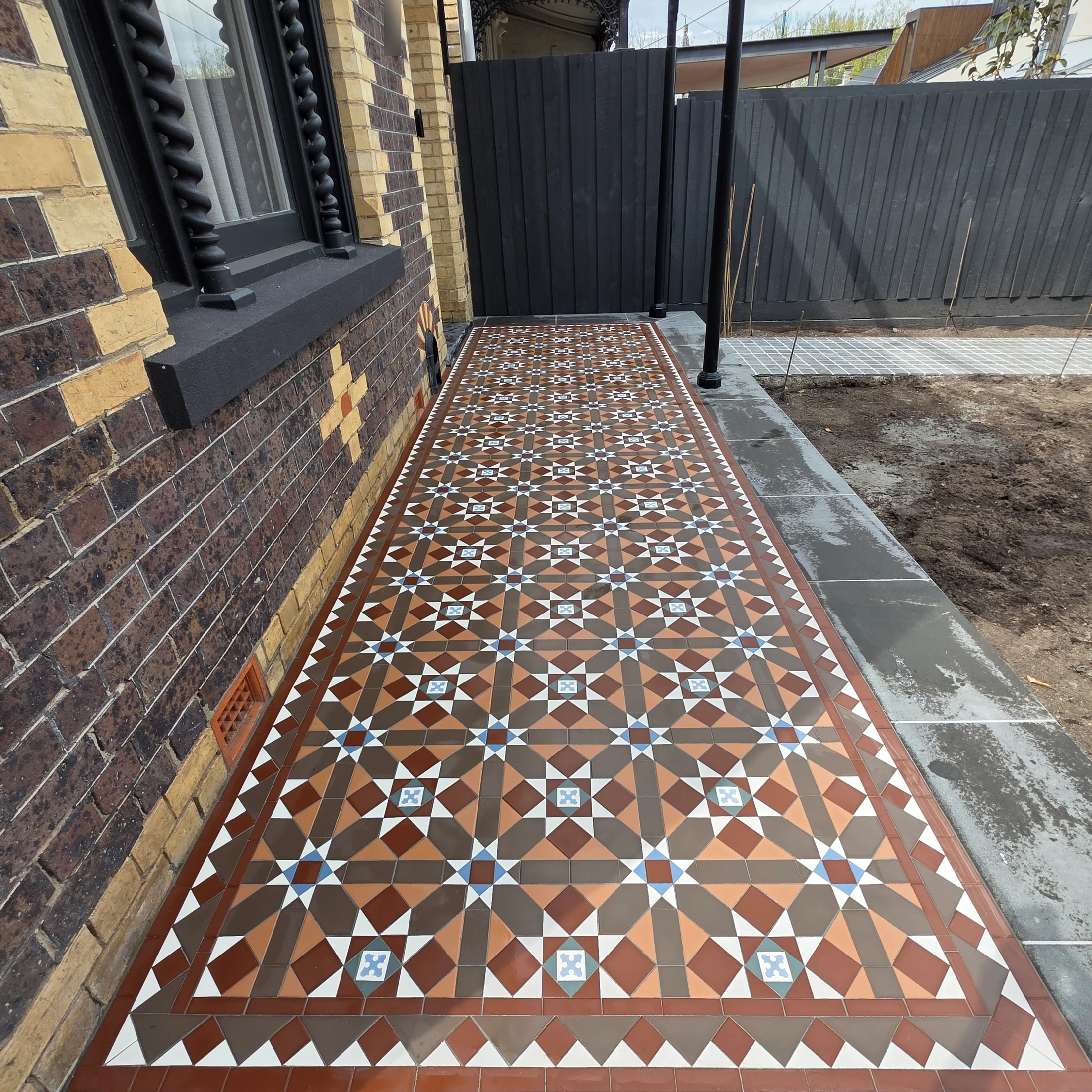
A Ballarat West setting with new and established fabric
City of Ballarat planning material places Delacombe at the south-west edge of the Ballarat West Major Activity Centre. The wider precinct is planned around a mixture of residential neighbourhoods, activity centres, schools, community facilities, open space and connected walking routes. That context makes the relationship between a tiled entry, verandah or path and the surrounding frontage especially important.
The Ballarat West framework asks new built form to respond to Ballarat's history, established areas, landforms and rural environment while supporting contemporary housing. For tile work, that is a useful design principle rather than a claim that every Delacombe property has a heritage character. A restrained border, considered threshold and durable external transition can give a new installation a clear relationship to its setting without copying an unverified historic detail.
Plan the pattern around the property
For a new Delacombe project, begin with the route from street to door, the width of the landing, sightlines at the entrance and how the tiled area meets paving, garden edges or a garage. Tessellated layouts can be developed for a compact porch, a longer verandah or a pathway, but the module, border and direction should be proportioned to the actual space rather than selected from a generic sample.
Ballarat West planning guidance gives particular weight to pedestrian connections, active frontages, treed streets and well-resolved public interfaces. On a private site, those principles translate into practical checks: keep transitions legible, allow for movement and maintenance, and coordinate levels and drainage before fixing the final pattern.
When an existing floor or path needs care
Existing tiles should be assessed for movement, missing pieces, dampness, surface wear and the condition of adjoining thresholds before a repair or extension is designed. Matching is not only a colour exercise: scale, edge geometry, laying direction and the way the work meets newer construction all affect whether an intervention reads as coherent.
The City of Ballarat is reviewing heritage places and local heritage policy across the municipality. That does not make every Delacombe property heritage-listed, and it does not itself grant approval for works. If a property has a heritage control or a significant surviving feature, confirm the relevant planning requirements with the responsible authority before work proceeds; AHTC can help keep the design discussion focused on the existing fabric and the proposed scope.
Design, supply, installation and restoration
AHTC can discuss tessellated tile design for Delacombe and Ballarat projects, coordinate tile supply, plan installation and assess restoration or selective replacement where existing work is worth retaining. Stone bullnose or edging coordination can also be considered where the edge condition needs to meet steps, a landing or another finish cleanly.
The useful starting information is the property's locality, the intended area, a few clear photographs and what you want the finished space to do. For older work, include close views of damaged or loose areas and wider views showing thresholds and drainage.
Your Heritage Tiling Questions
Is Delacombe part of Melbourne for a tiling project?
Delacombe is treated here as a regional Ballarat locality within the Ballarat West planning area, not as a Melbourne metropolitan suburb. The existing Delacombe route is retained under the Ballarat service destination so the local enquiry has an accurate regional context.
Can a new tessellated pathway suit a contemporary Delacombe home?
Yes. The pattern, border and scale can be designed for the actual frontage and access route rather than treated as a period reproduction. Proportions, level changes, drainage and the transition to adjoining paving should be resolved before the final layout is selected.
Does every older-looking property in Delacombe need heritage approval?
No assumption should be made from appearance or suburb name alone. Heritage controls and planning requirements are property-specific. Check the relevant authority if a heritage overlay or significant existing fabric may apply before altering it.
Can existing tiles be repaired instead of replaced?
That depends on the condition of the tiles, substrate, edges and adjoining construction. An assessment can identify whether selective repair, careful matching or a new adjoining section is the more coherent approach.
What should I include in an enquiry about Delacombe tiling?
Include the project location, whether the work is new or restoration, the approximate area and photographs showing the whole space as well as thresholds, edges and any damaged sections. This gives the design discussion a useful starting point without assuming a construction method before the site is understood.
Discuss Your Heritage Tiling Project
Share your location, project details and photographs using our enquiry form, or call 0433 932 711.