
Tessellated tiles and heritage tiling in Hindmarsh
Hindmarsh combines an early village plan with layers of residential, civic, religious, commercial and former industrial development. That setting can be a useful starting point when planning a tessellated tile entry, verandah or pathway, but the right response depends on the individual property and what remains in place. AHTC can assist with design consultation, tessellated tile supply, installation, restoration and stone bullnose or edging coordination.
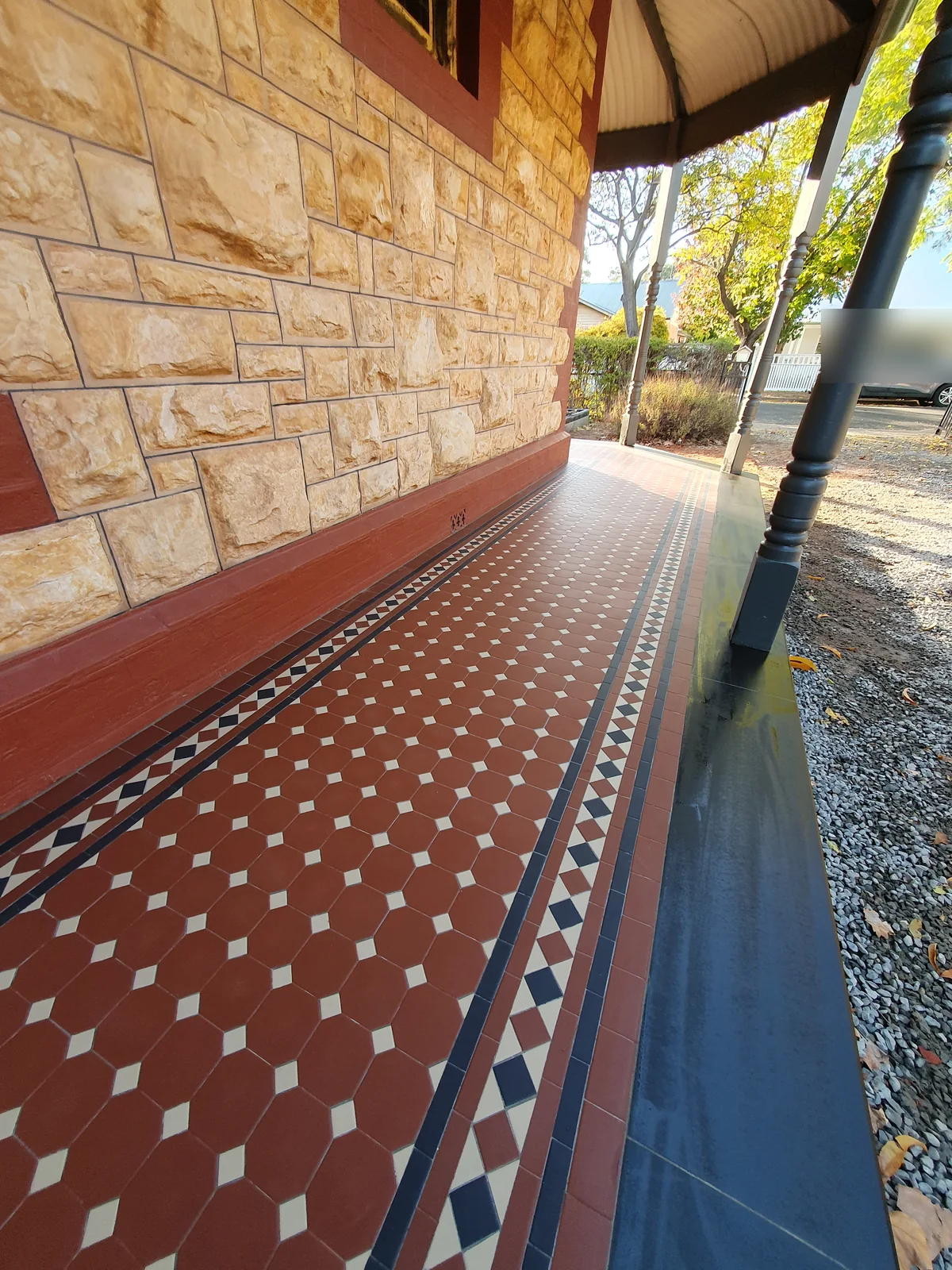
A layered inner-west village setting
The City of Charles Sturt's local history records Hindmarsh's 1838 village layout and the way Port Road became a public and commercial focus. The heritage survey describes a broader mix of residences, public buildings and industrial premises, shaped by the district's changing economic uses rather than a single uniform house style.
For a tile project, that history is best used as context rather than a prescription. A compact entry, a broad verandah and a long pathway may each need a different balance of field, border, colour and edge. The relationship to existing masonry, joinery, fencing, steps and the street frontage should lead the design.
Hindmarsh's heritage record includes individual places and groups of places, not a blanket statement that every property is protected. Read the property-specific heritage and planning position before deciding whether existing fabric should be retained, repaired or replaced.
Design around the existing frontage
A considered Hindmarsh design starts with the threshold and the way the surface meets the building. Check the available width, steps, door openings, garden edges and adjoining paving before choosing a pattern. A restrained border can clarify a narrow approach, while a larger verandah may allow the geometry to be read across a wider field without overwhelming the building.
Where older brickwork, rendered walls, stone elements or painted joinery survive, colour and proportion can connect new tiling with the existing frontage. Matching does not mean copying a nearby property. It means testing the pattern and palette against the actual building and the views from the street.
South Australian heritage records include former industrial, civic and religious places as well as houses and shops in Hindmarsh. That variety is a reminder to assess the building in front of you, rather than assume a generic Victorian or Federation treatment applies to the whole suburb.
Restoration and property-specific checks
If existing tessellated tiles remain, begin by recording their condition, pattern, edges and relationship to steps or walls. Restoration may involve retaining sound sections, selectively repairing damaged areas or integrating new work with the surviving surface. The appropriate scope depends on the material and construction that are actually present.
The South Australian Heritage Places Database distinguishes State from Local listings and warns that development affecting a State Heritage Place can extend beyond the registered structure or footprint. Check the current record and the relevant planning pathway for the individual property before work starts. Tile design advice is not heritage approval or council endorsement.
Where a new pathway, verandah surface or edging meets drainage, levels or other existing construction, site assessment should guide the detail. No single substrate or installation method should be assumed for every Hindmarsh property.
From pattern selection to finished edges
Design consultation can help establish the pattern, border and colour relationship before supply and installation are coordinated. For a restoration brief, the first question is usually what can be retained and how a repair or complementary section will sit beside it. The work should remain specific to the property's dimensions, exposure and existing fabric.
Stone bullnose or edging coordination can help define a step, pathway or verandah junction where the design calls for it. Careful detailing at corners, thresholds and changes of level is what allows a geometric surface to feel settled within a layered Hindmarsh frontage.
Your Heritage Tiling Questions
Does every Hindmarsh property have heritage protection?
No. The South Australian Heritage Places Database records specific State and Local heritage places in Hindmarsh, but the suburb name alone does not establish a listing or a uniform control for every property. Check the current property record and applicable planning information before work begins.
What local character can inform a Hindmarsh tessellated tile design?
Hindmarsh's documented context includes an early village plan, Port Road's commercial role and a mix of residential, civic, religious and former industrial buildings. These are useful cues for considering scale, colour, edges and the relationship to the street, but the final layout should be designed for the individual frontage rather than copied from a broad period label.
Can existing tessellated tiles in Hindmarsh be restored?
An assessment can consider whether surviving tiles are suitable for retention, selective repair or careful integration with new work. Record the pattern, condition, edges and adjoining construction first. If a heritage listing or other control may apply, check the relevant South Australian and council information before altering the surface.
Should I check heritage information before tiling a verandah or pathway in Hindmarsh?
Yes, where the property may be a listed place, within a heritage area or affected by a listed setting. The South Australian database explains that development affecting a State Heritage Place may extend beyond the registered structure, so the current property-specific pathway should be confirmed before work proceeds.
Discuss Your Heritage Tiling Project
Share your location, project details and photographs using our enquiry form, or call 0433 932 711.